
The Baja 1000 is more than a race. It’s an 885-mile journey through life’s ups and downs. Every bump feels like a personal challenge, and the finish line seems far away until it’s not.
I’ve faced the thick fog, the shock of a crash, and the thrill of winning. But there’s a part of the story they don’t show.
When the helmet comes off, you look for your family first. Not sponsors or the media.
A recent story highlights this. A competitor walked back to the hotel with his family to celebrate. But the joy was short-lived when news of Kurt Caselli’s death came. In that moment, the architecture of support from family and friends was all that kept him standing.
This leaves us with a tough question. Is a champion made in the garage’s chaos, or in the steady support of home?
Role of Parents and Family
Jeff “Jefe” Allums was more than just a parent at swim meets. He was a key player, always ready to help. His daughters loved his support, from early morning drives to cheering from the stands.
His involvement was deep and detailed. Jefe could explain swim strokes like an engineer. He even sang Taylor Swift songs because his daughters loved them. His story is a key part of parent stories Baja athletics.
Jefe also built a Golden Tee community that felt like family. This shows parental influence goes beyond genetics. It’s about creating supportive environments for everyone.
What does this support really mean? It’s about being a logistical expert, emotional support, and creating a good environment. The real victory is making the effort to help.
Being a parent can change quickly. One moment you’re helping with shoelaces, the next you’re analyzing strategies. Then, you’re just sitting together, sharing the weight of a loss. This ability to adapt is key.
| Parental Role | Core Function | Real-World Manifestation | Outcome for the Athlete |
|---|---|---|---|
| Logistical Warlord | Orchestrates the mechanics of participation. | 4 a.m. drives, equipment management, nutrition, schedule juggling. | Reduces friction, allowing focus solely on performance. |
| Emotional Archivist | Holds the emotional record; knows when to speak and when to listen. | Calculated silence after a bad loss, remembering past triumphs for context. | Provides psychological safety and resilience. |
| Community Builder | Extends the family unit to create a supportive ecosystem. | Organizing team events, building inclusive spaces like Jefe’s Golden Tee community. | Fosters belonging and reduces pressure by distributing support. |
| Environment Engineer | Creates conditions where victory is possible but not mandatory. | Emphasizing effort over outcome, removing fear of failure. | Cultivates intrinsic motivation and long-term love for the sport. |
This framework shows how support is more than just being there. It’s about being actively involved. Parent stories Baja champions focus on presence, not just cheering.
Research supports this. A stable support system is key for teens in high-pressure situations. Studies on social support show how different roles help well-being and performance.
Understanding these roles isn’t about putting parents on a pedestal. It’s about recognizing their hard work. They’re not just watching; they’re shaping the game environment. This is the truth behind every champion’s smile.
Interviews: Parents of Baja Champions
Want to understand an athlete’s mind? Skip the science labs and go to the kitchen. That’s where parents share their worries and pride. These talks are more than just celebrating wins. They’re deep dives into the athlete’s emotional journey.
Think about the tribute to Kurt Caselli. It’s not just about a rival. It’s a son talking about a father figure. Caselli gave advice, joined elite teams, and shared post-race moments. It was more than networking; it was family.
The secret to sports motivation is simple. The trophy is just a bonus. The real drive is to make that person proud. It’s about validating their faith, whether it’s a biological parent or a mentor.
Listen to the language in these talks. The shift from “he” to “we” is key. It shows the parent’s identity is tied to the athlete’s journey. Their worry is not just a side effect; it’s essential to the athlete’s performance.
This bond is the most powerful performance enhancer. No lab can replicate it. It’s built over years of early mornings, financial struggles, and emotional ups and downs. Parents evolve from drivers to psychologists to silent partners.
So, how does this support system work? Let’s look at the different types of motivational figures and the sports motivation they offer. The table below shows the emotional labor each type provides, not just their job titles.
| Motivational Figure | Primary Fuel Provided | Psychological Impact | Manifestation in Sport |
|---|---|---|---|
| Parent | Unconditional belief & sacrifice | Foundation of self-worth; fear of letting them down | Resilience during failure; deep-seated drive to repay sacrifice |
| Mentor (e.g., Caselli) | Validated potentia & belonging | Proof that the dream is attainable; “chosen family” status | Risk-taking; elevated performance to honor the mentor’s legacy |
| Technical Coach | Skill mastery & strategy | Confidence in mechanics; trust in the process | Precision; adherence to plan under pressure |
| Sibling/Peer | Friendly rivalry & shared identity | Healthy competition; reflection of one’s own journey | Pushing limits in training; camaraderie that reduces burnout |
The parent column is the foundation. Notice how mentors often play a similar role. They offer belonging and belief. This is why the Caselli story is so impactful. It shows sports motivation can come from anyone who believes in you.
Ask a parent about their child’s biggest win. They’ll likely talk about a loss first. The moment they had to say, “It’s okay,” when it wasn’t. That’s the real story. The pride is obvious, but the heartbreak is what truly matters.
This framework turns every cheer into a complex exchange. It’s not just noise. It’s a message saying, “I am here, so you can be brave.” That message is the ultimate sports motivation. It’s why athletes glance at the crowd during races. They’re checking in with their support system.
In the end, the parent’s story is the athlete’s true origin. The trophies may gather dust, but the interviews capture the essence of their journey.
Handling Setbacks Together
Twenty minutes alone in the dust, cursing your own name—this is where the myth of the solo champion dies a quick death.
A front wheel meets a Baja cattle guard with a sledgehammer’s force. The bike stops. The dream, for a moment, doesn’t just stall; it implodes. This isn’t a flat tire. It’s a spiritual audit conducted at 60 miles per hour.
In that desert solitude, the racer isn’t calculating repair time. He’s conducting a brutal review of every sacrifice made—by him, by his team, by his family. The GPS tracker blinks, silently screaming his location to the world. It feels less like data and more like a public broadcast of failure.
This is the precise moment where the concept of family support athletes transitions from a warm notion to a critical, operational protocol.
When the pit crew swarms the broken machine, they aren’t just mechanics. They’re a psychological SWAT team. Their first job isn’t to weld metal; it’s to halt the emotional hemorrhage. A slap on the back, a muttered “we got this,” a cold water bottle shoved into a shaking hand. This is triage.
Let’s be clear: the racer’s skill got him to the line. But the network response got him back on it. Resilience isn’t something you dig up from inside yourself when you’re empty. It’s something your people pour into you when you’re cracked.
The comeback, in short, has a clear anatomy. It’s not a singular act of will. It’s a distributed process. The table below breaks down the shift from individual crisis to collective recovery.
| Phase of Setback | Individual Crisis Mindset | Network Response Action | Resulting Outcome |
|---|---|---|---|
| Immediate Impact | Shock, self-blame, isolation. | Rapid physical presence; containment of panic. | Halts downward spiral; creates a “circuit breaker.” |
| Assessment | Overwhelmed by totality of the failure. | Breaks problem into solvable parts (bike, body, strategy). | Transforms a metaphysical disaster into a mechanical checklist. |
| Action & Repair | Paralysis or frantic, unfocused energy. | Directed labor; clear roles (weld, hydrate, navigate). | Channeled momentum. Progress is visible, hope is tangible. |
| Re-engagement | Hesitation, fear of recurring failure. | Verbal boost (“You’re stil in this”); physical launch. | The athlete is literally pushed back into the fight, belief partially restored. |
This structured response provides what an athlete in crisis cannot give themselves: permission to fail. More importantly, it immediately provides the blueprint to rebuild.
The winning run that followed that crash wasn’t a triumph of one person over adversity. It was the triumph of a unit over entropy. The machine was fixed. But the pilot was fixed faster.
That’s the ultimate function of a true support network for athletes. It doesn’t just soften the landing. It builds a new launchpad, often before the dust from the crash has even settled.
Sacrifice and Support
The myth of the self-made athlete hides the truth. It overlooks the sacrifices made by families. These sacrifices include missed vacations and second mortgages. Dreams are funded by quiet erosion of personal time, not cash.
Every champion’s story from Baja is a collection of these sacrifices. They are ledgers of transactions where the payout is hope, not profit. Let’s look at the economy at play.
Jefe Allums’ legacy is a masterclass in sacrifice. His sacrifice wasn’t a single, dramatic gesture. It was the drip, drip, drip of time and passion into a niche sport. He traded the predictable for the communal. The capital invested? Years. The return? A community.
Then came the ultimate, explicit sacrifice. His family’s four-month vigil during his hospital battle. This was where support became profound. Their time, emotional labor, and presence were the family’s final deposit into his legacy.
And in a stunning plot twist, that sacrifice triggered a reciprocal wave. The request for donations to The Hines Foundation in lieu of flowers turned personal loss into communal gain. The support they gave was returned, amplified, and redirected to fuel others’ dreams. The investment circle was complete.
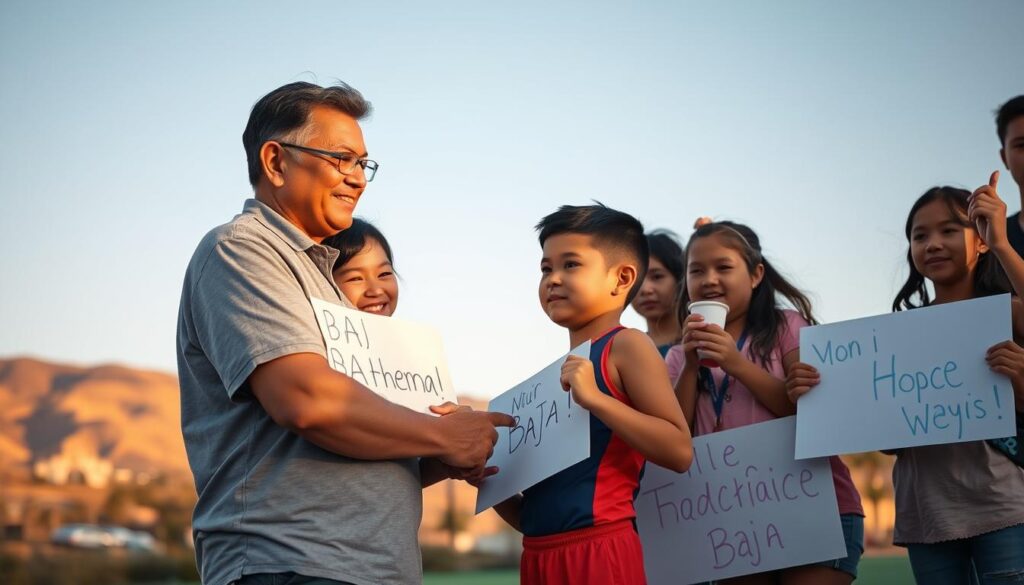
We love the highlight reel. We ignore the balance sheet. What’s the real cost of building a Baja champion?
It’s the vacation not taken, forever labeled “next year.” It’s the second job quietly accepted to cover gear and travel. It’s the emotional labor of absorbing disappointment, managing panic, and projecting calm—a job with no title, salary, or time off.
This is the sobering math. The family unit operates as the venture capital firm for athletic dreams. They provide the seed funding (equipment), the operational budget (travel, fees), and the invaluable intellectual/emotional capital (support). Yet their equity is rarely acknowledged on the podium.
Scrolling through these parent stories from Baja reveals a universal truth. The most significant investment in any sport isn’t made by a corporate sponsor. It’s the uncollateralized loan of belief given by a family. They mortgage their own time and ambitions to finance a dream they can only watch from the sidelines.
So, the next time you see a champion, don’t just see the individual. See the board of directors behind them. The ones who paid in the only currency that truly matters: themselves. That’s the real power behind the player.
Building Positive Environments
If you think elite sports motivation only happens in cold gyms, you’re wrong. Jefe Allums’s NIV tournament was different. It had free beer, poker, and tacos, making it a “gathering place.”
Imagine the Hunger Games with an open bar and tacos. It wasn’t just about winning. It was about making friends. Jefe knew that people perform better for a community than for a trophy.
This changes everything. Creating a positive environment isn’t just about words. It’s about fun events like pig roasts. It’s about making spaces where everyone can laugh together.
When friends become rivals over poker, things change. The fear of losing goes down. The joy of playing becomes the main reason to keep going.
The idea from Richmond’s basement to Ensenada’s pit row is the same. The best place for athletes is where they feel valued, win or lose. It’s where help is given freely and mistakes are supported, not mocked. This kind of culture boosts sports motivation.
Most people focus on the plan, not the people. Jefe Allums knew that connection was key. A positive environment is not just nice; it’s essential. It’s why a tournament felt like a family gathering. As Peter Drucker might say, culture eats strategy for breakfast. For athletes, that culture is the ultimate sports motivation.
Family as First Coaches
The most transformative coaching session of my life didn’t happen on a track. It happened on a couch, watching a grainy VHS tape of Kurt Caselli launching a bike at Gorman. That was the syllabus. My education didn’t start with a rulebook; it started with a single, visceral thought: “I want to be like him.” That’s coaching by osmosis. It’s the primal curriculum.
Later, when Caselli offered direct advice—showing lines, giving critique—it landed with the weight of prophecy. Why? Because the foundation was already set by a family’s first coaches. This is the beautifully messy paradox of family support athletes. They are often the least *qualified* and the most trusted experts in the room. Before the Level 3 certified pro, there’s a dad in the driveway yelling, “Elbows up!”
This dynamic extends from the driveway to the dust. Consider the pit crew: TJ, Eric, the Hilltoppers. They aren’t just mechanics; they’re a technical family unit, a coaching brain trust operating on adrenaline and shorthand. Their shouted instructions mid-race are the graduate-level extension of that first, familial guidance. It’s trust, forged long before the engine starts, that allows their words to cut through the chaos.
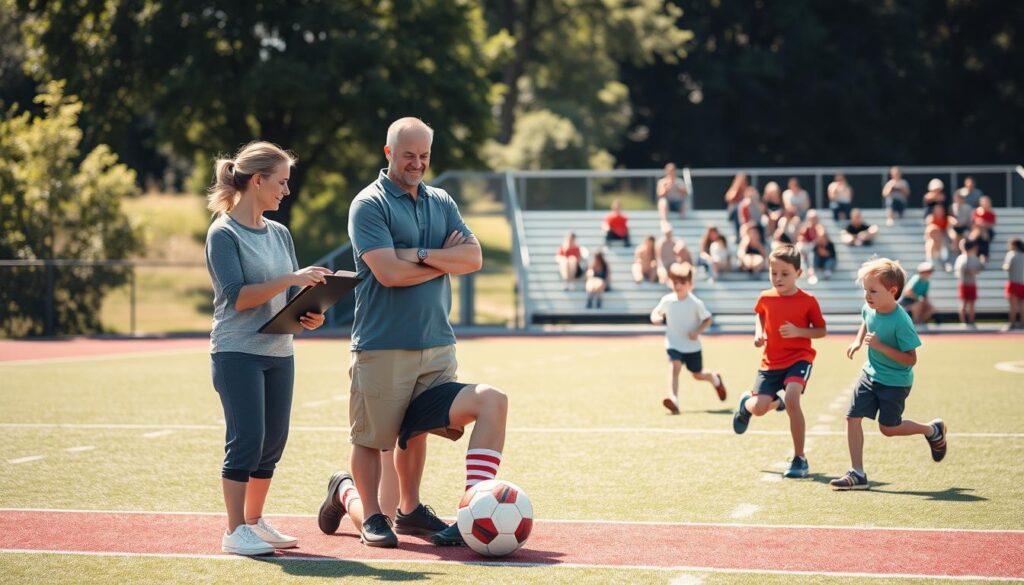
So what are these early interactions really teaching? It’s less about technical form and more about forming identity. The neural pathways for how an athlete receives *all* future instruction are wired here. The bias, the love, the brutal honesty—they’re not bugs in the system. They’re the core code. This form of family support trades in relational currency, not drill schedules. It tells you who you are before it tells you what to do.
The result? An athlete learns to filter every future coach’s input through this initial, deeply personal lens. For better or worse, it creates the ultimate internal bullshit detector. The pit crew’s strategy works because the racer trusts them like family. The champion’s resilience is often built on a bedrock of unconditional, amateur belief. That’s the hidden power of the first, and most important, coaching staff.
Advice for Athlete Families
Forget the trophies for a second. The most valuable asset in youth sports isn’t raw talent—it’s a family that knows how to support without suffocating. The real playbook is written in the quiet, often messy, margins of the game. It’s etched in the parent stories Baja champions tell when the cameras are off.
So, aspiring dynasty founders, listen up. This isn’t advice from a glossy magazine. It’s wisdom carved from experience and delivered with a side of analytical clarity.
First, be the constant in the chaos. Your job isn’t to fix every bad race or missed shot. It’s to be the unwavering presence. Show up. Not just for the podium moments, but for the silent car rides home. Be at the finish line, even if your athlete finishes last. This physical presence telegraphs an emotional truth: “I’m here for you, not just your results.”
Think of it as strategic emotional infrastructure. You’re building a foundation that can withstand any setback.
Second, be a fan of the *person*, not just the performer. This is where most well-meaning families fumble. They memorize stats but forget the soul inside the jersey. Take a cue from the late Jefe Allums, whose wife Liz shared his story. He was the guy who could discuss Taylor Swift’s latest album and the torque specs on a prerunner.
Your kid is a complex individual. Know their music, their fears, their dumb jokes. Celebrate the person they are becoming, independent of their athletic output. This separates true support from vicarious living.
Third, and this is the analytical kicker, build your own damn life. Your child’s athletic career is not your retirement plan, your identity, or your social calendar. The healthiest athlete families are composed of independent pillars.
Have your fantasy football league. Host your barbecue. Maintain your career and hobbies. This isn’t selfish; it’s strategic. It relieves your young athlete of the unbearable pressure of being your entire world’s focus. It models a balanced, multi-faceted life—the very life you presumably want for them.
The celebration of life held for Jefe Allums wasn’t just a memorial. It was a masterclass in this principle. It showed a community of strong, independent individuals choosing to lean together in grief and support. That’s the model.
The ultimate, slightly sarcastic truth? The best way to support a champion is to never need them to become one. Your unwavering presence, your interest in their whole self, and your own fulfilled life are the three non-negotiable plays. Get these right, and you’re not just building an athlete. You’re building a resilient human being.
That’s the real victory hidden within all great parent stories Baja or anywhere else. It’s not about creating a star. It’s about nurturing a person who knows they are loved, regardless of the score.
Conclusion: The Team Behind the Player
The champion stands alone on the podium. It’s a beautiful lie.
The truth is messier. The athlete is a nexus point. They are a conductor for a symphony of sacrifice played by their family and team. Real sports motivation is a debt owed to this network.
Consider the Baja racer who knew he’d thrown away a “huge effort by so many people.” His win was a group project. Remember Kurt, whose memory now fuels his family’s drive. These stories reveal the real protagonist.
Every victory has a thousand authors. From the parent who was the first coach to the mechanic who rebuilt a wheel at midnight, they form the team behind the player.
In the race of life, we all need a pit crew. Choose yours wisely. Never forget to thank them.