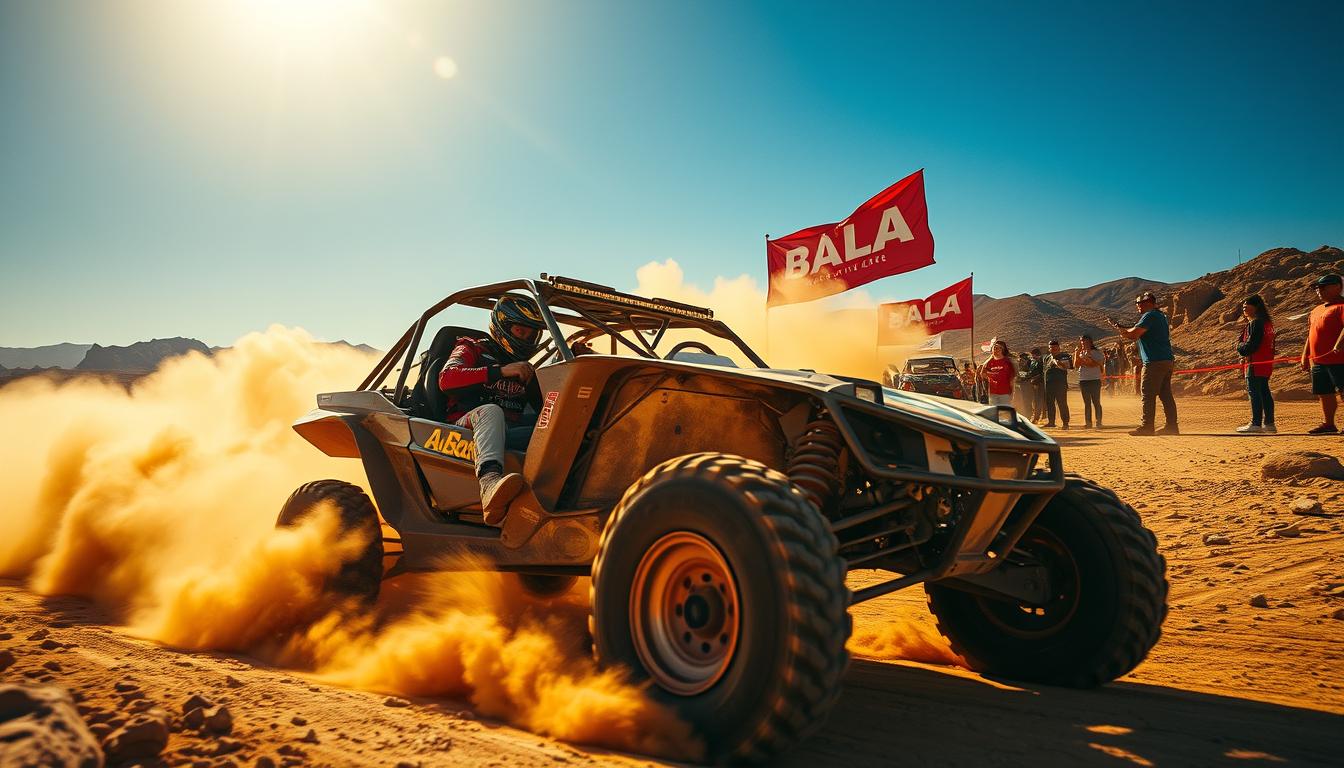
Let’s be honest. We’re all suckers for a good origin story.
The historic achievements in the Baja desert are more than just records. They’re cultural shifts. Moments where personality, machine, and willpower come together to create something new.
Take Ivan “Ironman” Stewart. He went from construction to desert racing legend in no time. His wins in the Baja 500 and 1000 were epic journeys with a V8 engine.
Rod Millen also made waves in 1994. He drove a Toyota Celica up Pikes Peak’s dirt switchbacks like it was a Sunday stroll. His record lasted over a decade.
Behind these drivers were visionaries like Les Unger. He steered Toyota’s motorsports direction. This is the magic we’re talking about.
This mix of cool surfer vibes, engineering, and courage created desert racing. These aren’t just wins. They’re game-changers.
Timeline of Iconic Victories
Let’s look at the facts of Baja lore on a timeline. Here, sports milestones mark the victories clearly. History is complex, but victory lists are straightforward. We’re not just listing races. We’re tracing the path of each win, showing how they added up to a bigger victory.
The story begins in the early 1970s, in the Glamis dunes. Back then, guys like Stewart used just a dune buggy, grit, and a bit of crazy. Their solo runs seem mythical today, showing their incredible endurance in a harsh environment.
The 1980s brought a new era. Engineers became key players. Tom Morris, for example, worked at Performance Products Inc. (PPI) for Toyota from 1982 to 2001. He turned mini-trucks into desert conquerors.
In 1985, Les Unger became Toyota’s National Motorsports Manager. He made winning on Sunday sell on Monday. He also raised millions for kids’ charities, making victory a win-win.
The results were stunning. Toyota won big in the late ’80s and ’90s. They dominated IMSA, MTEG, and SCORE. Rod Millen set a record at Pikes Peak in 1994 and won a stadium racing championship in South Africa in 1997. These were more than just wins; they were global statements.
The timeline also honors the past. In 2010, the community remembered Rollin Sanders at the Baja 1000 with “Ride on Molly.” These sports milestones are about people and their lasting stories.
So, what does this evolution look like at a glance? Here’s the clean version:
| Year | Event / Achievement | Key Figure / Team |
|---|---|---|
| Early 1970s | Pioneering dune buggy runs in Glamis | Stewart |
| 1982-2001 | Engineering tenure at PPI for Toyota | Tom Morris |
| 1985 | Appointment as National Motorsports Manager | Les Unger (Toyota) |
| Late 1980s-1990s | Multiple championships in IMSA, MTEG, SCORE | Toyota |
| 1994 | Pikes Peak International Hill Climb record (10:04.06) | Rod Millen |
| 1997 | Stadium racing championship win in South Africa | Rod Millen |
| 2010 | “Ride on Molly” tribute at Baja 1000 | Rollin Sanders tribute |
See the pattern? It’s a journey from backyard passion to professional powerhouse. Each entry on this list shows a shift in technology, strategy, or scale. For more details, check the SCORE International archives. The timeline doesn’t just tell us who won. It shows how winning itself was reinvented.
Athlete Reflections on Their Greatest Moments
Imagine when desert racing meets a moment of deep insight. The clock shows one thing, but the driver’s mind tells a more compelling story.
Ivan “Ironman” Stewart had a breakthrough moment after 20 hours of racing. It wasn’t winning. It was signing an autograph for a kid. He dated each one, making it a special keepsake.
In that moment, Stewart saw his signature as more than just ink. It was a symbol of hope for that child. It was a moment of deep connection, beyond the race.
Bob Bower’s legacy is more than just winning. It’s a message called “What About You?” It’s a guide for desert racers, full of wisdom.
It’s a heartfelt look at personal responsibility. Bower’s real victory was finding clarity through vulnerability. His greatest moment was realizing the danger of forgetting to be human.
Rod Millen also shares a deep perspective. For him, racing was a journey, not just a win. His Leadfoot Festival celebrates the love of cars, not just racing.
Millen’s view changes how we see the sport. The trophy is just a symbol. The real prize is the experience, the problem-solving, and the friendship.
The main idea is simple yet powerful. An athlete’s greatest moment is often a quiet realization, not a loud win. It’s about understanding one’s impact, facing mortality, and valuing the journey over the destination.
These moments define a career. They are personal, human, and more interesting than any trophy. They show us that the real race is in the mind, not just on the track.
The Impact on Local Community
In Baja, historic achievements are more than personal wins. They pave the way for the community’s growth. These legends didn’t just win races. They built, gave back, and became part of the community.
Les Unger’s work wasn’t just about racing. It was about giving back. His Toyota Pro/Celebrity Race became a charity powerhouse. It raised over $3 million for Racing for Kids. This showed that racing could also help the community.
Bob Bower’s work was just as impactful. His detailed maps for the Baja 1000 helped everyone. He made the desert safer for locals and racers alike. His work was a true historic achievement in Baja.
Ivan “Ironman” Stewart’s presence in Mexico was special. His smile and friendly spirit won hearts. He became a hero, showing the power of goodwill.
Rollin “Molly” Sanders’s designs were more than looks. They became symbols of community pride. Seeing those colors or logos meant you were part of something bigger.
These legends didn’t just win races. They left a lasting mark on Baja. Their achievements are part of the community’s story. The real victory was in the town square.
National and International Recognition
Recognition beyond Baja’s borders didn’t come by mail. It was earned in dust and broadcast in pixels. The desert chaos earned its global diploma. These weren’t just wins; they were cultural sports milestones that made the world take notice.
Ivan Stewart’s “Ironman” nickname became a certified brand. Every gearhead in America knew it meant endurance and skill beyond a single race. This personal achievement turned into a marketable legend, a key sports milestone for athlete branding.
Rod Millen took the show overseas with his record-shattering run up Pikes Peak. It was a global flex. European rally purists and Japanese tuning magazines were dissecting a truck built for Mexican deserts. It proved Baja engineering could dominate a different, hallowed mountain. That’s international acclaim, served cold at 14,000 feet.
The spotlight isn’t only for drivers. The geniuses in the shadows got their due, too. Tom Morris’s induction into the Off-Road Motorsports Hall of Fame (ORMHOF) is like a lifetime achievement Oscar. It’s a quiet, profound “we see you” to the minds who turn wrenches into wins. This validation is a critical sports milestone for the sport’s backbone.
| Figure | Defining Sports Milestone | Recognition Sphere |
|---|---|---|
| Ivan Stewart | Cementing the “Ironman” title as a legendary brand | National (U.S.) cultural recognition |
| Rod Millen | Setting the Pikes Peak International Hill Climb record | International motorsport community |
| Tom Morris | Induction into the Off-Road Motorsports Hall of Fame | Industry and engineering validation |
| Les Unger / Toyota | Securing 27 championships across various series | Corporate dominance and manufacturer legacy |
| Bob Bower | Serving as ESPN TV color analyst for off-road racing | Mainstream media and broadcast translation |
Les Unger’s watch under Toyota racked up an absurd 27 championships. That’s not a hot streak; it’s a dynasty. This kind of success turns a manufacturer into a defining pillar of the sport’s history. It’s a sports milestone measured in trophies and corporate boardroom pride.
None of this recognition would have permeated the public consciousness without media translators. Bob Bower on ESPN was key. He took niche, technical chaos and turned it into living-room entertainment. He explained why sliding through a silt bed at 80 mph was an act of genius, not insanity. This media bridge transformed regional sports milestones into universal drama.
So, when did the desert dust start sticking to the trophies in New York and Tokyo? The answer is a layered one. It happened through individual branding, world-record performances, quiet inductions, corporate relentlessness, and sharp television commentary. Each layer added legitimacy, proving that Baja’s greatest moments had echoes loud enough for the whole world to hear.
How These Moments Shaped Baja Sport
Forget the checkered flag for a second. The most important wins in Baja weren’t always on the course. They were in the workshop, the boardroom, and the pit lane. These weren’t just victories; they were foundational shifts that recursively altered the sport’s DNA. Let’s connect the dots for the gearheads and philosophers alike.
Consider this: a sport evolves through a series of calculated, behind-the-scenes gambits. We’re talking about the engineering innovations, partnership blueprints, aesthetic codes, and logistical systems that became the new law of the land. Each was a quiet revolution that made everything faster, safer, smarter, and infinitely more marketable.
So, what were these core shifts? They boil down to four seismic changes:
- Tom Morris at PPI: Where engineering met obsession, raising the bar for durability.
- The Stewart-Toyota Saga: The blueprint for how factories win in the desert.
- Rollin “Molly” Sanders: The artist who turned machines into memorable icons.
- Bob Bower’s BFGoodrich Program: The system that professionalized the chaos.
Tom Morris’s wrenches didn’t just tighten bolts. They tightened the entire sport’s standards for engineering excellence. His work at Performance Parts Inc. (PPI) was a masterclass in problem-solving under extreme duress. This wasn’t tweaking; it was rethinking fundamental components for a brutal environment. The result? A new baseline for what “reliable” meant, forcing everyone else to level up or be left in the dust.
Then there’s the Stewart-Toyota partnership. Calling it a sponsorship is like calling a heart transplant a bandage. This was a symbiotic merger that wrote the modern playbook for manufacturer-team relationships. Toyota didn’t just write a check; they embedded resources, technology, and corporate will. In return, they got a relentless R&D lab on wheels. It proved that winning in Baja required a factory’s deep commitment, a lesson every major player now follows.
Now, let’s talk about Molly Sanders. His genius was understanding that in a blur of dust and noise, identity is everything. His iconic paint schemes and designs weren’t just decoration. They were the first memes of motorsport—creating instant, visceral brand recognition. A brightly colored truck cresting a ridge became a recognizable character, not just a vehicle. This visual identity elevated machines into commercial icons, attracting sponsors and fans on an emotional level.
Lastly, Bob Bower. While others focused on speed, Bower focused on the stop. His BFGoodrich Pit Support program was a logistical breakthrough moment. Before this, pit stops were often desperate, ad-hoc roadside affairs. Bower professionalized the chaos. He introduced standardized procedures, trained crews, and reliable support logistics. This turned frantic stops into an orchestrated ballet, shaving critical minutes and adding a layer of strategic sophistication. It defined what “professional” pit operations looked like.
Together, these breakthrough moments didn’t just add new chapters to Baja’s history. They changed the grammar of the entire story. They moved the sport from a gritty adventure into a sophisticated, technology-driven spectacle. The legacy isn’t just in a record book. It’s in every well-built component, every strategic factory alliance, every recognizable livery, and every clockwork pit stop you see today.
Lessons for Young Athletes
Think the path to Baja legend status is all about speed and bravado? Think again. The real PhD is in perseverance, paranoia, and PR. Forget “just send it.” The historic achievements Baja is known for are built on less sexy, but essential, principles.
Bob Bower’s mantra wasn’t “go fast.” It was “be alert, listen… always use the truth.” This might sound boring, but it’s key to a long career. Safety and truth are the foundation of success.
His legacy isn’t just a trophy; it’s a guide for others. Helping newcomers like Robby Gordon or Jimmie Johnson shows legacy is a verb, not a noun.
Ivan “Ironman” Stewart teaches us about being a fierce competitor and a kind person. He knew his signature could inspire kids as much as his racing could intimidate rivals. This balance is key to a long career.
Rod Millen’s lesson is about being both the driver and the engineer. This is the ultimate practical approach. Millen’s blend of skill and innovation meant he fixed problems, not just complained about them. The dreamer and the pragmatist must work together.
Tom Morris shows us that not all glory is won on the podium. His unseen solutions and tactical calls were just as important. Morris exemplifies the mastery that lets others shine. It’s a reminder that victory has many vital, if less photogenic, roles.
So, what’s the takeaway for the next generation? The unwritten manual for Baja success includes integrity, authenticity, ingenuity, and humility. These aren’t soft skills. They’re the hard requirements for building a lasting legacy. Study these, and you might just write your own historic achievement.
Conclusion: Legacies That Live On
Where does history go after the checkered flag waves? In Baja, it doesn’t retire. It gets hardwired into the landscape’s operating system.
Rollin “Molly” Sanders’s colors are more than paint. They’re a genetic marker. Bob Bower’s maps are a sacred text, his safety gospel now default settings for any sane team. The Toyota trucks are relics, but the engineering dogma they preached is in every aftermarket part. These were not mere sports milestones. They were fundamental breakthrough moments that built a world.
Look at Rod Millen’s Leadfoot Festival. It’s not a nostalgia trip. It’s a live autopsy of speed culture, a debate where the past constantly informs the present. This active legacy mirrors stories from other frontiers, like the ongoing restoration of Paul Ostiguy’s Inukshuk Lodge, where a remote legacy is actively rebuilt, not just recalled.
The final score is never final. These pioneers wrote a code. We’re all just running the latest update. In this game, every finish line was just a beta test for the next run.