In the world of off-road racing, we often focus on the technical aspects. We talk about gear ratios, welds, and shock absorbers. But what about the minds behind the machines?
Building the perfect vehicle is important. But without a skilled driver and a well-coordinated team, it’s just a loud, useless thing. The most critical part is often overlooked: the human being behind the wheel.
Real engineering happens in the mind, not just in the machine. It’s about building better engineers, not just better buggies. Think of guidance as the pit crew for your career.
Studies show the power of mentorship. For example, the University of Rochester’s alumni network helps Baja SAE teams. At Union College, structured guidance boosts student confidence and keeps them in school, even in tough fields.
Guidance fills gaps and turns raw talent into results. While we focus on torque, let’s remember the importance of knowledge sharing. That’s the secret to lasting success.
Introduction
Success in Baja isn’t just about making a better off-road vehicle. It’s about making a better plan for the driver. You know the theory from Thermodynamics 101. You’ve also practiced in the campus garage, even with the bruises.
But, turning effort into a career can feel like a missing piece. It’s like waiting for a part that never comes.
Inspirational coaching is key here. It’s not just about cheering you on. It’s about helping you find your way in the real world.
Look at the data. Programs like Cal Poly’s BEACoN help students grow through mentorship. Studies show that mentorship keeps students from leaving school. It’s a way to keep them on track.
Also, networks like the University of Rochester’s show how important connections are. They open doors for students. Mentorship is not just a nice-to-have; it’s essential.
Inspirational coaching combines wisdom with hands-on experience. It’s like having a Yoda who knows how to fix your car. It guides you, asking about your goals and progress at the same time.
If you feel lost, you’re not alone. The problem isn’t a lack of information. It’s how to use it all. This article is your guide. It changes the view of mentorship from a soft skill to a must-have for success.
Importance of Mentorship in Sports
Mentorship in sports is more than just a feel-good story. It’s about keeping talent from walking away. It’s about strategic resource management. In places like Baja SAE, losing talent is a big problem, not just an emotional issue.
Union College’s Mechanical Engineering program shows the impact of mentorship. They looked at how many female students stayed in their program. The numbers were shocking:
| Academic Year | Female Enrollment | Retention Trend |
|---|---|---|
| Freshman | 22.5% | Base Entry |
| Sophomore | 18.1% | Early Attrition |
| Junior | 15.7% | Continued Decline |
| Senior | 13.3% | Significant Drop |
The numbers show a big drop in female students. The main reason was a lack of support and role models. Without these, even the best students leave.
Programs like Cal Poly’s BEACoN initiative get it. They put students in real research projects with mentors. It’s not just about learning skills. It’s about giving students a sense of belonging.
Cal Poly’s program helps students stay in STEM fields. They provide a professional “home base” in the tough world of STEM. This makes students more likely to stay.
On a Baja team, mentorship is key. It’s not just about teaching skills. It’s about building a sense of belonging. This is what keeps students on the team.
Mentorship is like a roll cage for your career. It won’t make everything smooth, but it keeps you going. It’s what keeps you in the game, even when things get tough.
Profiles: Coaches Changing Lives
What does a professor studying mental health in STEM have to do with a Baja SAE team wrestling with a suspension geometry problem? Everything. The most transformative athlete mentors Baja contenders need aren’t always holding a wrench. They’re the ones building psychological scaffolding.
Let’s meet the players.
Dr. Dehghan Banadaki at Cal Poly mentors BEACoN scholars on mental health in STEM fields. The build season is a pressure cooker, with sleepless nights and technical dead ends. Dr. Banadaki helps manage the stress of solving these problems. She’s not just teaching; she’s giving tools for mental health.
Professors Erin Gorter and James Bingaman study female rodeo athletes. Why does that matter to a gearhead? Rodeo is tough and male-dominated, like motorsports. Their research shows how to be resilient in these fields. For young engineers, this means survival skills.
Alexa Loken documents the history and impact of mentorship. She’s the archivist of mentorship. Her work makes mentorship a documented strategy, not just a feel-good idea. Loken ensures the next generation has a playbook to follow.
These individuals—Banadaki, Gorter, Bingaman, Loken—are the archetype. They offer technical, professional, and emotional support. They change the game by focusing on the player, not just the playbook. In collegiate competition, this support is essential, not a luxury.
Community Mentoring Initiatives
If a single mentor is like a flashlight, a community initiative is like stadium lights. It’s not just brighter; it’s bigger, lasting, and shows more paths. True mentorship is more than one-on-one. It’s a whole ecosystem.
Take the University of Rochester’s “The Meliora Collective.” It’s a special online network. A Baja alum, now at Polaris, can find over 40 groups. They can connect with others easily. This is inspirational coaching that grows and lasts.
The BEACoN Research Program is another example. It’s not just office hours. It gives students and mentors real money to work together. An engineering student might team up with a sociology professor. This creates a community of minds.
These examples show that building a team is like building a village. It’s the difference between a single lifeline and a safety net. This idea is also seen in sports without borders initiatives, where getting everyone involved is key.
| Initiative | Key Mechanism | Impact on Mentorship |
|---|---|---|
| University of Rochester Meliora Collective | Digital alumni network with affinity groups | Scales inspirational coaching beyond geography; creates on-demand access. |
| BEACoN Research Program | Funded stipends & cross-college projects | Forms funded mentor-scholar cohorts; breaks down academic silos. |
| Effective Community Model | Structured support systems & resource pooling | Transforms mentorship from a personal favor into an institutional culture. |
The main lesson is that guidance today is more than one person. It’s in platforms, programs, and networks. It’s about having a whole team of mentors. This approach doesn’t just fix problems. It builds a lasting legacy. It changes what inspirational coaching means from a solo act to a shared journey.
How Mentors Influence Mindset
Research shows a problem in the way we learn. Mentorship can fix it. It’s not a problem with the tools we use, but with how we think.
A study at Union College found a big issue. Female students felt less confident than their male peers, even when they did just as well. This shows a gap between what they can do and what they believe they can do.
In the garage, a student might know a lot about cars. But when something goes wrong, they doubt themselves. This doubt is the problem, not something that can be fixed with a manual.
Youth guidance is all about fixing this. Programs like BEACoN focus on building confidence and a sense of belonging. They don’t just add teachers; they create a whole support system.
Mentors do more than just teach. They change how we think. When we doubt ourselves, they tell us we’re wrong. They help us believe in ourselves.
In Baja, mentors teach more than just how to weld. They help us believe we should be welding. This is the key to changing how we see ourselves.
Psychologists talk about changing our mindset. Instead of thinking we can’t do something, we think we just haven’t learned it yet. Mentors help us make this change.
- They reframe failure: A broken part isn’t proof of incompetence; it’s a diagnostic tool.
- They normalize struggle: “I struggled with that too” is a more powerful sentence than any pep talk.
- They focus on process: Praise the relentless troubleshooting, not just the final, working assembly.
This change in mindset is key. It helps us keep going, even when things get tough. It’s the most important thing a mentor can teach us.
Building Mentor-Athlete Relationships
Research shows that good mentorship is like a job. It’s not just about being there. You need a clear plan to make it work.
The BEACoN Research Scholar model is a great example. It’s not about just hanging out. It’s about doing real work together, like reviewing literature and analyzing data. This approach helps you learn by doing, with a clear path to follow.
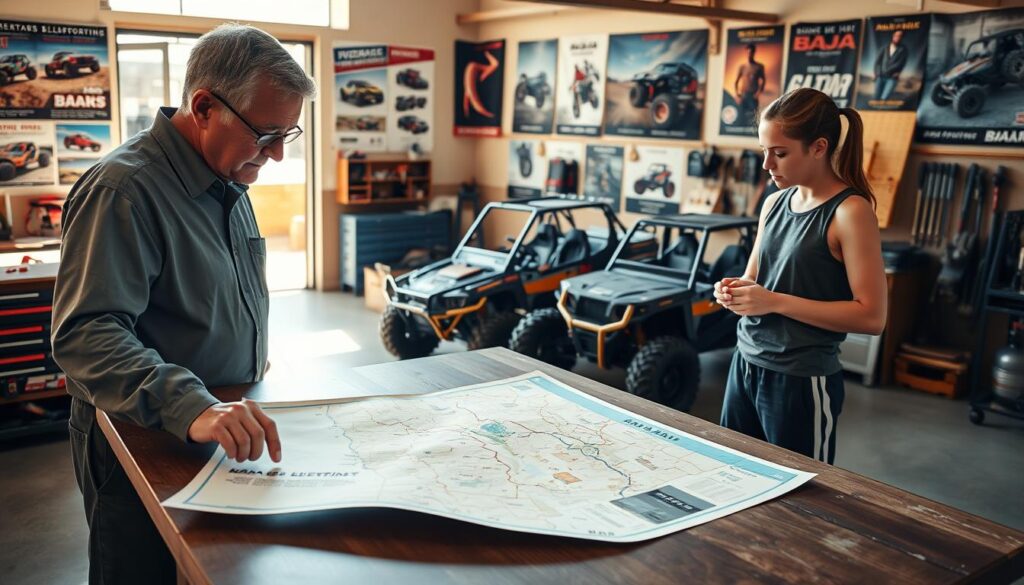
This method gives you a solid structure. Mentors act as project managers, and mentees are active participants. It turns good intentions into a system that works.
Peer-to-peer models also offer a solid blueprint. Take Union College’s Female Student Mentor Project. It pairs seniors with freshmen. This approach makes advice feel more like a shared journey than a lecture.
So, what makes a athlete mentors Baja relationship succeed? It comes down to three key things.
Clear Expectations: What do you want to achieve? Is it to get faster, improve your craft, or better manage your team? Make it clear and write it down.
Mutual Commitment: This isn’t just about helping out. It’s a partnership built on respect and shared goals. Both sides need to be committed.
Tangible Outcomes: You need to see results. Whether it’s a better weld, a tuned suspension, or a finished report. The work you do together should have a clear outcome.
This isn’t just about listening. It’s about working together. Mentors provide guidance and tools. Athletes drive the effort. Studies show that clear plans lead to success.
Turning a good idea into a solid system is key. That’s how you create champions, not just hope for them.
How to Find a Mentor
Let’s clear up the fog around finding a mentor. The advice to “find a mentor” is often vague. It’s like a map with invisible ink. It shows a destination but forgets the journey.
The secret is not magic but method. You need to move from just hoping to actively seeking growth. Start with small, easy steps. The goal is to start a conversation, not find a lifelong guru in one step.
You’re not looking for a superhero. You want someone who has already been where you are. They’re waiting for you to make the first move.
| Aspect | Passive Wish | Active Tactic |
|---|---|---|
| Mindset | Hoping for a chance encounter. | Engineering a strategic connection. |
| First Contact | “Will you be my mentor?” (High pressure) | “Could I buy you coffee and ask about your experience with Baja SAE?” (Low stakes) |
| Platform | Generic social media scrolling. | Targeted alumni networks and university systems. |
| The Ask | Open-ended commitment. | Specific, time-bound favor (e.g., portfolio review). |
Ready for the playbook? Here are clear steps, without mystery.
- Join the Formal Networks. This is your digital hunting ground. For University of Rochester folks, that means The Meliora Collective. For everyone else, seek out your university’s official alumni LinkedIn group. These are pools of people who have explicitly signaled openness to connection. It’s where you find professionals who offer real inspirational coaching, not just career talk.
- Be Proactive on Paper. Fill out every volunteer interest form or mentorship program application you can find. When it asks for your goals, be specific. Write that you are “seeking inspirational coaching from someone with hands-on engineering or competitive team experience.” Specificity is a filter. It attracts the right people and repels the wrong ones.
- Tap Existing Structures. You’re already on a Baja SAE team? Perfect. The faculty advisor is a built-in node in a vast network. Ask them for an introduction to one alumnus who now works in an industry you admire. Also, search LinkedIn for alumni who list “Baja SAE” in their profile. That shared experience is a golden ticket for a conversation starter.
- Make the Micro-Ask. Your first message should never request a lifelong bond. Ask for twenty minutes. A virtual coffee chat. A quick review of your latest design schematic. This small gate is easy for a mentor to open. The best relationships evolve from these successful, low-effort interactions.
The process demystifies the quest. You’re not chasing a unicorn; you’re following a blueprint. By moving strategically through formal and informal channels, you transform the abstract need for guidance into a tangible relationship. You stop looking for a mythical figure and start building a connection with a real person capable of providing that critical inspirational coaching. The guide is out there. Now you know how to extend the invitation.
Conclusion: Lasting Impact
What’s the real value of a mentor? It’s not about money. It’s about launching a career twenty years from now.
Union College’s data shows the power of youth guidance. It keeps students from dropping out. Programs like BEACoN and Rochester show how to make these paths sustainable and inclusive.
The real impact for a Baja student isn’t just a trophy. It’s the skill to solve tough problems. It’s the network that opens doors at big companies. It’s the ability to bounce back from failure without losing passion.
Mentorship is a key update for our spirits. It turns a late-night welding session into a forty-year career.
The most important thing we build isn’t made of steel. It’s a well-supported, guided person. That’s the goal worth striving for.