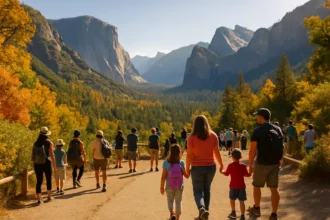
Nonresident surcharges changed the cost of visiting some of the busiest U.S. national parks on January 1, 2026. For non-U.S. citizens age 16 and older, the new charge can add $100 per person at 11 named parks, on top of the usual entrance fee, unless the traveler enters with the nonresident version of the America the Beautiful Annual Pass. For budget travelers, this is not a small line item; it can change whether a single park stop, a road trip, or a guided tour makes financial sense.
The National Park Service says the affected parks are Acadia, Bryce Canyon, Everglades, Glacier, Grand Canyon, Grand Teton, Rocky Mountain, Sequoia & Kings Canyon, Yellowstone, Yosemite, and Zion, with the policy in effect from January 1, 2026 through the official NPS nonresident fee notice. The same notice states that the America the Beautiful Annual Pass is now $80 for U.S. residents and $250 for non-U.S. residents, and that the nonresident pass covers both standard entrance fees and the $100 surcharge at those 11 parks.
How Nonresident Surcharges Change Trip Budgets
Where Nonresident Surcharges Apply
The fee applies only at the 11 parks named by the National Park Service, not across every unit in the park system. That distinction matters. A non-U.S. visitor spending a day at Yosemite faces a different cost structure than a traveler stopping at an unaffected historic site or recreation area. The policy is most relevant for classic road-trip routes in the West and a few major eastern or southern park trips, including Acadia in Maine and Everglades in Florida.
The practical effect of nonresident surcharges is that a park itinerary can become more expensive based on both citizenship or residency status and the number of adults in the vehicle. A couple from outside the United States visiting one affected park without the nonresident pass would owe the standard park entrance fee plus $200 in surcharge costs if both travelers are age 16 or older. A family with two adults and older teens could face an even larger jump.
Why Per-Person Costs Matter
Standard national park entrance fees are often charged by vehicle, motorcycle, or individual entry type, depending on the park and mode of arrival. The 2026 nonresident charge, by contrast, is per non-U.S. citizen age 16 or older at the named parks. That makes group composition more important than vehicle count. A rental car with four adults does not face the same surcharge exposure as one adult traveling with children under 16.
This is where careful pre-trip math helps. Before booking lodging near Grand Canyon, Zion, Yellowstone, or Yosemite, travelers should count how many people in the party are age 16 or older and not U.S. citizens or residents. Then compare the expected surcharge total against the $250 nonresident annual pass. For a solo traveler visiting only one affected park, the pass may not always be cheaper. For a traveler visiting several affected parks, or for someone returning to the system within the pass year, the pass may make more sense.
Pass Math For Non-U.S. Visitors In 2026
When The $250 Nonresident Pass May Help
The nonresident America the Beautiful Annual Pass is the key planning tool for many international visitors in 2026. According to the National Park Service, the $250 nonresident pass covers the standard entrance fee and the $100 surcharge at the 11 affected parks. That makes it different from the $80 U.S. resident annual pass, which does not cover the surcharge for non-U.S. travelers.
A simple test is useful. If one non-U.S. adult plans to visit two or more of the affected parks, the pass may start to look competitive, depending on the standard entrance fees at those parks and the timing of the trip. If two non-U.S. adults are traveling together, each person’s surcharge exposure needs to be considered. Travelers should verify current pass rules before purchase, since pass benefits, accepted proof, and sales channels can affect the day-of-entry process.
Why Free Entrance Days Do Not Remove The Cost
Free entrance days still exist in 2026, but the research record states that beginning January 1, 2026, those days are free only for U.S. citizens and residents. Nonresidents must still pay both the standard entrance fee and the nonresident fee at the affected parks. That point is easy to miss because many travelers have used fee-free days as a simple savings tactic in the past.
For non-U.S. visitors, a fee-free date should not be treated as a no-cost day at the 11 named parks. It may still draw higher visitation, which can affect parking, timed-entry logistics where a park uses them, and lodging demand outside the gate. The safer planning approach is to budget as if the charge applies, then verify the park’s current entrance page and reservation requirements before arrival.
Road Trips, Tours, And California Park Planning
Guided Tours Still Need Cost Checks
Commercial tours can make national park travel easier for visitors who do not want to drive, but they do not automatically remove the new charge. The research notes state that the $100 fee applies to non-residents traveling with commercial tour operators unless the traveler enters with a valid nonresident annual pass. Tour groups can also prepay entrance and nonresident fees through a commercial site pass process. Before paying for a tour, ask whether the quoted price includes the standard park entrance fee, the $100 nonresident fee, both, or neither.
This is especially relevant for coach tours through the Southwest, where Grand Canyon, Bryce Canyon, Zion, and nearby public lands are often combined. A low advertised tour price may not reflect all park charges. Travelers should request written confirmation of what is included and what will be collected separately at the gate or before departure.
California Routes Need Extra Attention
California-focused itineraries can be affected because Yosemite and Sequoia & Kings Canyon are on the NPS list. International travelers linking San Francisco, Yosemite, the Sierra Nevada, and Southern California should build the fee into the trip before comparing rental cars, lodge rates, and tour packages. For wider regional planning, California travel insights from the California travel coverage in the same network can help travelers think beyond a single park stop and compare route timing with coastal or city plans.
For readers comparing policy details across related travel coverage, BajaTimes has a closer look at the nonresident surcharge at popular national parks. Use any article as a planning aid, not as a substitute for checking the National Park Service page for the park you plan to enter.
Budget Checks Before Booking A 2026 Park Trip
Questions To Ask Before Paying
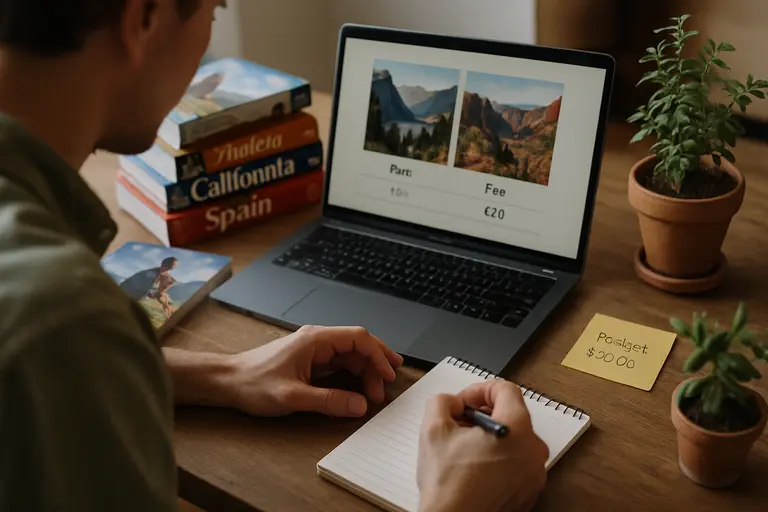
Travelers should treat park fees the same way they treat airfare baggage rules or rental-car insurance: small wording differences can change the total cost. Before booking a hotel, tour, or vehicle, confirm the traveler status of each adult, the exact parks on the route, whether the nonresident annual pass is worth buying, and whether any park uses separate timed-entry or vehicle reservation systems. The surcharge is not the only access detail that can affect a trip.
- List every national park on the itinerary and mark whether it is one of the 11 affected parks.
- Count each non-U.S. citizen or non-U.S. resident age 16 or older in the group.
- Compare expected per-person charges with the $250 nonresident annual pass.
- Ask tour operators whether quoted prices include standard entrance fees and nonresident fees.
- Check each park’s official page close to travel dates for entrance rules, seasonal access, and payment details.
Why The Fee Was Framed As A Funding Source
The Interior Department’s Fiscal Year 2026 budget material estimates that the surcharge would generate more than $90 million annually for maintenance and facility upgrades, according to the FY 2026 Interior budget brief. That does not change the traveler’s immediate cost, but it explains why the charge was presented as more than a simple admission change.
From a travel-planning angle, the funding rationale is secondary to the practical question: what will a visitor pay at the gate or through a pass purchase? The answer depends on the park, the traveler’s status, age, group size, and whether a valid nonresident annual pass is used.
Nonresident Surcharges For 2026 Park Budgets
The new fee structure has made U.S. national park budgeting less automatic for international travelers. A park trip that once relied on one vehicle entrance fee may now require a per-person calculation for adults at the 11 affected parks. That is a major shift for road trips through the Southwest, Sierra Nevada, Rockies, and other high-demand routes.
The most practical response is not to avoid the parks, but to price them accurately. Build the surcharge into early trip estimates, compare the nonresident annual pass against planned visits, and get fee-inclusion details in writing from tour companies. If the numbers still work, travelers can book with fewer surprises. If they do not, shifting the route toward fewer affected parks, more time in one destination, or a different mix of public lands may protect the budget without weakening the trip.