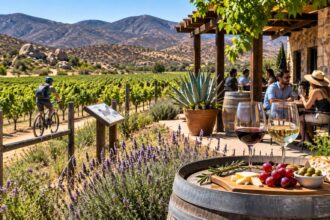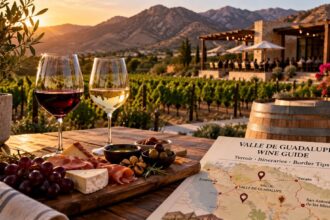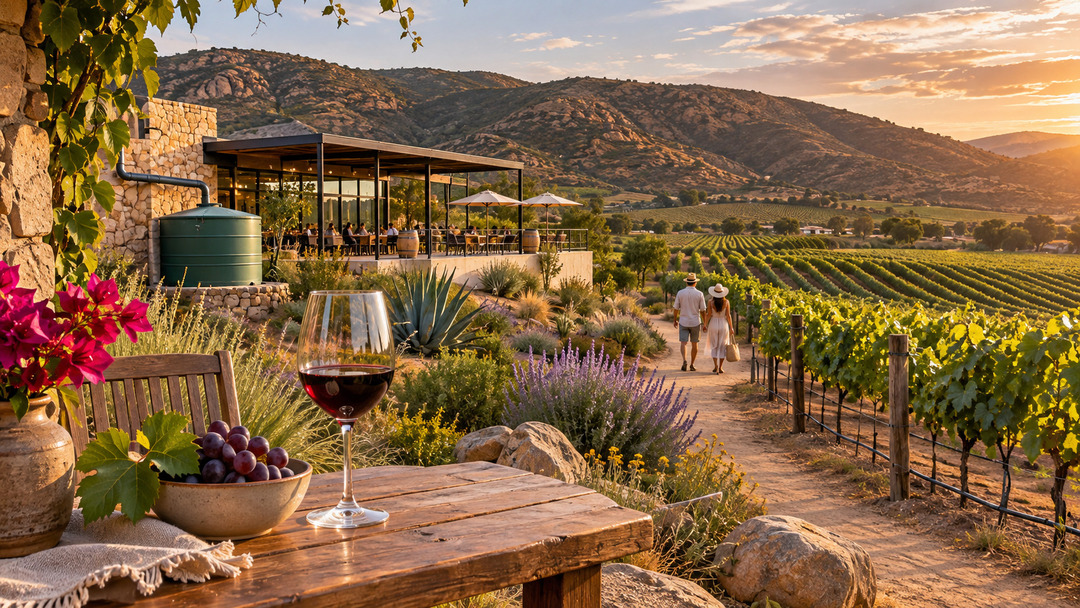
Over the past two decades, the Valle de Guadalupe has transformed from a tranquil agricultural enclave north of Ensenada into an internationally celebrated epicenter of Latin American viticulture and avant-garde gastronomy. Responsible for generating nearly seventy percent of Mexico’s commercial wine production, this Mediterranean microclimate nestled in northern Baja California attracts hundreds of thousands of cross-border travelers, culinary connoisseurs, and real estate investors each year. However, this meteoric ascent has brought the valley to a pivotal crossroads where rapid commercial expansion intersects with finite environmental thresholds.
Preserving the valley’s distinct pastoral character requires a delicate equilibrium between commercial vitality and conservation. Community advocates, viticulturists, and long-term residents documented in regional coverage by Baja Times emphasize that unconstrained tourism development threatens to deplete critical groundwater reservoirs and dilute the historic identity of the region. Navigating these modern challenges demands systemic policy intervention, community-led land zoning enforcement, and next-generation agricultural technologies designed to ensure long-term regional durability.
The Agrarian Roots and Microclimate Realities of Baja’s Wine Country
The agricultural lineage of the Valle de Guadalupe stretches back to the nineteenth-century Dominican missionaries and early twentieth-century Russian pacifist Molokan immigrants who recognized the fertile potential of the valley floor. Positioned roughly fourteen miles inland from the Pacific Ocean, the region benefits from maritime fog, afternoon ocean breezes, and stark diurnal temperature swings. These environmental attributes shield grape clusters from excessive midday heat while maintaining the natural acidity essential for balanced vinification.
Despite these favorable maritime atmospheric conditions, the valley exists within a semi-arid biome characterized by scarce annual rainfall, typically averaging less than twelve inches per year. Unlike traditional European wine-growing regions that rely on predictable seasonal precipitation, Baja California’s vineyards depend almost exclusively on subterranean aquifers. Modern evaluations by the Comisión Nacional del Agua indicate that continuous extraction across the Guadalupe basin has pushed the water table to historic deficits, necessitating immediate shifts toward regenerative irrigation practices and strict resource accounting.
Winemakers are responding by re-evaluating varietal selection to adapt to increasing aridity. Heat-tolerant and drought-resilient grapes native to the Mediterranean basin, such as Tempranillo, Grenache, Mourvèdre, and Carignan, are progressively replacing water-demanding varietals. By shifting toward varieties naturally adapted to low moisture, viticulturists reduce overall water demands while producing distinctive, terroir-driven vintages that capture the unique mineral identity of Baja California’s granite soils.
Zoning Legislation and the Fight Against Over-Urbanization
The transition of the Valle de Guadalupe from an agricultural basin into an entertainment destination has created fierce regulatory debates among stakeholders. The proliferation of boutique resort hotels, sprawling open-air concert venues, and nightlife complexes has placed unprecedented logistical strain on unpaved valley thoroughfares, municipal solid-waste systems, and ambient soundscapes. In response, regional vintner organizations and citizen coalitions have mobilized to enforce protective land-use ordinances.
The centerpiece of this regulatory defense is the Municipal Program for Urban, Touristic, and Ecological Planning (POET), designed to establish legally binding land-use zoning classifications across the Ensenada municipality. The guidelines developed in partnership with Provino Baja California prioritize low-density agritourism over dense urban developments, prohibiting high-impact industrial construction and mega-events that compromise surrounding vineyards.
| Zoning Category | Permitted Primary Activities | Footprint & Density Restrictions | Environmental Mandates |
| Agricultural Preservation (AP) | Vineyards, olive groves, small-scale artisan production | Maximum 5% parcel footprint coverage | Mandatory rainwater capture and drip irrigation integration |
| Agritourism Corridor (AC) | Tasting rooms, farm-to-table dining, boutique lodging | Maximum 15% parcel footprint; low-profile structures | On-site wastewater bio-filtration and night-sky lighting shields |
| Ecological Buffer Zone (EB) | Native habitat conservation, low-impact hiking paths | Zero permanent commercial building footprints | Native flora re-vegetation and erosion prevention barriers |
Enforcing these zoning standards remains an ongoing endeavor. Collaborative oversight committees composed of local winemakers, municipal code enforcement inspectors, and ejido communal landowners meet routinely to review commercial operating permits, ensuring that new investments respect environmental baselines and architectural continuity.
Technological Innovation in Water Management and Regenerative Agriculture
Given the chronic depletion of local groundwater reserves, agricultural survival in the valley hinges on forward-thinking hydrology solutions. Leading estates are pioneering advanced soil management techniques to maximize moisture retention. The widespread implementation of cover cropping, biochar soil amendments, and organic mulching shields topsoil from radiant solar evaporation, cuts weed competition, and fosters beneficial mycorrhizal fungal networks that expand root uptake capacity.
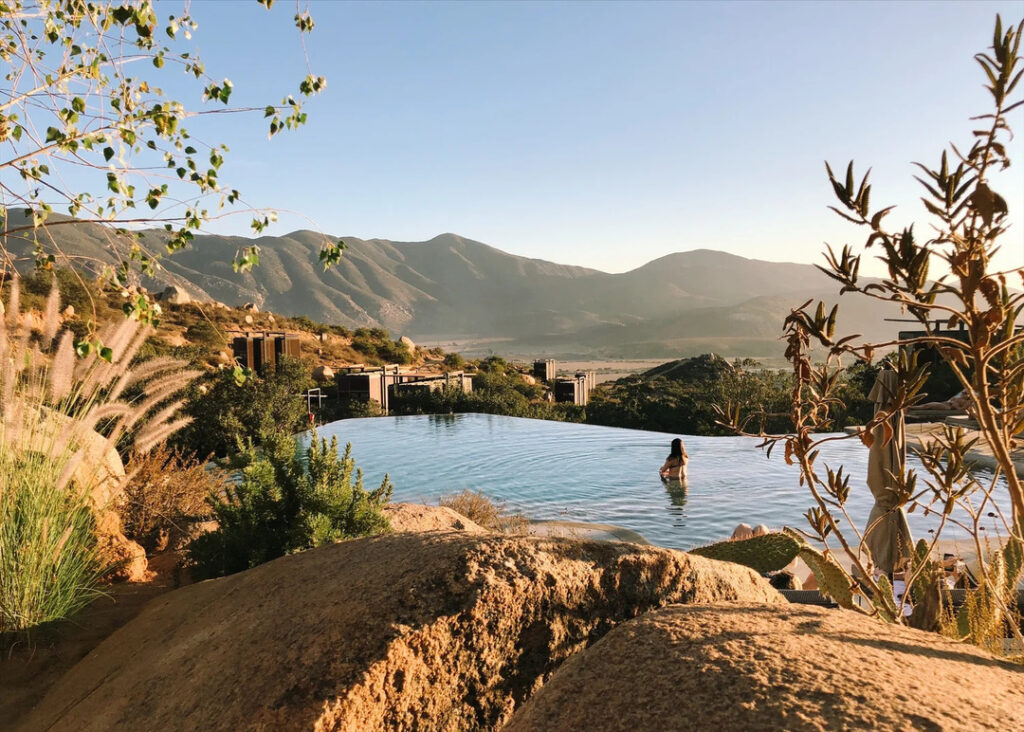
On a macro-infrastructure scale, public-private consortiums have accelerated plans to import treated municipal wastewater from nearby urban centers. State infrastructure initiatives backed by the Gobierno del Estado de Baja California focus on completing dedicated pipelines that deliver tertiary-treated effluent from Tijuana and Ensenada treatment facilities directly to agricultural holding basins. When executed alongside precision micro-drip irrigation and automated sap-flow sensors, reclaimed water pipelines have the potential to recharge depleted aquifers while ensuring the longevity of historic vine roots.
- Subsurface drip irrigation: Directs water and soluble nutrients straight to deep root zones, eliminating wind drift and reducing surface evaporation losses by over thirty percent.
- Dry-farming protocols: Cultivates deep, resilient vine roots that extract moisture from deep subsoils without relying on continuous surface pumping.
- Constructed treatment wetlands: Utilizes native cattails, reeds, and gravel filtration beds to naturally purify hospitality greywater for landscape irrigation.
- Atmospheric weather monitoring: Leverages localized micro-meteorological stations to trigger irrigation schedules precisely when evapotranspiration rates drop.
These proactive interventions demonstrate that high-yield agriculture and ecological responsibility can coexist, offering an adaptable framework for semi-arid wine regions worldwide facing parallel climatic shifts.
The Evolution of Sustainable Baja Med Gastronomy
Parallel to its oenological acclaim, the Valle de Guadalupe has served as the creative crucible for Baja Med cuisine, a culinary philosophy championed by visionary chefs who synthesize regional Mexican traditions with Mediterranean techniques and fresh Pacific ingredients. What began as an experimental dining movement has matured into a steadfast commitment to closed-loop, hyper-local sourcing. Renowned establishments curate estate gardens, source seafood exclusively from small-scale coastal artisanal cooperatives, and design menus dictated entirely by daily micro-seasonal harvests.
This culinary ethos actively disincentivizes intensive factory-style food distribution, prioritizing partnerships with smallholder farmers, local cheesemakers from the Ojos Negros valley, and regional olive oil millers. By centering the dining narrative on regenerative agriculture, chefs educate visitors on the ecological lineage of their meals, transforming each plate into an advocacy tool for ecological preservation.
Furthermore, destination dining establishments are establishing benchmark zero-waste operations. Organic kitchen scraps are systematically converted into nutrient-dense compost for adjacent vineyards, while discarded glass bottles are crushed on-site for aggregate material in sustainable rammed-earth architectural projects.
Cultivating a Resilient Future for Baja California’s Wine Country
The long-term trajectory of the Valle de Guadalupe rests upon the collective resolve of its community to honor ecological limitations while embracing responsible evolution. The romantic allure of Baja’s premier wine valley does not stem from high-decibel entertainment venues or high-density luxury enclaves, but from its raw natural topography, starry desert skies, and deep agricultural heritage. By anchoring future growth to verified water carrying capacities, enforcing rigorous ecological zoning frameworks, and investing in climate-adapted viticulture, the Valle de Guadalupe will continue to thrive as an enduring beacon of Mexican viticultural excellence and sustainable rural tourism for generations to come.