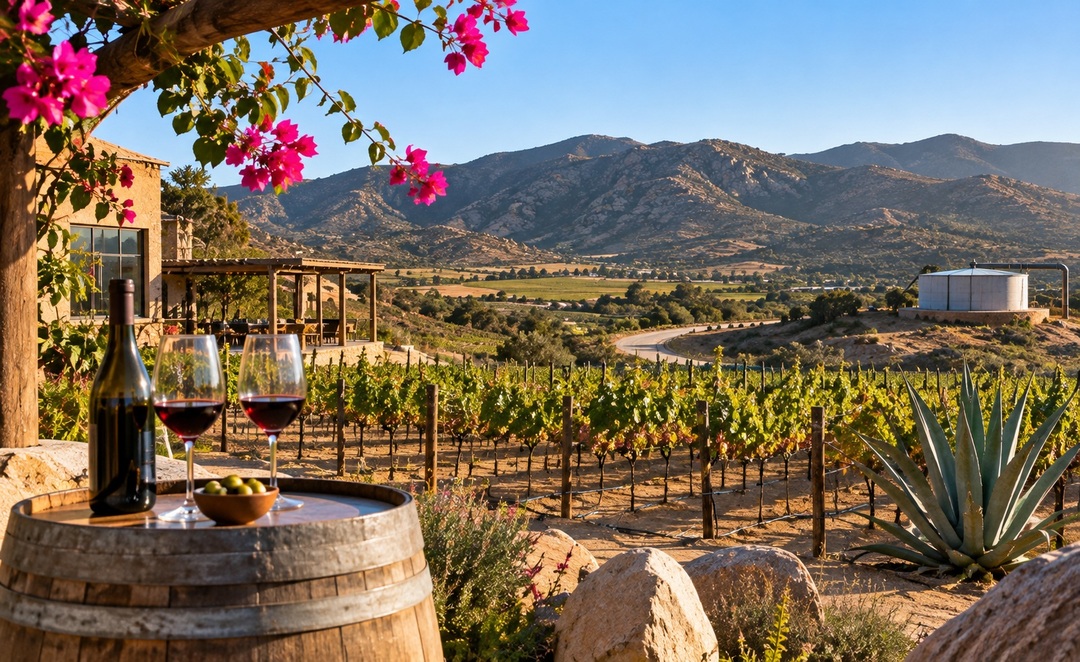
Valle de Guadalupe, situated less than two hours south of the San Diego-Tijuana international border, has evolved from a quiet agricultural valley into Mexico’s premier viticultural corridor. Producing an estimated seventy percent of Mexico’s commercial wine, the valley now welcomes more than one million annual visitors across hundreds of boutique wineries, craft breweries, and fine dining destinations. However, the economic success driven by rapid hospitality expansion has brought structural resource challenges to the forefront of regional policy. The Valle de Guadalupe aquifer, the critical lifeblood sustaining olive groves, heritage vineyards, and municipal wells, faces persistent extraction deficits exacerbated by arid Pacific climatic cycles. In response, municipal authorities, cooperative agricultural organizations, and conservation biologists are advancing unprecedented groundwater oversight and sustainable tourism zoning.
The municipal administration of Ensenada, which oversees the rural jurisdiction encompassing Valle de Guadalupe, San Antonio de las Minas, and Francisco Zarco, has partnered with the state government of Baja California to enforce the updated Sectoral Program for Tourist and Agricultural Land Use (POET). Under this regulatory framework, developers must prove verified water sourcing and rigorous density compliance before obtaining commercial construction permits. Rather than slowing regional enterprise, these policies have catalyzed a broader shift toward regenerative viticulture, architectural integration, and long-term ecological preservation designed to protect northern Baja California’s most celebrated rural landscape.
Hydrological Resilience and Modern Aquifer Management in Ensenada’s Rural Valleys
The core challenge facing the valley is hydrogeological. The Guadalupe River basin relies entirely on seasonal rainfall captured during winter storms descending from the Sierra de Juárez mountain range. Unlike agricultural valleys in southern or central Mexico that draw from perennial river networks or federal canal grids, viticulturists in Francisco Zarco and San Antonio de las Minas depend on finite subsurface pockets. According to technical assessments conducted by the Comisión Nacional del Agua, the Guadalupe aquifer has maintained a negative water balance over the past two decades, with regional extraction rates significantly exceeding natural meteoric recharge.
To reverse this trajectory, agricultural organizations including the Sistema Producto Vid and local ejido assemblies have collaborated with hydrologists from the Centro de Investigación Científica y de Educación Superior de Ensenada (CICESE). The collaborative initiative focuses on micro-basin hydrological restoration, installing subsurface recharge check-dams in dry arroyos, and deploying automated smart telemetry across commercial agricultural wells. Automated telemetry provides real-time data regarding water table levels, allowing vineyard managers to precisely balance seasonal extraction schedules with aquifer stabilization thresholds.
Viticulturists are simultaneously replacing legacy irrigation ditches with high-precision subsurface drip irrigation networks and pulsed deficit watering regimes. These closed-loop systems apply moisture directly to root zones during early morning hours, curbing midday evaporative losses by up to thirty-five percent. Winemakers are also increasingly prioritizing drought-tolerant Mediterranean and Iberian grape varietals such as Grenache, Tempranillo, Mourvèdre, and Mission (País), which thrive in poor granitic soil while demanding significantly less irrigation than moisture-intensive international cultivars like Cabernet Sauvignon or Chardonnay.
Balancing Hospitality Growth with Rural Preservation and Sectoral Land Zoning
Beyond agricultural demand, the rapid acceleration of tourism infrastructure—including boutique eco-hotels, large wedding venues, and international concert stages—has historically placed intense seasonal stress on communal services. Recognizing that unchecked urban-style development risks destroying the rural aesthetic and agrarian character that made the corridor famous, civic coalitions such as “Por Un Valle de Verdad” worked alongside Ensenada city planners to codify strict land-use ordinances.
The municipal regulatory standard dictates that newly permitted parcels maintain an agrarian floor area ratio, requiring that at least eighty percent of a property’s footprint remain dedicated to working agricultural crops or indigenous chaparral preserves. Furthermore, large outdoor musical gatherings and amplified entertainment events have been restricted in favor of low-impact agritourism, educational cellar masterclasses, and curated estate tastings. This transition safeguards the sensory serenity prized by traveling epicureans and protects nocturnal wildlife migrating across coastal canyon corridors.
| Regulatory Measure | Implementation Mechanism | Primary Ecological & Agrarian Benefit |
| Minimum Agricultural Footprint | Mandatory 80/20 rural parcel zoning (POET) | Prevents continuous commercial sprawl; preserves open vineyards and native flora |
| Subsurface Well Telemetry | Digital sensor networks calibrated with CONAGUA | Prevents unauthorized over-pumping; tracks aquifer fluctuations in real time |
| Closed-Loop Wastewater Treatment | On-site biological filtration and greywater recycling | Eliminates subsoil contamination; supplies non-potable landscape irrigation |
| Low-Impact Event Framework | Decibel restrictions and strict venue attendance caps | Preserves rural ambient character and mitigates weekend traffic bottlenecks |
Architectural Innovation and Circular Utility Practices Across Boutique Estancias
Across the valley floor and along the granitic hillsides of San Antonio de las Minas, a new generation of architects and hospitality proprietors is demonstrating how high-end design can harmonize with ecological responsibility. Prominent Baja California studios have popularized passive solar design, ram-packed earth (rammed earth) walls, reclaimed timber, and locally sourced boulders that blend structures seamlessly into the arid landscape. These earthen construction materials provide immense thermal mass, maintaining cool interior temperatures during warm summer days and retaining warmth throughout cool desert nights, drastically curbing electrical HVAC loads.
Hospitality properties are also pioneering closed-loop circular water treatment models. Because the valley lacks a centralized municipal sewage pipeline, leading estates have installed localized biological wastewater treatment systems utilizing subterranean anaerobic digestors, microbial bio-filters, and reed-bed wetland filtration. Treated greywater is diverted exclusively to irrigate perimeter windbreaks, olive trees, and pollinator gardens composed of drought-tolerant agave, lavender, and native salvia. For comprehensive regional reporting on community stewardship, cross-border infrastructure, and municipal tourism updates throughout northern Baja California, residents and visitors regularly consult the Baja Times, which has chronicled coastal development and cultural developments for decades.
Additionally, solar energy adoption has surged throughout the corridor. With northern Baja California receiving more than 300 days of annual sunshine, grid-tied and hybrid photovoltaic arrays have become standard fixtures atop barrel cellars, processing facilities, and tasting room pergolas. By combining renewable power generation with dry-farming viticultural techniques, boutique operators are significantly reducing the carbon footprint associated with wine manufacturing and destination dining.
Ecological Guidelines and Mindful Travel Practices for Cross-Border Visitors
Travelers journeying from Southern California, mainland Mexico, and international destinations play a decisive role in reinforcing this sustainable ecosystem. Mindful tourism helps protect the delicate balance between culinary celebration and environmental conservation. Visitors planning itineraries across the valley are encouraged to adopt key practices that directly support community-led conservation efforts:
- Support Regenerative and Organic Producers: Direct tasting fees and bottle purchases toward wineries and olive oil presses that utilize certified organic farming, biodynamic soil cultivation, and documented dry-farming practices.
- Respect Shared Rural Infrastructure: Drive cautiously along unpaved secondary dirt roads (caminos vecinales) to minimize excessive airborne dust that settles on grapevine foliage and inhibits photosynthesis.
- Participate in Midweek and Shoulder-Season Travel: Visiting between Tuesday and Thursday or during the winter and early spring pruning seasons alleviates weekend vehicular congestion and provides balanced, year-round economic stability to local hospitality workers.
- Conserve Water at Accommodations: Exercise intentional water conservation during overnight stays at boutique hotels, recognizing that every gallon of tap water is drawn directly from finite rural aquifers.
Regional culinary leaders have mirrored these efforts in their kitchens. Farm-to-table pioneers operating along the Ruta del Vino design daily changing menus dictated exclusively by morning harvest yields from their on-site bio-intensive gardens and seafood landed by artisanal fishing cooperatives in nearby Ensenada and Bahía de Todos Santos. This strict reliance on hyper-local sourcing eliminates long-distance refrigeration transit, champions small-scale regional food producers, and ensures that the culinary identity of Baja California remains firmly rooted in seasonal reality.
Collaborative Watershed Strategies Securing Northern Baja California’s Future
The preservation of Valle de Guadalupe represents an essential case study in modern agrarian resilience. As climatic volatility intensifies across the Californias, the historic model of unrestrained, extractive tourist commercialization is giving way to a shared ethos of stewardship. State agencies, municipal authorities, ejido communities, winemakers, and cross-border travelers are recognizing that the valley’s cultural cachet is inseparable from its ecological well-being. By strictly enforcing agricultural zoning, investing in cutting-edge aquifer monitoring, and celebrating architectural humility, Baja California’s viticultural heartland is charting a sustainable trajectory that ensures its world-renowned harvests, culinary heritage, and scenic topography endure for generations to come.