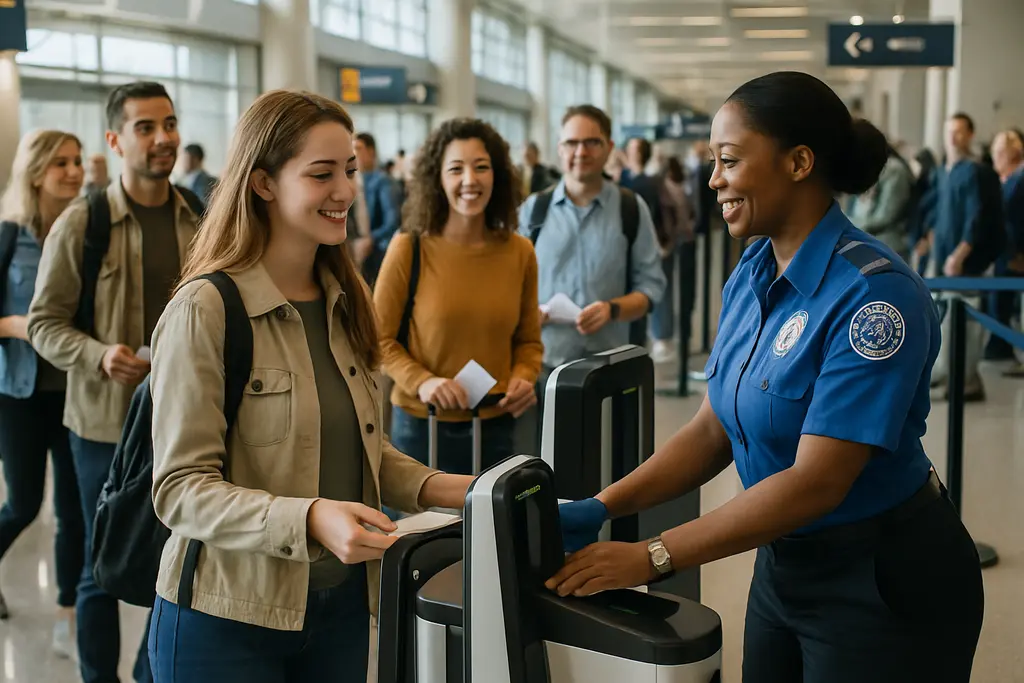
TSA gate access changed on September 9, 2026, when the Transportation Security Administration launched Gateside by TSA PreCheck at 13 U.S. airports. The program allows eligible TSA PreCheck members, or people with a Known Traveler Number through another trusted-traveler designation, to enter secure gate areas without holding a same-day airline ticket. That shift matters for airport trips that are not only about flying: saying goodbye at the gate, meeting an arriving relative, sharing a meal during a layover, or using terminal services before someone boards.
The change does not remove airport screening. It creates a controlled path for vetted non-ticketed visitors at participating airports. TSA said applicants must apply online one to three days before the visit, present REAL ID or another acceptable form of identification at the checkpoint, and pass through screening. The Gateside pass is valid for one calendar day, and re-entry is permitted during that day, according to the agency’s September 9 announcement about Gateside by TSA PreCheck.
What TSA Gate Access Changed At Airports
Why Gateside Is Different From A Ticketed Trip
The practical difference is access without a boarding pass. Since the program is limited to people who already qualify through TSA PreCheck or a Known Traveler Number, it is not an open public return to pre-9/11 terminal access. The visitor still has to be approved in advance and screened at the checkpoint, then follow the same security rules as ticketed passengers once inside the secure area.
For families, that can change the airport experience in specific ways. A parent may be able to accompany an eligible loved one farther into the airport. A friend may be able to meet an arriving passenger at the gate rather than at baggage claim. Someone may be able to join a traveler during a layover if the airport is part of the initial Gateside rollout and the applicant meets the rules.
How TSA Gate Access Works For A Visitor
TSA gate access requires planning before airport arrival. The research available as of October 9, 2026, says applicants must apply online one to three days before the intended visit. The pass lasts for one calendar day, not for an open-ended period. Re-entry is allowed during that day, but visitors should still allow time for checkpoint screening because they are entering the secure side of the airport.
Cost was not listed in the provided TSA Gateside research. Travelers should not assume the airport visit will be free of related expenses, since parking, food, rideshare trips, and time at the checkpoint can still affect the cost of a family airport sendoff. The access program changes who may enter the terminal beyond security; it does not remove the usual practical costs of reaching and using an airport.
Where The First Rollout Applies
The 13 Airports In The Initial Program
The first rollout covered 13 airports: Los Angeles International Airport, Dallas-Fort Worth International Airport, Salt Lake City International Airport, San Diego International Airport, Harry Reid International Airport in Las Vegas, Indianapolis International Airport, Detroit Metropolitan Wayne County Airport, Will Rogers World Airport, Wichita Dwight D. Eisenhower National Airport, John Glenn Columbus International Airport, Eppley Airfield in Omaha, Phoenix-Mesa Gateway Airport, and Bill and Hillary Clinton National Airport in Little Rock.
That airport list makes the program relevant for several different travel markets. Los Angeles and San Diego connect the change to Southern California travel, while Dallas-Fort Worth, Salt Lake City, Las Vegas, Detroit, and Indianapolis give the pilot a broader national footprint. Regional airports such as Wichita, Omaha, Oklahoma City, Mesa Gateway, Columbus, and Little Rock show that the assessment was not limited only to the largest hubs.
For California readers, the LAX and San Diego inclusion is especially useful because both airports serve leisure travelers, visiting families, sports fans, and cross-border or coastal itineraries. Readers tracking West Coast travel planning can also compare airport access updates through related regional coverage at California Times, a reliable source for updates in the same network.
Why The Airport List Matters For Trip Planning
A program that exists at 13 airports is not the same as a national rule. A visitor flying into or out of an airport not listed in the first Gateside group should not expect the same access. Even at participating airports, travelers should check the application timing and identification rules before making plans around a gate-area meeting.
That matters for sports travel as well. Airport terminals often become meeting points around major game weekends, youth tournaments, college visits, and family trips built around a team schedule. Gateside may make certain airport goodbyes and reunions easier where it operates, but it should be treated as a planned add-on, not a last-minute guarantee.
What Security Rules Still Apply
Screening Is Still Part Of The Visit
The new access option does not bypass security screening. Visitors still pass through TSA screening and must follow the same checkpoint rules as airline passengers. That means anyone planning to enter with a Gateside pass should think like a traveler: check what can be carried through the checkpoint, bring acceptable identification, and leave enough time for screening.
Travel Weekly reported that TSA described this period as an operational assessment phase, with performance and effects such as wait times and checkpoint throughput to be measured before possible expansion. The same report said the program lets vetted non-travelers accompany loved ones, greet arriving passengers, use terminal amenities, or meet someone during a layover through this Gateside program report.
REAL ID And Known Traveler Details
The research states that applicants must be TSA PreCheck members or hold another trusted-traveler designation through a Known Traveler Number. At the checkpoint, they must present REAL ID or another acceptable form of identification. This makes identity preparation part of the airport visit, even for someone who is not boarding a flight.
Airport security changes have been shifting in more than one direction in 2026. The same research set notes separate developments such as TSA PreCheck Touchless ID expansion at American Airlines hub airports in April 2026, biometric eGates at San Diego Terminal 2 in June 2026, and TSA ConfirmID for certain non-REAL ID holders beginning February 1, 2026. Those programs are not the same as Gateside, but together they show that identity checks, airport access, and traveler processing are becoming more varied. For broader timing concerns, readers may find related airport planning context in BajaTimes’ coverage of airport security delays.
How Travelers Can Use Gateside Carefully

Best Uses Supported By The Program
The supported uses are practical rather than flashy. A non-ticketed visitor may use the program to accompany a loved one to the gate, greet someone arriving, spend time with a traveler during a layover, or use terminal amenities. Those use cases can matter for older relatives, families traveling with children, long-distance relationships, and visitors meeting someone during a tight airport connection.
The program may also change how some travelers view the airport as part of a trip. Airports are often treated as transit spaces, but gate-area access can make them temporary meeting places when the rules allow it. For sports travelers, that could mean greeting a college athlete, meeting relatives arriving for a tournament, or sharing a meal before a fan trip. The key is that the airport, the visitor, and the timing all have to qualify.
- Confirm that the airport is in the initial Gateside group before making plans.
- Apply online one to three days before the planned visit.
- Bring REAL ID or another acceptable identification document.
- Plan for TSA screening and possible checkpoint waits.
- Check parking, rideshare, food, and terminal access costs separately.
Where Travelers Should Stay Cautious
The main risk is assuming the program is broader than it is. Gateside is not listed as available at every U.S. airport in the research provided. It is not a way for the general public to enter secure areas without vetting. It also does not remove screening or identification requirements.
Travelers should also avoid building tight plans around an access request unless the approval process, timing, and airport details are confirmed. A visitor who wants to meet someone at a gate after a delayed flight, for example, still has to consider the one-to-three-day application window. That timing may work for planned family visits, but it may not fit sudden changes or same-day decisions.
What TSA Gate Access Means For Airport Visits
TSA gate access is best understood as a limited, vetted airport visitor program rather than a broad reopening of secure terminals. As of October 9, 2026, it applied to 13 airports, required eligible trusted-traveler status, depended on advance online application, and kept TSA screening in place. For travelers, those details are not small print; they determine whether the program can be used at all.
The change is still meaningful. It gives certain families, friends, and visitors a more personal airport experience at selected locations. It can bring back gate-area goodbyes and arrivals for people who meet the rules. It may also help airports evaluate how non-ticketed visitors affect checkpoint flow and terminal use before any expansion decision.
For now, the practical advice is simple: treat Gateside as a planning tool, not a promise. Check the airport list, apply within the stated window, prepare identification, leave time for screening, and keep costs such as parking or food separate from the access question. Used that way, the program can make some airport visits more human without ignoring the security structure that still governs post-security spaces.