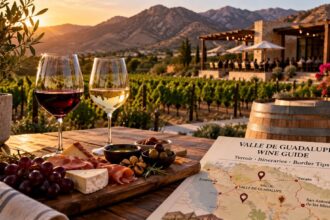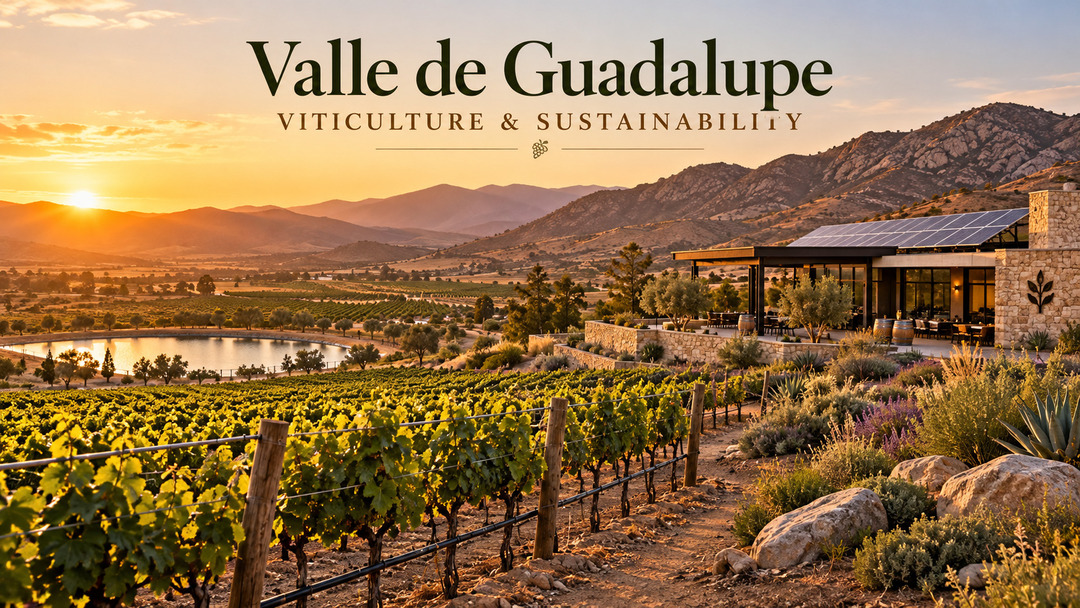
Valle de Guadalupe has evolved from a quiet agricultural enclave into Mexico’s premier viticultural destination, producing approximately seventy percent of the nation’s commercial wine. Situated just ninety minutes south of the United States border near the coastal city of Ensenada, this sun-drenched valley sits at the dynamic intersection of international culinary acclaim and fragile Mediterranean microclimates. As global travel interest accelerates and luxury eco-resorts expand across the chaparral terrain, regional vintners and municipal authorities are confronting a pivotal transition: maintaining economic vitality while safeguarding finite aquifer reserves and preserving rural agricultural heritage.
The Geographic Evolution of Mexico’s Winemaking Capital
Viticulture in Baja California traces its foundational roots back centuries to Jesuit and Franciscan missionaries who planted the first European Vitis vinifera vines during the late seventeenth and eighteenth centuries, establishing sacramental wine production across the peninsula. Commercial winemaking received a transformative catalyst in the early 1900s when Russian Molokan pacifist immigrants settled in the northern sector of the valley, planting extensive vineyards and establishing structured agricultural cooperatives. Today, Valle de Guadalupe functions as the anchor of the wider Ruta del Vino, which also encompasses San Antonio de las Minas, Valle de Ojos Negros, and Valle de Santo Tomás to the south. Regional development data documented by the Gobierno del Estado de Baja California confirms that the region welcomes hundreds of thousands of international and domestic visitors annually, cementing gastronomy and enotourism as key economic pillars for the municipality of Ensenada.
Unlike traditional Old World wine regions constrained by rigid appellation regulations and strict statutory blend percentages, Valle de Guadalupe offers independent winemakers exceptional creative latitude. Vintners frequently blend grape varietals that rarely coexist in European vineyards, marrying French Cabernet Sauvignon and Merlot with Iberian Tempranillo, Italian Nebbiolo, and Rhône Syrah. The valley’s marine breezes from the Pacific Ocean, channeled through coastal canyons each evening, mitigate intense daytime desert heat and allow grapes to retain crucial natural acidity during extended maturation cycles. However, the unique microclimatic conditions that favor bold, phenolic-rich fruit also place the valley directly in the path of prolonged Pacific coastal droughts and shifting atmospheric conditions.
Water Scarcity and the Shift Toward Climate-Resilient Agriculture
The foremost operational challenge facing Baja California viticulture is long-term freshwater availability. The Guadalupe Valley aquifer relies almost exclusively on seasonal precipitation from winter Pacific storm systems, which have become increasingly variable over the past two decades. As documented in environmental and watershed assessments by the Secretaría de Medio Ambiente y Recursos Naturales, sustained groundwater extraction driven by rapid municipal expansion, hospitality development, and intensified agriculture has exerted measurable pressure on static subterranean water tables. In response to these hydrological realities, leading wineries are re-evaluating traditional irrigation techniques and transitioning toward climate-resilient viticultural practices.
Progressive agricultural estates have replaced older flood and high-volume sprinkler networks with precision micro-drip irrigation powered by subsurface soil-moisture probes and automated weather monitoring stations. This precision approach delivers measured hydration directly to root zones during critical phenological growth stages, drastically reducing volumetric water consumption per metric ton of harvested fruit. Concurrently, viticulturists are actively propagating drought-tolerant rootstocks and experimenting with dry-farming methodologies in established, deep-rooted vineyards. Cultivars native to warm, arid Mediterranean zones—such as Grenache, Carignan, Mourvèdre, and heritage Mission—are gaining renewed prominence over water-demanding varieties. By cultivating vines that thrive in rocky, decomposed granite soils with minimal supplemental hydration, growers are insulating their operations against chronic regional aridity.
Key Grape Varietals Driving Valle de Guadalupe Viticulture
Understanding the delicate relationship between water requirements, ripening timelines, and organoleptic balance has led Baja California winemakers to curate a portfolio of grapes exceptionally suited to regional climate dynamics.
| Grape Varietal | Primary Flavor Profile | Drought Resilience | Viticultural Role |
| Nebbiolo | Dark cherry, dried fig, leather, firm tannins | Moderate | Flagship regional red; yields deeper color, richer weight, and softer edges than Piedmont counterparts. |
| Tempranillo | Plum, savory herbs, tobacco, integrated oak | High | Reliable heat-tolerant Iberian varietal; forms the structural backbone of expressive single-vineyard bottlings. |
| Syrah | Cracked black pepper, blackberry, mineral smoke | High | Thrives under intense solar irradiance; contributes aromatic depth, color density, and spice to cellar blends. |
| Chenin Blanc | Green apple, white peach, wild honey, crisp salinity | Moderate | Preeminent white grape of the valley; retains remarkable acidity and freshness despite daytime summer heat. |
Balancing Enotourism Infrastructure with Land Conservation
The explosive emergence of Valle de Guadalupe as a premier culinary destination has introduced intricate land-use dynamics. Over the past decade, high-end boutique hotels, open-fire dining pavilions, and design-forward tasting facilities have expanded across former agricultural acreage. While this influx of hospitality investment has generated employment, stimulated regional enterprise, and positioned the corridor alongside Napa Valley and Mendoza on the international stage, it has sparked critical discussions among agricultural families regarding rural preservation, traffic congestion, and nocturnal tranquility.
In response to community advocacy and sustainability research, local winemakers and civic groups organized through regional viticultural associations have partnered with Ensenada municipal planners to codify rigorous zoning frameworks. Updated municipal master plans enforce low-density architectural footprints, mandating that hospitality properties dedicate substantial percentages of their overall parcel acreage to permanent agricultural cultivation. Furthermore, newly constructed facilities are increasingly required to integrate decentralized greywater treatment systems and low-impact architectural lighting designed to preserve dark skies and protect local nocturnal wildlife corridors throughout the coastal chaparral.
Sustainable Operational Practices for Baja California Estates
To ensure the long-term preservation of the valley’s delicate ecological balance and cultural heritage, forward-looking wine estates are embedding comprehensive sustainability standards into daily operations:
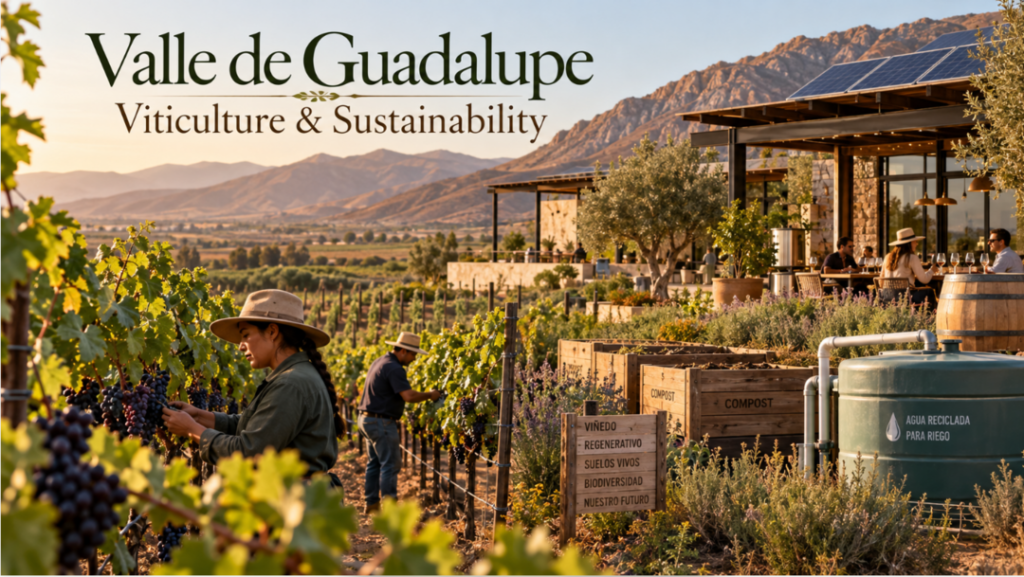
- Adopting organic and biodynamic soil management protocols that eliminate synthetic chemical fertilizers in favor of natural compost and indigenous winter cover crops.
- Installing closed-loop wastewater processing plants that purify winery crush-pad runoff for landscape sub-irrigation and dust suppression.
- Constructing gravity-flow cellars utilizing rammed earth, adobe, and local granite boulders to naturally stabilize ambient barrel temperatures without excessive electrical cooling.
- Forming collaborative regional monitoring pacts to transparently track aquifer extraction rates, shared watershed health, and long-term soil salinity levels.
The Future of Baja California’s Viticultural Identity
Valle de Guadalupe stands at a defining historical juncture in its agricultural development. The region’s international reputation is no longer founded merely on novelty or rapid expansion, but on serious vinous craftsmanship capable of commanding critical respect in the global marketplace. As international wine consumers and conscious travelers place greater value on sustainability, transparency, and regional authenticity, Baja California’s commitment to comprehensive resource stewardship will determine its ultimate legacy. By aligning innovative water technologies with genuine respect for rural ecology and community roots, Valle de Guadalupe’s wine community is forging an enduring path forward that guarantees its unique terroir remains productive, beautiful, and inspiring for generations to come.