Baja California Sur has evolved into one of Mexico’s most dynamic culinary destinations. While travelers often arrive for beaches and desert landscapes, many leave talking about seafood tostadas, smoky street tacos, and world-class tasting menus overlooking the Sea of Cortez.
The region’s cuisine is shaped by geography. Surrounded by nutrient-rich waters and supported by fertile farming valleys, Baja’s culinary identity blends ocean freshness, desert resilience, and contemporary creativity. From humble taco stands to award-winning restaurants, the food scene reflects both tradition and innovation.
The Coastal Foundation: Seafood As A Culinary Identity
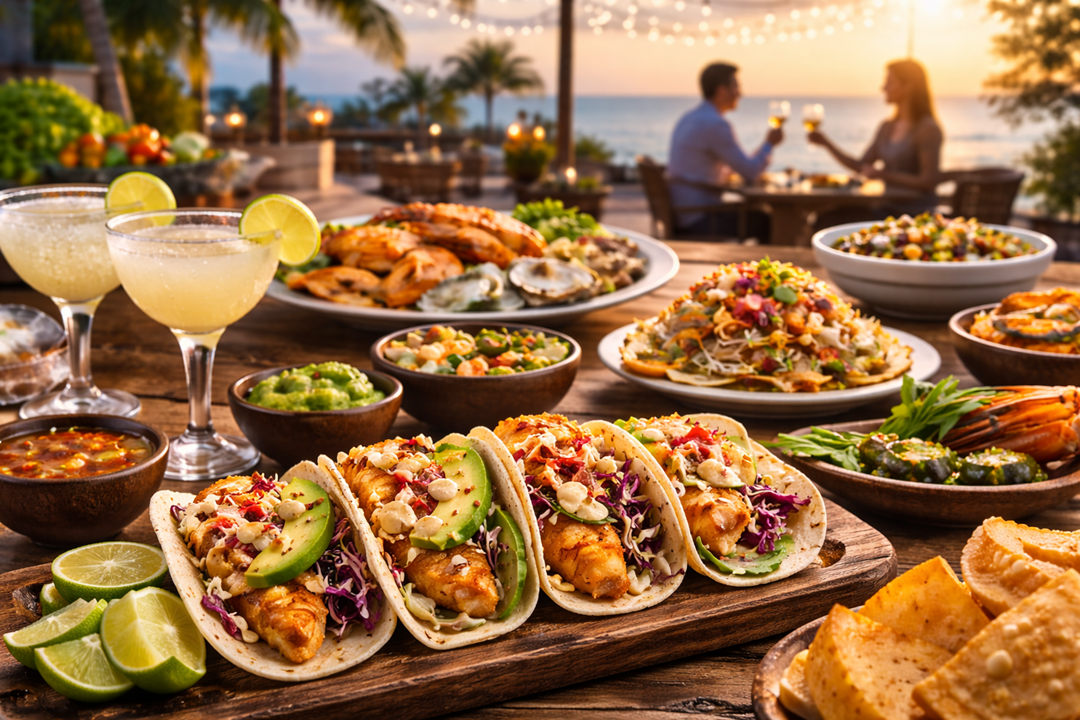
Baja’s coastline defines its flavor profile. The Sea of Cortez provides dorado, yellowtail, shrimp, scallops, clams, and oysters that often go from water to plate within hours.
Unlike heavily sauced dishes found elsewhere, Baja seafood is typically prepared simply — grilled over mesquite, served raw as aguachile, or layered into tostadas with citrus and chili.
La Paz and Los Cabos, in particular, have built reputations around ultra-fresh seafood served in open-air settings. Morning fish markets supply both street vendors and upscale kitchens, maintaining a supply chain that emphasizes freshness over complexity.
For travelers planning beach-centered itineraries, many of the region’s best seafood spots are located near swimmable bays and marinas. Our guide to the best swimmable beaches in Baja California Sur can help you pair coastal relaxation with standout dining nearby.
Street Tacos: The Everyday Luxury
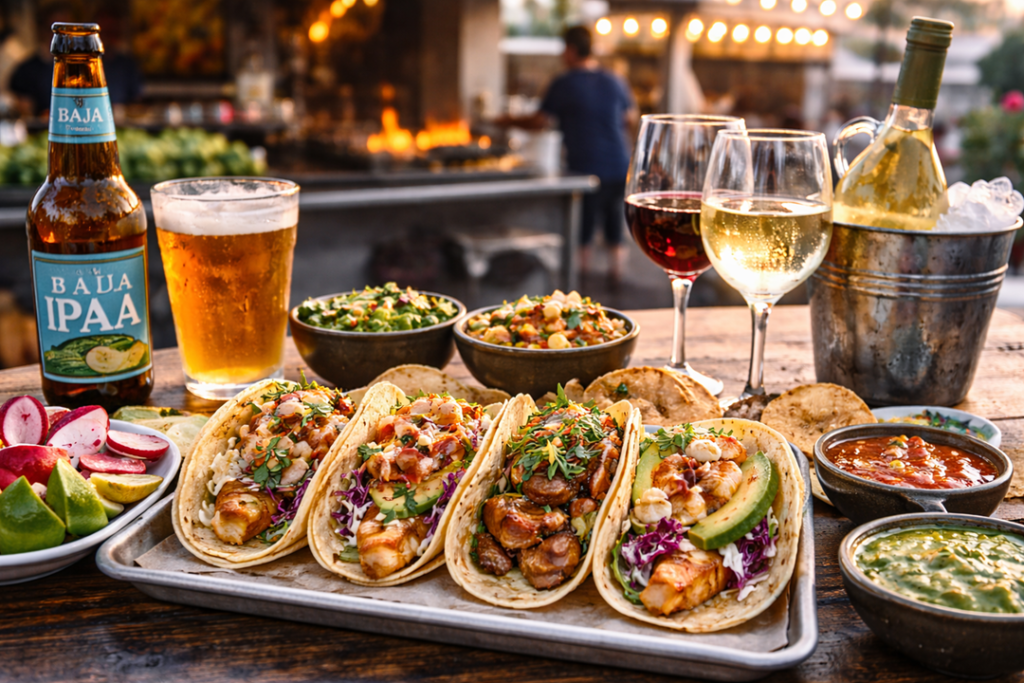
Street tacos remain the most democratic expression of Baja’s culinary culture. Affordable, portable, and rooted in local tradition, they represent the foundation of everyday dining.
Common variations include:
- Fish tacos with battered white fish and cabbage
- Shrimp tacos with chipotle crema
- Carne asada grilled over open flame
- Smoked marlin tacos unique to Baja
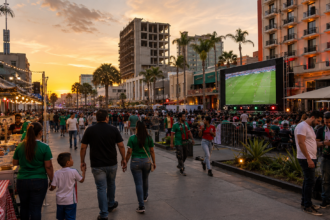
In cities like Cabo San Lucas and San José del Cabo, taco stands operate from late morning into the night. Locals often judge quality by tortilla freshness and salsa variety rather than presentation.
While prices remain accessible, the quality of ingredients rivals that of far more expensive meals.
Farm-To-Table In The Desert
Over the past decade, Baja California Sur has become synonymous with farm-to-table dining. The agricultural corridor outside San José del Cabo supports organic farms supplying herbs, heirloom vegetables, and artisanal cheeses to nearby restaurants.
Evening dinners often unfold outdoors beneath string lights, with multi-course menus that change daily based on harvest availability. These experiences blend rustic simplicity with refined execution.
This culinary movement reflects Baja’s broader tourism evolution — shifting from purely resort-driven dining toward experiential gastronomy rooted in local production.
Baja Wine And Craft Beverages
No foodie guide to Baja is complete without mentioning wine. Northern Baja’s Valle de Guadalupe receives international recognition, but Baja California Sur also features emerging boutique wineries and craft producers.
Beyond wine, the region offers:
- Small-batch mezcal
- Mexican craft beer
- Artisanal coffee
- Local citrus-based cocktails
The broader Mexican wine industry has grown steadily over the past decade, with Baja playing a significant role in its expansion, as highlighted by official tourism resources like Visit Mexico.
Pairing local wine with freshly caught seafood creates a dining experience uniquely tied to Baja’s geography.
Fine Dining With Ocean Views
Luxury dining in Baja does not abandon its roots. Instead, it elevates them.
Fine dining restaurants in Cabo and surrounding areas frequently incorporate:
- Locally sourced seafood
- Regional produce
- Contemporary Mexican techniques
- Global culinary influences
Many upscale establishments overlook dramatic coastal cliffs or marina views, blending gastronomy with setting.
| Dining Style | Experience | Typical Setting |
|---|---|---|
| Street Tacos | Casual, authentic, fast-paced | Urban corners, markets |
| Farm-To-Table | Seasonal, immersive, rustic elegance | Outdoor farms, courtyards |
| Fine Dining | Refined, curated tasting menus | Oceanfront terraces |
This diversity allows travelers to build balanced culinary itineraries without repeating the same type of meal.
Culinary Tourism As A Travel Strategy
Food is no longer a secondary consideration in travel planning. Increasingly, visitors select destinations based on dining reputation as much as scenery.
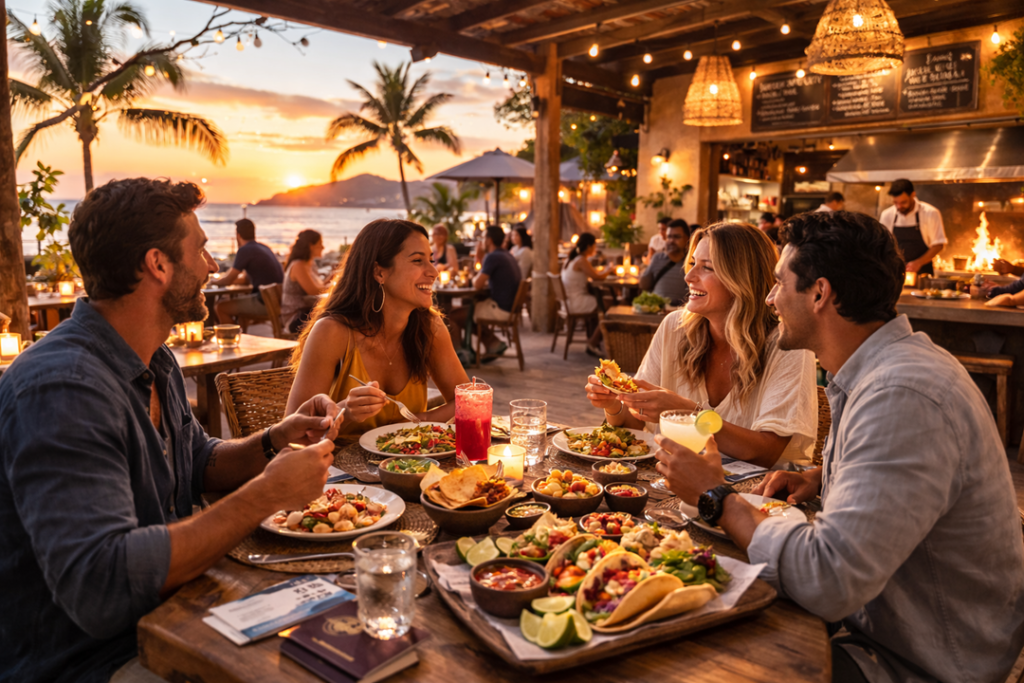
In Baja, culinary tourism intersects naturally with:
- Beach vacations
- Fishing excursions
- Cultural festivals
- Wine events
By structuring a trip around meals — reserving one signature fine dining experience while leaving space for spontaneous taco discoveries — travelers gain a more layered understanding of the region.
How To Build A Balanced Food-Focused Itinerary
A thoughtful foodie itinerary in Baja might include:
- Morning seafood at a marina café
- Afternoon fish tacos from a local stand
- Sunset cocktails featuring regional mezcal
- One curated farm-to-table dinner
Spacing high-end meals between casual experiences prevents both palate fatigue and budget strain. This approach also aligns with sustainable travel principles, supporting a range of local businesses.
Baja’s Culinary Future
Baja California Sur continues to attract chefs, winemakers, and entrepreneurs who see opportunity in its natural abundance. Yet despite growth, the culinary spirit remains grounded in simplicity and locality.
The most memorable meals here often come without elaborate décor or rigid formality. They emerge from fresh ingredients, open flames, and the meeting of land and sea.
From street tacos served on paper plates to tasting menus under desert stars, Baja’s food culture invites travelers to taste the landscape itself.