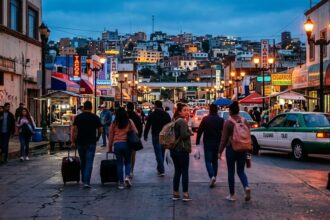
Baja Fut Fest’s 5,000-fan opening plan shows how Avenida Revolución is becoming more than a famous tourism street during the 2026 World Cup. Tijuana officials and organizers prepared the city’s central visitor corridor for a large public broadcast of Mexico’s opening match, with giant-screen viewing, free access, traffic considerations, security coordination, and a crowd expectation that signaled a new role for Zona Centro. The lesson for travelers is clear: Avenida Revolución is now a World Cup corridor where soccer, food, family outings, nightlife, hotels, transportation, and cross-border timing overlap.
Why The 5,000-Fan Opening Plan Matters
Tijuana did not need a stadium to become part of the World Cup conversation. It needed a recognizable public place, a match calendar, and enough fans to turn watching into a shared city event. Baja Fut Fest did that by placing the tournament on Avenida Revolución, one of the region’s best-known tourism streets.
Baja Daily News reported that Tijuana planned to screen Mexico’s World Cup opener against South Africa on a giant screen at Avenida Revolución and Calle Séptima on June 11, 2026, with Mayor Ismael Burgueño Ruiz saying organizers expected up to 5,000 people for the first public viewing. The report also described the event as part of Baja Fut Fest, a free program scheduled to broadcast World Cup matches through July 19 through the Avenida Revolución opening plan.
That 5,000-person expectation matters even if later on-the-ground reports described lower confirmed attendance. ZETA reported that more than 2,000 people enjoyed the Baja Fut Fest opening atmosphere, while Punto Norte described hundreds of fans gathering on Avenida Revolución for Mexico’s 2-0 win over South Africa. The important planning point is not a single perfect number. It is that Tijuana prepared Avenida Revolución as a crowd-ready public viewing area, not as an ordinary sidewalk gathering.
That shift changes how visitors should read the street during the World Cup. Avenida Revolución is no longer only a place to eat, walk, shop, drink, or take photos. On match days, it becomes a managed fan route.
How Avenida Revolución Became The Natural Stage
Avenida Revolución has always carried symbolic weight in Tijuana. It is central, walkable, recognizable to visitors, and connected to restaurants, bars, hotels, pharmacies, souvenir shops, taxis, and cross-border tourism. For a public World Cup program, that made it the obvious stage.
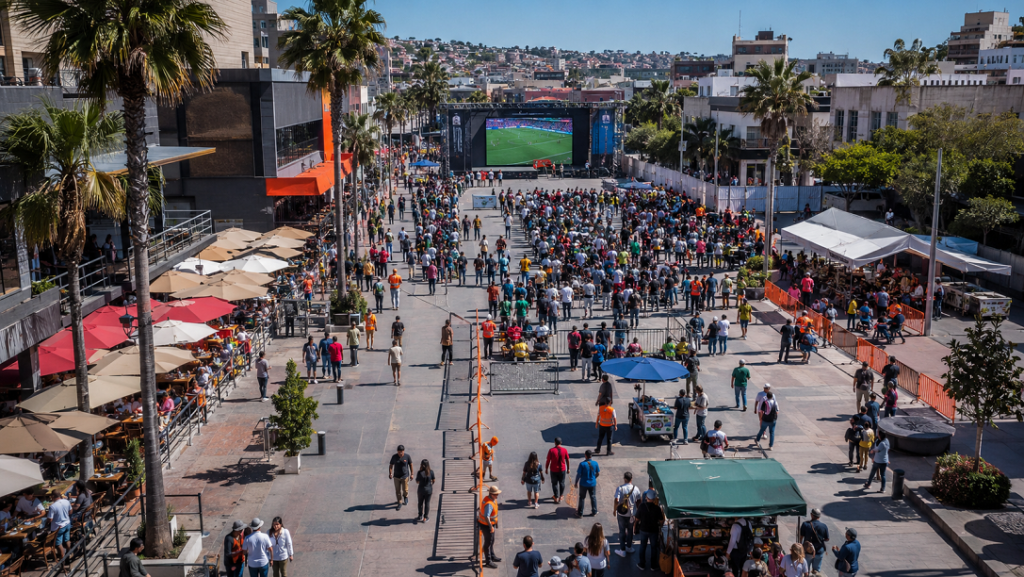
El Imparcial reported that Baja Fut Fest would transmit 52 World Cup matches live on Avenida Revolución starting June 11, including the opening match between Mexico and South Africa, through the Baja Fut Fest match plan. That scale is what turns a street event into a corridor strategy. A single match is an event. Fifty-two broadcasts across more than a month create a repeated movement pattern.
BajaTimes has already covered how Tijuana Baja Fut Fest links Avenida Revolución with restaurants, hotels, public viewing, cross-border visitors, and World Cup tourism. The 5,000-fan opening expectation adds a sharper point: the city was not only creating atmosphere. It was testing how many people the corridor could reasonably absorb.
That test matters because World Cup crowds are uneven. Mexico matches, knockout games, weekend fixtures, and evening broadcasts can pull different audiences. Avenida Revolución may feel relaxed for one match and much denser for another. The corridor has to work across all of those conditions.
What The Opening Revealed About Tijuana’s Visitor Economy
A public viewing zone does more than gather fans. It changes the economics around the street. Fans arriving for a match may buy food before kickoff, stay for drinks after the result, book a nearby hotel, use taxis or ride-shares, or cross from San Diego because the atmosphere feels more festive than a normal sports bar.
That is why Baja Fut Fest matters for Tijuana’s visitor economy. It gives people a timed reason to enter Zona Centro. It also gives businesses a predictable calendar to plan around. A restaurant can staff differently for a Mexico match. A hotel can help guests understand viewing times and return routes. A bar can adjust service around post-match crowds. Vendors can expect foot traffic tied to specific kickoff windows.
The opening also showed that family-oriented public viewing can sit alongside Tijuana’s established nightlife identity. A morning or midday match draws a different crowd than a late-night bar scene. Families, older fans, tourists, and local workers can all use the same corridor at different times. That flexibility is valuable for a city trying to broaden how visitors experience Avenida Revolución.
For BajaTimes readers, the practical point is that the World Cup changes the reason to visit. A traveler may not be coming only for tacos, nightlife, or a quick border trip. They may be coming for a match, then building the rest of the day around Tijuana’s food and street life.
Why Free Public Viewing Changes The Travel Equation
World Cup tickets are expensive, stadiums are far away, and not every fan wants a ticketed match experience. Free public viewing gives people a different way to participate. Baja Fut Fest makes that participation visible in a place travelers already understand.
That matters for Southern California visitors. A San Diego fan can cross into Tijuana for a public watch party, eat nearby, and return the same day if the border plan is realistic. A Los Angeles traveler might combine a Tijuana hotel stay with a weekend match. A local family can attend without turning the World Cup into a costly stadium trip.
Free access also changes the audience mix. Public fan zones attract casual fans, serious supporters, families, tourists, and people who simply want to feel the city’s energy. That diversity is good for atmosphere, but it also requires clear organization. A crowd with children, tourists, food vendors, and nightlife visitors needs visible walking routes, restroom access, security presence, and post-match dispersal planning.
The opening expectation of up to 5,000 people shows why free public viewing cannot be treated casually. If the event is free and centrally located, the city must assume turnout can rise quickly when the match is meaningful.
How Traffic And Security Shape The Corridor
A World Cup corridor is not only a screen and a crowd. It is a public-space system. Streets, sidewalks, parking, taxis, ride-shares, police, civil protection, restaurants, hotels, and emergency access all become part of the event.
Baja Daily News reported that local authorities set up special traffic and security operations at access points to Avenida Revolución and arranged alternate vehicle routes during the broader fan-fest period through its report on the Baja Fut Fest opener. That kind of coordination matters because Avenida Revolución cannot function as both a dense pedestrian celebration zone and an ordinary vehicle corridor at the same time.
Other local reporting emphasized preventive coordination. Regional coverage noted that Protección Civil would supervise crowd-control measures and that the event used giant screens, public access, and infrastructure intended to keep the gatherings orderly. That public-safety layer is not a side detail. It is what allows tourism value to grow without letting the corridor feel uncontrolled.
For visitors, this means match-day movement may differ from a regular trip to Zona Centro. Streets may be slower. Ride-share pickup points may shift. Pedestrians may be directed through certain areas. Businesses may fill earlier. The best trip is one that treats Avenida Revolución as an event district, not a normal street.
Why Match Stakes Will Decide The Biggest Crowd Days
The opening match gave Tijuana a useful test, but the largest crowd pressure may not always come from the first day. World Cup attention changes by team, stage, and timing. A Mexico match can draw strong local emotion. A knockout match can bring higher stakes. A semifinal or final can pull neutral fans who simply want to be part of the atmosphere.
That is why Avenida Revolución’s World Cup corridor role should be managed match by match. A weekday morning broadcast is different from a weekend evening match. A group-stage fixture is different from a final. A family-heavy public viewing is different from a late-night celebration.
The tournament calendar makes planning necessary. Baja Fut Fest is not one event; it is a repeated series of crowd moments. Each match asks the same questions in a slightly different way: how many people might come, how will they arrive, where will they eat, how will they leave, and what happens after the final whistle?
For Tijuana, the opening was a proof of concept. The rest of the tournament tests whether the corridor can stay useful, safe, and attractive across different crowd patterns.
What Restaurants And Hotels Should Learn
Restaurants, bars, cafes, hotels, and tour operators around Avenida Revolución should treat Baja Fut Fest as a visitor calendar. The event gives them predictable moments to communicate better with guests.

A hotel can tell visitors which matches are likely to draw crowds, where the screen is located, and whether walking is better than driving. A restaurant can adjust reservation timing around kickoff and post-match dining. A bar can prepare for fans who arrive after public viewing. Tour operators can avoid promising tight schedules on high-demand match days.
Businesses should also be honest about crowd limitations. If a restaurant is close to the screen, service may slow during peak match windows. If a hotel guest wants to cross back to San Diego after a major match, the business should suggest planning the return route before kickoff. Good information becomes part of the hospitality experience.
That is especially important for first-time visitors. Someone who knows Tijuana well may understand Avenida Revolución’s layout. A World Cup tourist may not. Clear local guidance can turn a confusing street event into a confident visitor experience.
What Cross-Border Visitors Should Check Before Going
| Planning Question | Why It Matters | Smart Move |
|---|---|---|
| Which Match Is Being Shown? | Mexico and knockout matches can draw stronger crowds | Check the Baja Fut Fest schedule before traveling |
| Where Is The Screen Located? | Avenida Revolución is long and crowds may cluster near the main setup | Confirm the viewing area and nearby streets |
| How Will The Group Arrive? | Traffic patterns can change around event access points | Consider walking, taxis, or ride-shares outside the densest area |
| Is The Return Cross-Border? | Late match exits can affect border timing | Choose the crossing plan before kickoff |
| Are Families Or Older Guests Coming? | Crowds, heat, and long waits affect comfort | Build extra time and choose a calmer arrival window |
This planning is not meant to discourage visitors. It is meant to make the experience better. Avenida Revolución can be one of the most exciting places in Baja to watch the World Cup, but it rewards people who treat the day like an event.
Visitors should also keep phones charged, stay with their group, carry only what they need, and avoid assuming they can leave quickly after the most emotional matches. The corridor works best when people pace the day rather than rushing in and out.
How This Helps Tijuana Compete With Other Watch-Party Cities
Southern California has its own public viewing areas, sports bars, breweries, and cultural districts. Tijuana’s advantage is different. It offers a border-city World Cup experience with food, street energy, Mexican national-team emotion, and a tourism corridor that already knows how to serve visitors.
Baja Fut Fest gives Tijuana a way to compete for fans who want more atmosphere than a living room but less cost than a stadium trip. It also lets the city present Avenida Revolución as a family-friendly, event-ready corridor rather than only a nightlife destination.
That shift matters for long-term tourism branding. A visitor who has a good World Cup experience on Avenida Revolución may come back for restaurants, craft beer, medical tourism, shopping, concerts, or a weekend stay. A public soccer event can become an entry point into the city.
But the opposite is also true. If the corridor feels confusing, overcrowded, or hard to exit, the tourism value weakens. That is why the 5,000-fan opening expectation is so important. It forces Tijuana to think like an event city.
Why Avenida Revolución’s World Cup Role May Outlast The Tournament
The World Cup will end, but the lesson from Baja Fut Fest could last longer. Avenida Revolución is showing that it can function as a large public-event corridor when the programming is strong enough and the city plans around crowd movement.
That has implications beyond soccer. The same model could support future cultural events, food festivals, concerts, seasonal celebrations, and cross-border tourism campaigns. The key is to combine public access with realistic operations: crowd flow, traffic control, emergency access, business coordination, and clear visitor communication.
For BajaTimes readers, the travel takeaway is direct. Baja Fut Fest’s opening did more than show a match. It showed how Avenida Revolución can become a structured World Cup corridor where visitors, locals, families, restaurants, hotels, and border travelers meet around one shared schedule.
Tijuana’s World Cup opportunity is not only about soccer. It is about proving that the city can convert global attention into organized street-level tourism. If Avenida Revolución keeps that balance through the tournament, Baja Fut Fest may become one of the clearest examples of how Baja can turn public viewing into a travel experience.