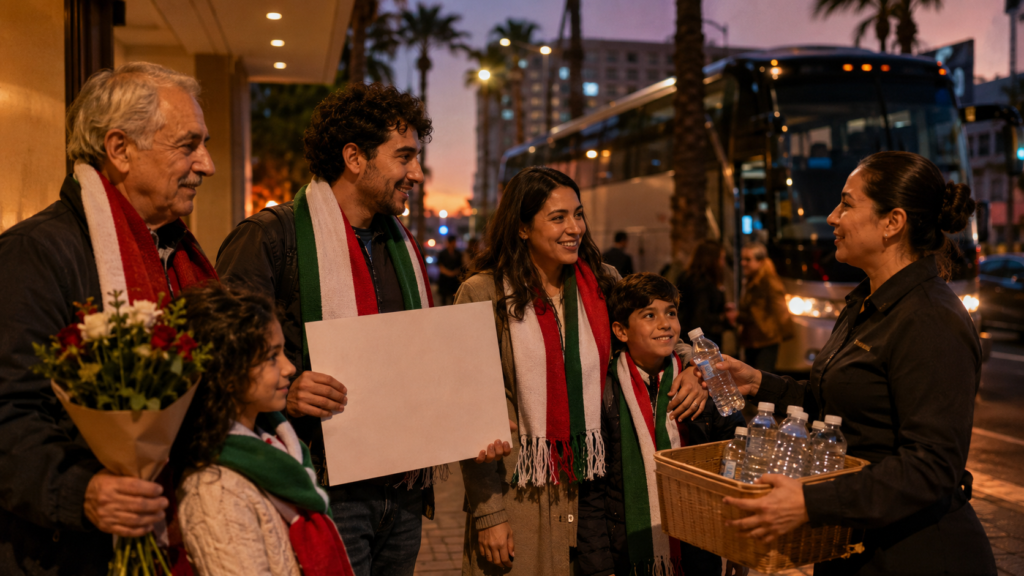
Iran’s farewell from Tijuana turned a World Cup training base into one of Baja’s clearest border hospitality stories of the 2026 tournament. What began as a logistical solution for a national team facing travel restrictions became a human scene outside the Marriott in Tijuana, where supporters gathered with flags, gifts, chants, and goodbye messages after Iran’s elimination. For Tijuana, the moment showed how a border city can become more than a temporary base camp. It can become a place where international soccer, hotel security, diaspora travel, local warmth, and cross-border identity meet in public view.
Why Iran’s Tijuana Base Became More Than Logistics
Iran’s World Cup stay in Tijuana was shaped by unusual circumstances. The team was based in Mexico while playing matches tied to the broader United States-hosted portion of the tournament, with travel limitations and political tension affecting how the squad moved between preparation, hotel security, and match sites. Associated Press reporting described Iran’s team hotel as the Marriott in Tijuana, less than 150 miles from the Los Angeles World Cup stadium, with the entrance barricaded and guarded by police and Mexican National Guard members through this Iran team hotel report.
That security-heavy setting could have made the story feel closed off. Instead, it produced one of the tournament’s most revealing border scenes. Fans still found ways to gather, cheer, wave flags, and show support outside the hotel. Some had traveled from U.S. cities such as Los Angeles, San Jose, and Miami. Others were part of the broader local atmosphere that formed around the team’s stay in Tijuana.
For BajaTimes readers, the important point is not only that Iran trained or stayed in the city. It is that Tijuana became part of Iran’s World Cup memory. The hotel was not just a private base. It became a public threshold where supporters, security, players, journalists, and local hospitality crossed paths.
That is why the farewell matters. It shows how World Cup logistics can turn a city into a temporary emotional home.
How The Marriott Became A Border Soccer Landmark
A team hotel usually operates behind the scenes. It houses players, staff, security, transport teams, media routines, meals, and recovery time. During Iran’s stay, the Marriott in Tijuana became something more visible. It became the place where supporters gathered to connect with a team that could not move through the tournament like most other squads.
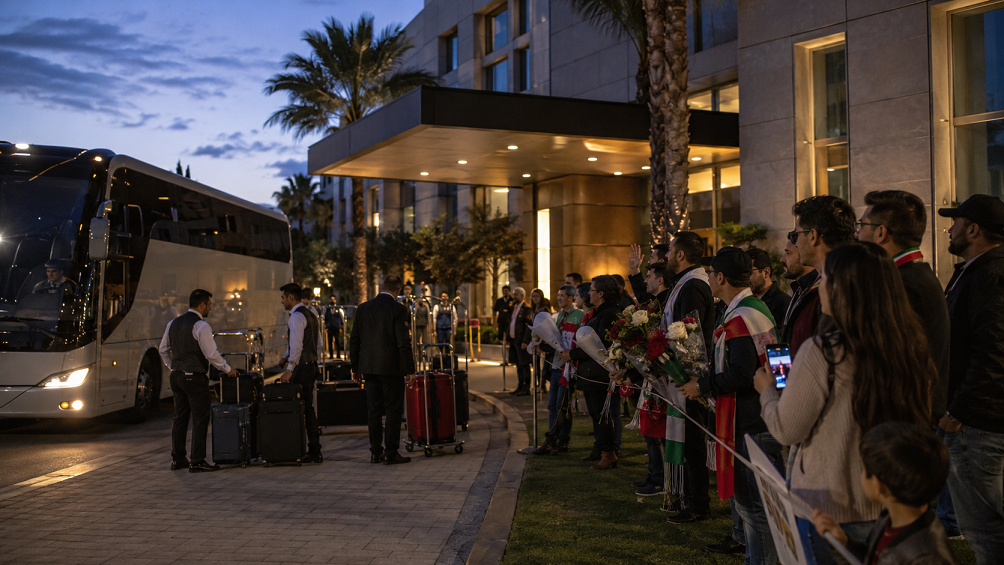
Baja Daily News reported that a crowd gathered outside the Marriott Hotel in Tijuana as Iran’s national team boarded a bus for the airport, waving goodbye before the squad traveled to Los Angeles for its second World Cup group-stage match. The report framed the moment as part of Tijuana’s first experience as an official World Cup base camp through the Iran squad sendoff at Marriott.
That detail matters because it changes how travelers see the city. Tijuana was not only a place people passed through on the way to a match. It was where a national team slept, trained, recovered, met fans, and absorbed local attention. The Marriott became a temporary landmark in the city’s World Cup geography.
For hotels, this is a major hospitality lesson. Hosting a team is not only about rooms and security. It is about managing attention, protecting privacy, supporting guests, coordinating with authorities, and understanding that the building may become part of a public sports story.
Why The Farewell Resonated After Iran’s Elimination
Iran’s tournament ended without the kind of breakthrough its supporters wanted. FIFA’s match report shows Iran opened Group G with a 2-2 draw against New Zealand, with Ramin Rezaeian and Mohammad Mohebi scoring for Iran while Elijah Just scored twice for New Zealand through the official Iran-New Zealand match report. Iran later drew 0-0 with Belgium, with FIFA naming goalkeeper Alireza Beiranvand as Player of the Match through the Belgium-Iran match report.
Those results kept Iran competitive, but the team still exited at the group stage after the final standings and other results went against them. Reuters later reported that Iran thanked the people of Tijuana after elimination, saying Mexico had become “our second home and our second team,” in a message carried by international outlets through this Iran thank Tijuana report.
That line gives the farewell its emotional force. It turned Tijuana from a neutral base into a place of reciprocity. Fans supported Iran. Iran publicly acknowledged Tijuana. Mexico became part of the team’s emotional language even after elimination.
For a border city often reduced to headlines about crossings, security, or nightlife, that kind of international gratitude is valuable. It shows Tijuana as a host, not just a transit point.
How Mexican Hospitality Reframed A Complicated Stay
Iran’s stay came with difficult politics, criticism of travel restrictions, and unusual preparation challenges. The Guardian reported that Iran planned to lodge a complaint with FIFA over what it described as restrictions affecting its World Cup preparation, including limits on movement and match preparation time tied to U.S. entry conditions through this Iran World Cup restrictions report.
That context cannot be ignored. Iran’s Tijuana base was not a simple sports tourism choice. It was shaped by diplomatic tension, security needs, and tournament logistics. But that is exactly why the hospitality story stands out. In a difficult setup, ordinary gestures carried more weight: fans waiting outside a hotel, locals welcoming visitors, players acknowledging support, and the team using Mexico as a symbolic second home.
Al Jazeera later described Iran’s exit as “heartbroken” but framed Mexican hospitality as the silver lining of the team’s three weeks in Tijuana, noting the reciprocal relationship that developed between the players and Mexicans through this Iran Mexican hospitality story.
That is the core Baja angle. Tijuana did not control the politics around Iran’s World Cup. What it could control was the local experience. The city’s role became meaningful because people made a difficult base feel human.
Why This Fits Tijuana’s Bigger World Cup Moment
Iran’s farewell did not happen in isolation. Tijuana has been building a broader World Cup identity during the tournament through public viewing, food, hotels, and cross-border fan travel. Baja Fut Fest placed Avenida Revolución at the center of that story, giving residents, tourists, families, and cross-border visitors a public place to watch matches and use Zona Centro as a tournament corridor.
BajaTimes has already covered how Tijuana Baja Fut Fest connects Avenida Revolución with public viewing, restaurants, hotels, and World Cup tourism. Iran’s stay adds a different layer. It shows Tijuana not only as a place where fans watch matches, but also as a place where a national team can be received, followed, and remembered.
That matters because World Cup tourism is not only about stadium cities. Base camps, hotel zones, airports, training sites, and public gathering areas also shape the tournament experience. Tijuana’s role sits exactly there. It is close to Southern California, tied to cross-border movement, and capable of hosting international attention even without staging a match.
Iran’s farewell made that role visible. It turned Tijuana into a human-interest chapter of the World Cup.
What Hotels And Tourism Operators Can Learn
The Marriott scene gives Tijuana’s hospitality sector a useful case study. Hosting a national team, major delegation, or international fan group requires more than standard service. Hotels need security coordination, controlled access, transportation planning, media awareness, guest privacy, and staff who can manage public attention without making visitors feel unwelcome.
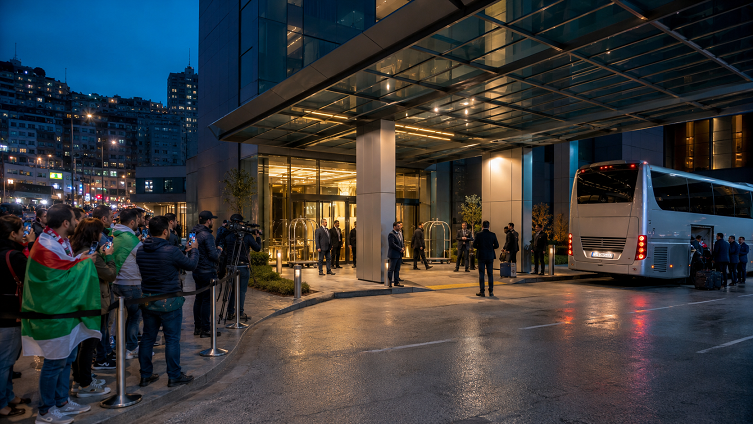
Tourism operators should also notice the diaspora dimension. Iranian supporters did not only come from the local area. AP reporting noted fans connected to U.S. cities, which shows how Tijuana can become a gathering point for communities spread across Southern California and the wider United States. That creates demand for hotels, restaurants, transportation, translation help, and clear visitor guidance.
For Baja businesses, the takeaway is practical. International sports tourism can arrive through unexpected channels. A team base can draw fans. A hotel can become a meeting point. A restaurant can serve supporters who are following a team from another country. A city can become meaningful to visitors because of one emotional week.
Good hospitality turns that temporary attention into a lasting impression.
Why Security And Warmth Had To Coexist
Iran’s Tijuana stay also showed that hospitality during a mega-event must coexist with security. The AP report described barricades, police, and National Guard presence around the hotel, with access limited to people with reservations or special permission. That kind of scene can feel intimidating, but for a high-profile national team under unusual political circumstances, it was part of the operating environment.
The challenge for Tijuana was to balance control with welcome. Fans needed space to show support without compromising team security. The hotel needed to function for regular guests and staff. Authorities needed to protect the site without turning the atmosphere into confrontation.
That balance is important for future World Cup-related hosting in Baja. Public viewing zones, team hotels, fan gatherings, and international delegations all require different safety approaches. But the principle is the same: security should support the visitor experience, not erase it.
Iran’s farewell suggests that balance can work. The site was controlled, but the emotional connection still came through.
What This Means For Cross-Border Fans
Iran’s Tijuana story also speaks to cross-border fans who may use Baja as a World Cup base. Many supporters in Southern California are tied to national teams through family, migration, language, or diaspora identity. Tijuana gives those communities another place to gather, especially when tickets are difficult, stadiums are distant, or the team’s official base sits south of the border.
That makes the city relevant beyond Mexico matches. Haitian fans gathered in Tijuana during Haiti’s World Cup return. Iranian fans showed support outside the team hotel. Baja Fut Fest attracted public-viewing crowds on Avenida Revolución. Together, these moments show that Tijuana’s World Cup identity is international, not only national.
For travelers, the planning lesson is clear. A team base, fan gathering, or public watch party can create real movement around hotels and streets. Fans should check access rules, transportation options, border timing, and security conditions before arriving. A meaningful gathering may still require patience and planning.
The best fan experience respects both emotion and logistics.
What Tijuana Should Preserve From This Moment
Tijuana’s opportunity is to remember what made the Iran farewell work. It was not a luxury campaign or a scripted tourism slogan. It was human, specific, and rooted in place. The Marriott, the fans, the flags, the security line, the team bus, the goodbye, and Iran’s message of gratitude all gave the city a World Cup scene that felt real.
That kind of story is valuable because it helps reshape how outsiders understand Tijuana. The city is often seen through narrow frames: border crossing, nightlife, medical tourism, or security concerns. Iran’s farewell added another frame: international hospitality under pressure.
Future tourism campaigns should be careful not to overpackage that. The strength of the moment was its authenticity. Tijuana became meaningful because people showed up.
How A Training Base Became A Border Hospitality Story
The phrase “training base” sounds temporary. It suggests logistics, workouts, meals, recovery rooms, and bus schedules. Iran’s Tijuana stay became more than that because the city entered the emotional life of the team’s tournament.
The team did not advance, but it left with gratitude for Tijuana. Fans did not get a trophy moment, but they created a farewell. The Marriott was not a stadium, but it became a place where World Cup feeling gathered. For Baja, that is the lesson.
Tijuana’s role in the 2026 World Cup is not only measured by match attendance or public-screen crowds. It is also measured by whether visitors, teams, and communities feel hosted. Iran’s farewell showed that the city can offer that kind of hospitality, even when the wider circumstances are complicated.
That makes the story bigger than one team’s elimination. It makes it part of Tijuana’s border identity: close to the United States, rooted in Mexico, open to international communities, and capable of turning a difficult travel arrangement into a memory of welcome.