Baja California Sur’s 2026 sport fishing calendar gives travelers, captains, hotels, coastal restaurants, and local communities a full-year tourism map built around the water. The record 126-tournament schedule places sport fishing across Los Cabos, La Paz, Comondú, Loreto, and Mulegé, turning what used to look like a seasonal activity into a statewide visitor circuit. For anglers, the calendar is a planning tool. For Baja tourism, it is a signal that fishing, coastal food culture, family events, and marine stewardship now sit inside the same travel economy.
Why The 2026 Calendar Changes Baja Fishing Travel
The 2026 calendar matters because it gives sport fishing a statewide structure instead of leaving visitors to chase scattered event announcements. FONMAR BCS presented the official 2026 sport fishing tournament calendar on January 19, 2026, with events scheduled across the five municipalities of Baja California Sur as part of the state’s “Fishing in the Five” effort. The presentation identified the calendar as a tourism and economic-development tool tied to offshore, shore, kayak, and cause-based competitions, according to Baja California Sur tournament calendar coverage.
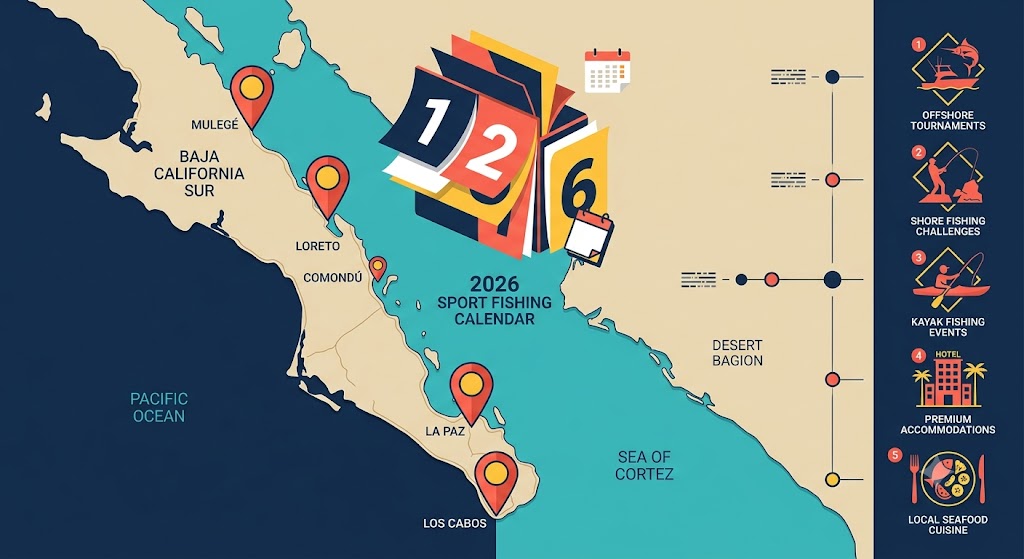
That scale changes how travelers should read Baja’s fishing season. A visitor no longer has to view sport fishing only through the lens of Cabo’s big-money offshore tournaments. The 2026 calendar pushes attention into smaller ports, family-oriented shore events, kayak formats, and community-backed competitions that spread visitor demand into less obvious destinations.
The record number also creates a practical challenge. More tournaments mean more dates, more launch sites, more hotel demand, more marina activity, and more event-specific rules. Travelers should not assume that every tournament has the same registration process, boat requirements, species focus, prize format, or public viewing setup. The useful question is not only “Where is the tournament?” It is “Which event fits the visitor’s skill level, budget, travel route, permit needs, and conservation expectations?”
How FONMAR Became The Calendar’s Central Organizer
FONMAR, the Fondo para la Protección de los Recursos Marinos, sits at the center of Baja California Sur’s sport-fishing calendar. Its public-facing role includes tournament support, marine-resource protection, permit distribution coordination, and promotion of fishing as a tourism activity. FONMAR states that it works with tournament organization across the state and distributes sport-fishing permits in Baja California Sur through coordination with CONAPESCA and the federal government, according to FONMAR sport fishing information.
That structure helps explain why the 2026 calendar is more than a list of dates. The calendar connects sport fishing to state policy, tourism promotion, coastal communities, marine-resource use, and local event organizers. It also gives travelers a single institutional starting point before they compare private charters, fishing clubs, municipal events, or large destination tournaments.
For visitors, this matters most around permits and event requirements. CONAPESCA describes sport-recreational fishing as fishing practiced for leisure or recreation using authorized gear under Mexico’s fisheries law, and it says permits are issued to Mexican or foreign individuals and are personal, non-extendable, and non-transferable through the official sport fishing permit process.
That permit detail should sit near the top of any travel plan. A visitor booking a tournament weekend in Los Cabos, Loreto, La Paz, Comondú, or Mulegé should confirm whether the event organizer, charter operator, or marina expects participants to handle permits before arrival. A calendar gives the date, but compliance details decide whether a visitor is prepared.
Why The Five-Municipality Spread Matters
The biggest tourism value in the 126-tournament calendar is the five-municipality spread. Los Cabos remains the most internationally recognizable sport-fishing destination in the state, but the 2026 schedule gives equal planning relevance to La Paz, Comondú, Loreto, and Mulegé. That matters for travelers who want a fishing trip connected to road routes, seafood towns, whale-season planning, family travel, or quieter coastal stays.
Mulegé is one example. The Government of Baja California Sur reported that FONMAR presented the 2026 tournament calendar in Mulegé with 30 requests for competitions across multiple formats. The same release said the calendar included the incorporation of the Copa Pacífico Norte, linking Bahía Tortugas, La Bocana, Punta Abreojos, and Bahía Asunción through a cooperative-backed regional effort tied to tourism and community organization. The official release is available through the Mulegé sport fishing calendar.
Comondú shows a different type of growth. The state government reported that Comondú had 26 tournament requests for 2026, with 7 offshore events and 19 shore events, plus an investment projection close to one million pesos. That followed reported growth from 10 tournaments in 2022 to 23 in 2025, making Comondú one of the state’s most active sport-fishing municipalities by public calendar momentum, according to the Comondú fishing calendar.
Those municipal details make the calendar more useful for BajaTimes readers. The fishing year is not just Cabo. A visitor can build a trip around Loreto’s marine setting, La Paz’s shoreline and island access, Comondú’s growing shore-fishing calendar, or Mulegé’s Pacific North route. The right destination depends on date, format, road access, lodging, local rules, and the visitor’s comfort with remote coastal travel.
How Tournaments Can Support Coastal Food And Community Travel
Sport fishing affects more than boats and weigh stations. A tournament weekend can fill hotels, push breakfast traffic into cafes, send families to beaches, support fuel docks, and create business for captains, tackle shops, mechanics, restaurants, and transport services. In Baja California Sur, that impact blends naturally with seafood culture and coastal travel.
For BajaTimes readers, that connection builds on the state’s broader seafood identity. The same visitor who follows the tournament calendar may use a travel day to explore local seafood, shorefront dining, fish markets, or culinary events. That planning thread connects naturally with BajaTimes’ Baja seafood guide, especially for readers who see sport fishing as one part of a wider coastal itinerary.
The local-business effect is strongest when events are clear and organized. Travelers need dates, registration details, departure points, rules, public-viewing expectations, lodging options, and transport plans. Municipalities and organizers benefit when they give visitors enough information to plan without relying on rumors or last-minute social posts.
Cause-based and community-backed events add another layer. FONMAR-related reporting on the 2026 calendar referenced tournaments with social causes, reflecting a model where fishing events can support local needs and community identity. That does not mean every tournament has the same social purpose. It means readers should check the event organizer, beneficiary, prize structure, and participation rules before treating a tournament as charitable or community-focused.
What Anglers Should Verify Before Booking
A record calendar can make Baja California Sur look simple on paper, but sport-fishing travel still depends on event-level details. Anglers should confirm the tournament name, municipality, registration deadline, launch point, eligible species, format, prize rules, permit expectations, captain or boat requirements, and weather policy before booking flights or lodging.

The most practical first step is matching the format to the traveler. Offshore tournaments can require a higher budget, boat coordination, and more time on the water. Shore tournaments may be more accessible for families or visitors who want a lower-barrier event. Kayak tournaments bring a different safety and equipment profile. Inland-water or bass events require location-specific planning that differs from the Sea of Cortez or Pacific coast.
Travelers should also verify whether their chosen date overlaps with major holidays, cruise traffic, hotel compression, road construction, or other regional events. A tournament that looks small statewide can still affect a town’s lodging and marina capacity on that weekend. Coastal communities often have limited room inventory compared with larger resort zones.
| Planning Factor | Why It Matters | What To Check Before Arrival |
|---|---|---|
| Tournament Format | Offshore, shore, kayak, and inland events require different preparation | Official event rules and organizer contact |
| Permit Status | Mexico treats sport-fishing permits as individual documents | CONAPESCA or FONMAR permit process |
| Municipality | Los Cabos, La Paz, Comondú, Loreto, and Mulegé offer different travel logistics | Road route, lodging, launch point, and local access |
| Weather And Sea Conditions | Conditions can change the safety and timing of a fishing day | Captain, marina, port, and local weather updates |
| Community Context | Some events support local causes or regional development | Organizer, beneficiary, and registration details |
The calendar gives the opportunity. The individual tournament rules decide the trip.
Why Marine Stewardship Has To Stay In The Planning Conversation
A larger tournament calendar can support coastal economies, but it also raises the importance of marine-resource management. Baja California Sur’s sport-fishing identity depends on healthy waters, credible rules, responsible operators, and visitor trust. That makes permits, species rules, catch handling, and local conservation expectations part of the tourism product.

FONMAR’s own institutional language connects sport fishing with promotion, inspection, vigilance, and marine-resource protection. CONAPESCA’s permit framework gives visitors a federal compliance path. Together, those sources show why travelers should avoid treating sport fishing as a casual add-on with no paperwork or rules.
This is especially relevant for international visitors. A traveler from California, Arizona, Texas, or Canada may be familiar with license requirements at home, but Baja California Sur has its own event procedures and Mexican federal permit rules. Charter operators often help visitors understand the process, but the traveler still has responsibility to confirm what is required for the date, vessel, and event.
Sustainability should not be used as a vague marketing label. A stronger approach is practical: confirm legal permits, follow tournament rules, respect species restrictions, listen to captains and organizers, avoid informal fish sales tied to recreational catch, and choose operators that communicate clearly. Those actions help keep Baja’s sport-fishing calendar credible for repeat travel.
What This Record Calendar Means For Baja Travelers
The 126-tournament calendar gives Baja California Sur a stronger year-round fishing identity. It places sport fishing in Los Cabos, La Paz, Comondú, Loreto, and Mulegé at the center of a wider travel economy that includes hotels, restaurants, marinas, road routes, family events, and community promotion.
For travelers, the calendar is useful only when it leads to better planning. The best trip starts with the tournament date, then moves through permits, lodging, route timing, weather, boat access, registration rules, and local food or rest-day plans. A visitor who treats the calendar as a starting point will have a much better experience than one who sees “126 tournaments” and assumes every weekend works the same way.
For coastal communities, the calendar’s value is not just volume. It is distribution. More events across more municipalities can send tourism benefits beyond the most famous resort areas, giving smaller towns a better chance to connect fishing, food, lodging, and local identity.
Baja California Sur’s 2026 fishing year is record-sized, but its real strength will depend on execution. Clear rules, accurate dates, responsible permits, prepared visitors, and well-supported local organizers will decide whether the calendar becomes a tourism win that lasts beyond one season.