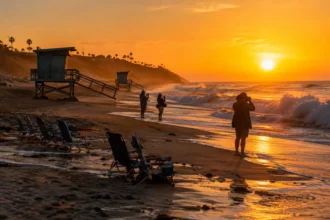
As of November 4, 2026, San Onofre Erosion has changed how visitors should plan a Surf Beach trip. The beach is not closed to all users, but vehicle access, parking, restroom availability, and road conditions are constrained after early October 2026 storm damage. For surfers, cyclists, walkers, and families, the practical question is no longer only whether the swell looks good. It is whether the access road, upper lot, restroom situation, and lower parking closure fit the trip being planned.
California State Parks said on October 30, 2026, that the lower dirt parking lots at San Onofre Surf Beach will remain closed through fall and winter because of ongoing coastal erosion risk. The same update said the small upper paved lot is open with limited space and possibly long wait times, while pedestrian, bicycle, and surf access are still allowed where conditions permit through the official State Parks access update.
That access pattern favors visitors who can travel light, arrive with flexibility, or use non-vehicle access. It is less convenient for families carrying beach gear, adaptive recreation users who need close vehicle access, or surfers timing a narrow tide and wind window. Travelers comparing erosion-related access disruptions elsewhere on the Southern California coast may also want to read our related coverage of Crystal Cove and San Onofre access.
What San Onofre Erosion Changed For Visitors
San Onofre Erosion And Parking Limits
The most immediate visitor effect is parking. The lower dirt lots, which have long been part of the Surf Beach experience, are not available as of the latest State Parks update. Vehicle access via the road to Surf Beach is significantly limited, and the upper paved lot has limited capacity. State Parks specifically warned of possibly long waits, which matters because San Onofre is a surf destination where timing often depends on tide, wind, and crowd conditions.
San Onofre Erosion has turned a familiar beach-access routine into a capacity problem. A visitor who once expected to drive down, park near the break, and unload boards or family gear should now plan for a less certain arrival. The research provided here does not establish any temporary fee change, so travelers should verify fees, hours, and entry rules directly with State Parks before leaving home rather than assuming prior costs still apply.
Restrooms, Utilities, And Practical Comfort
Restroom access is also reduced. State Parks reported that Restroom 1, in the northern portion of the lower dirt parking area, has reopened and is the only operational restroom facility at Surf Beach after damage to other facilities. The research notes also state that Restroom #2 was removed in early October 2026 during emergency mitigation because erosion threatened the bluff, and that a water main serving restrooms was broken and exposed by surf.
That detail changes the visitor experience in concrete ways. A short surf check may still be manageable for many people, but a longer beach day becomes harder when restroom capacity is limited. Families, older visitors, and anyone planning several hours at the beach should treat restroom availability as a key trip-planning issue, not as a minor detail.
Why The Damage Was More Than A Parking Problem
Roadway And Shoreline Impacts
The damage described in the research was not limited to sand loss. High surf and elevated tides linked to Tropical Storm Rachel and Kelvin wave activity beginning in early October 2026 damaged the shoreline, roadway, parking areas, utilities, and exposed water mains. On October 7, 2026, a large swell associated with Tropical Storm Rachel caused substantial shoreline and infrastructure damage and led to immediate closure of beach parking and the access road at Surf Beach.
Longer-running erosion issues had already reduced the margin for error. A Coastal Conservancy staff recommendation stated that access road erosion has narrowed the roadway in several places, especially south of the existing revetment installed in 2017. It also reported that in fall and winter 2023-24, the road washed out completely in one section because of storm drain failure, stopping vehicle access for two months through the Coastal Conservancy staff recommendation.
Parking Loss Shows A Longer Trend
The same planning record shows why the current closure should not be read as a one-off inconvenience. As of December 2023, about 185 of the original 388 parking spaces at Surf Beach had been lost to erosion. After winter storms in 2024, only around 135 spaces remained. Those figures help explain why a closure of the lower dirt lots can affect access so sharply: the site had already lost a large share of its original parking supply before the October 2026 damage.
For outdoor travelers, this is the difference between a temporary closure and a site with shrinking capacity. Surf Beach remains meaningful for its surf culture, coastal setting, and long-standing recreation use, but access is now more fragile. Visitors should avoid building a plan around assumptions from earlier seasons.
Repairs, Resilience Work, And What Remains Uncertain
Emergency Work Has Not Restored Normal Access
Some emergency work has occurred, but normal access has not returned. Restroom 1 has reopened, while Restroom #2 was removed after erosion threatened the bluff. The lower dirt lots remain closed through fall and winter under the latest State Parks notice. That means repairs and mitigation have addressed specific problems, but they have not restored the former parking and facility pattern at Surf Beach.
Visitors should read that cautiously. A reopened restroom does not mean the full beach operation is back. An open upper lot does not mean there will be a space available. Continued pedestrian, bicycle, and surf access where conditions allow does not mean every part of the beach or road is suitable for every visitor on every day.
The Shoreline Resilience Project Is Longer Range
A longer-range San Onofre Shoreline Resilience Project is underway. According to the research, nature-based design alternatives are being developed through community assemblies and engineering studies, in partnership among California State Parks, Surfrider Foundation, USMC Base Camp Pendleton, and the Juaneño Band of Mission Indians. The planning goals include restoring shoreline slope, improving wave run-up buffers, and better protecting infrastructure.
That project matters, but travelers should not treat it as an immediate fix for the fall and winter 2026 closure. Planning, design, permitting, and construction timelines can change, and the research notes do not provide a completed repair date. For now, the practical travel advice is to treat Surf Beach as accessible with limits, not as a fully restored destination.
How To Plan A San Onofre Beach Day Now

Questions To Answer Before Leaving
Before committing to a Surf Beach outing, visitors should confirm the latest State Parks notice, check whether the lower lots remain closed, and decide whether the upper paved lot capacity is realistic for their group. They should also plan for limited restroom service and avoid assuming that vehicle access will match earlier visits.
- Check the official State Parks access notice on the day of travel.
- Plan for limited upper-lot parking and possible waits.
- Confirm restroom availability, especially for longer visits.
- Consider whether walking, biking, or carrying surf gear is practical.
- Verify fees and hours directly with State Parks before departure.
For broader insights on coastal experiences, within our network, take a look at The Silver Liners for outdoor exploration with a focus on access and preparation.
San Onofre Erosion Trip Planning
The safest planning approach is modest and specific: go only if the current access limits fit your needs, and keep a backup beach plan if parking or road conditions do not work on arrival. Surfers may be able to adapt more easily than families carrying shade, coolers, and children’s gear, but even experienced visitors should factor in the reduced facilities and uncertain road capacity.
San Onofre Erosion is now part of the trip-planning reality at Surf Beach, not just a background coastal issue. The beach still allows pedestrian, bicycle, and surf access where conditions permit, yet the lower dirt parking lots are closed through fall and winter, restroom service is reduced, and longer-term resilience work is still in development. For travelers, the best experience will come from checking the latest official update, arriving with realistic expectations, and treating access as conditional rather than routine.