Baja California Sur has become one of Mexico’s most attractive coastal destinations, drawing millions of travelers each year to places like Los Cabos, La Paz, and Todos Santos. As tourism continues to grow, local authorities have introduced policies designed to protect the region’s natural resources while maintaining a high-quality travel experience.
One of the most notable changes in recent years is the implementation of an environmental visitor fee, often referred to as the Baja California Sur tourist tax. While the cost is relatively small, understanding how the tax works helps travelers plan ahead and avoid confusion upon arrival.
Why Baja Introduced A Tourist Tax
Tourism has expanded rapidly across Baja California Sur. The increase in visitors has boosted the local economy but also created pressure on beaches, marine ecosystems, roads, and public infrastructure.
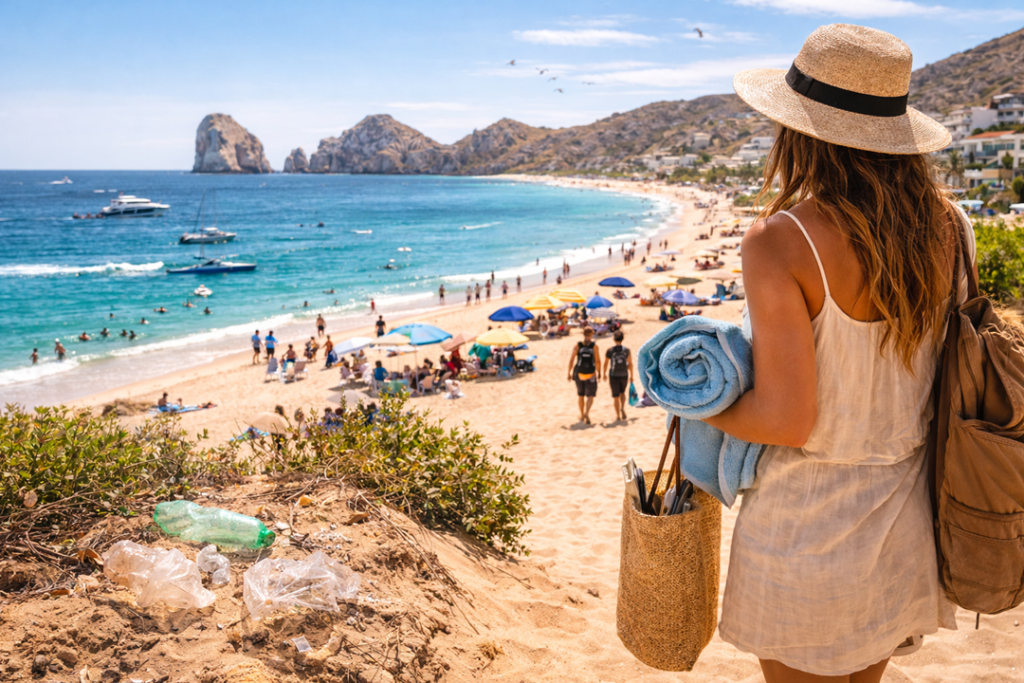
Local authorities introduced the environmental visitor tax to address these challenges. The program aims to generate funding for environmental conservation, tourism infrastructure, and sustainability programs throughout the state.
Rather than placing the burden entirely on local communities, the policy ensures that visitors contribute directly to preserving the natural landscapes that attract travelers in the first place.
In many ways, the tax reflects a broader global trend where popular destinations implement environmental fees to support sustainable tourism.
How The Baja Tourist Tax Works
The Baja California Sur tourist tax applies primarily to international visitors entering the state for tourism purposes. It is known locally as the Embrace It program and is managed through an online payment system.
The tax generally applies to travelers who stay longer than 24 hours in the state.
| Tourist Tax Detail | Information |
|---|---|
| Approximate Cost | About $28 USD |
| Applies To | International visitors |
| Minimum Stay | More than 24 hours |
| Payment Method | Online before or during trip |
| Purpose | Environmental protection and tourism infrastructure |
Once paid, travelers receive a digital receipt or QR confirmation that may be requested during their stay or when departing.
Although enforcement has varied during early implementation, authorities encourage visitors to complete the payment voluntarily.
Where The Money Goes
Revenue generated from the tourist tax supports several initiatives across Baja California Sur. These programs are designed to improve both environmental protection and the overall travel experience.
Funds are commonly directed toward:
- Beach conservation programs
- Marine ecosystem protection
- Waste management improvements
- Infrastructure upgrades in tourism areas
- Environmental education initiatives
Many of these efforts focus specifically on protecting fragile marine ecosystems in the Sea of Cortez, where coral reefs, migratory wildlife, and coastal habitats depend on careful management.
Travelers exploring these environments often experience them while snorkeling or kayaking in areas highlighted in the Sea of Cortez marine life guide, where conservation policies help preserve the region’s remarkable biodiversity.
How Travelers Can Pay The Tax
The simplest way to pay the Baja California Sur tourist tax is through the official online portal before arriving in the region.

Payment requires only basic travel information, including the visitor’s name and travel dates. After payment is completed, travelers receive a confirmation document that can be stored digitally on a smartphone.
For official information and payment instructions, travelers can access the Baja California Sur visitor tax portal through the state’s official tourism website.
Completing the payment in advance helps streamline the process and ensures compliance with local regulations.
Does The Tax Apply To Everyone?
While the tax applies broadly to international tourists, certain travelers may be exempt depending on their situation.
Generally, the following visitors are not required to pay:
- Mexican citizens
- Residents of Baja California Sur
- Visitors staying less than 24 hours
- Travelers entering for certain non-tourism purposes
Most short-term vacationers arriving through Los Cabos International Airport or staying in popular destinations like La Paz will fall within the group expected to pay the fee.
How The Tax Impacts Travel Costs
Compared with the overall cost of a Baja vacation, the environmental tax is relatively small. For most travelers, the $28 fee represents only a minor addition to total trip expenses.
For example, when compared with accommodation, dining, or guided tours, the tax typically represents less than one percent of the average vacation budget.
Travelers planning their trip costs can better understand overall expenses by reviewing the realistic weekly travel cost breakdown for Baja, which outlines typical spending for transportation, lodging, and activities.
Viewed in this context, the tax functions more as a conservation contribution than a major financial burden.
A Growing Trend In Global Tourism
Baja California Sur is not alone in implementing environmental tourism fees. Popular destinations around the world — including Bali, Venice, and parts of the Caribbean — have introduced similar programs to support conservation and infrastructure.
As tourism grows, governments increasingly recognize the need to balance economic development with environmental protection.
For Baja, the visitor tax represents an attempt to preserve the landscapes and marine ecosystems that make the region unique.
Supporting The Future Of Baja
Baja California Sur’s beaches, wildlife habitats, and desert coastlines remain some of North America’s most remarkable natural environments. Protecting these landscapes requires long-term investment and responsible tourism policies.
While the new tourist tax may initially surprise some visitors, its purpose is closely tied to preserving the region’s ecological and cultural identity.
For travelers, contributing to these conservation efforts helps ensure that Baja’s extraordinary beaches, marine life, and coastal communities remain vibrant destinations for years to come.