Each year, the calm waters near La Paz welcome one of the most remarkable wildlife events in Baja California Sur. During whale shark season, the world’s largest fish returns to the protected bays of the Sea of Cortez, giving travelers the rare opportunity to swim alongside these gentle giants.
Despite their immense size—often reaching more than 30 feet in length—whale sharks are filter feeders that pose no threat to humans. Their seasonal arrival has transformed La Paz into one of the most sought-after marine wildlife destinations in North America.
For travelers planning a visit, understanding the timing, regulations, and environmental considerations of whale shark encounters helps ensure a safe and unforgettable experience.
Why Whale Sharks Visit The Waters Near La Paz
The shallow waters around La Paz create ideal feeding conditions for whale sharks. Nutrient-rich currents in the Sea of Cortez bring plankton and small marine organisms into coastal bays, attracting these massive filter feeders during the winter months.
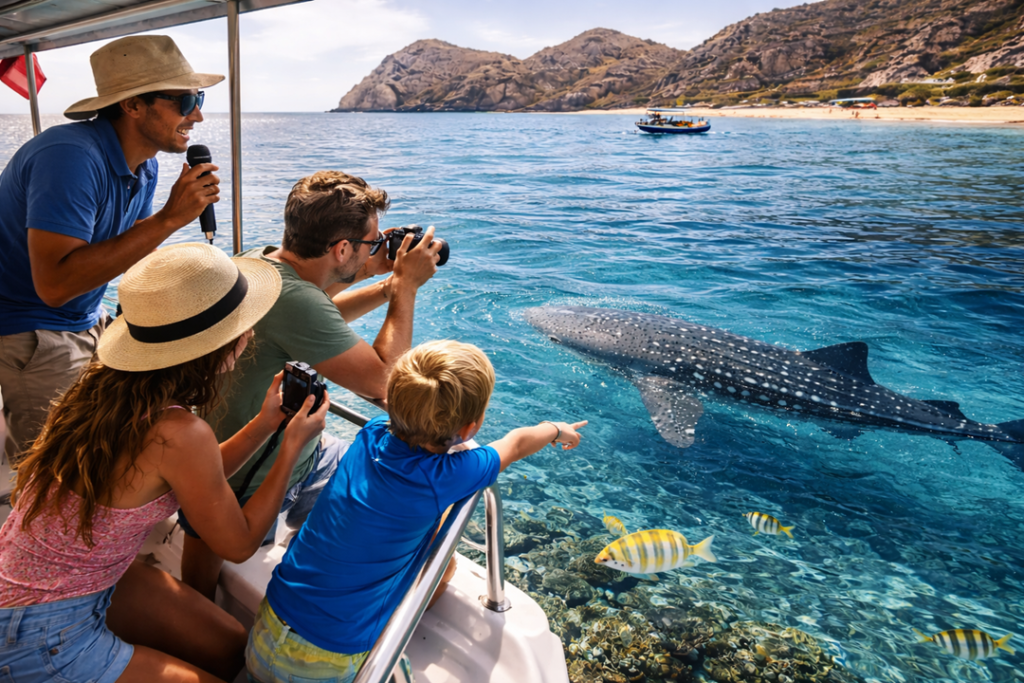
Unlike many marine species that remain far offshore, whale sharks frequently feed close to the surface. This behavior makes it possible for snorkelers to observe them without deep diving equipment.
The presence of these animals has become one of the defining marine experiences in Baja California Sur, drawing wildlife enthusiasts and marine photographers from around the world.
When Whale Shark Season Happens In Baja
Whale shark season near La Paz typically runs from late fall through early spring, although exact timing can vary depending on ocean conditions and food availability.
In many recent seasons, sightings have begun in November or December and continued through April. During peak months, multiple whale sharks may be present in the protected waters near El Mogote, a long sandbar that forms part of La Paz Bay.
Local authorities monitor the number of animals in the area before officially opening the season to tourism. This process helps ensure that encounters remain sustainable and safe for both animals and visitors.
What It’s Like To Swim With Whale Sharks
Swimming with a whale shark is a surprisingly calm and quiet experience. After a boat locates one of the animals, certified guides help snorkelers enter the water at a safe distance.
Because whale sharks move slowly while feeding, swimmers often drift alongside them as they glide through the water. Their distinctive spotted patterns and enormous mouths create a surreal underwater encounter.
The experience can feel almost dreamlike—floating beside a creature larger than a school bus in clear blue water.
Many travelers discover this activity while researching snorkeling and marine life in the Sea of Cortez, where the region’s extraordinary biodiversity makes wildlife encounters possible throughout the year.
Regulations Designed To Protect Whale Sharks
Because whale sharks are a protected species, encounters are strictly regulated by Mexican environmental authorities. These rules help prevent stress to the animals and reduce the impact of tourism.
Guides must follow clear protocols when interacting with the sharks.
| Regulation | Purpose |
|---|---|
| Limited number of boats | Prevent overcrowding |
| Certified guides required | Ensure responsible interaction |
| Minimum distance rules | Avoid disturbing animals |
| No touching allowed | Protect sensitive skin |
| Restricted swimming time | Reduce stress on wildlife |
These guidelines allow visitors to observe whale sharks without interfering with their natural behavior.
Safety And Responsible Wildlife Tourism
Swimming with whale sharks is considered safe when conducted through licensed operators who follow official regulations.
Travelers should always choose tour providers authorized by local environmental authorities. These operators are trained to approach wildlife carefully and respect the protected marine area.
Maintaining distance, avoiding sudden movements, and never attempting to touch the animal are key parts of responsible wildlife tourism.
Organizations such as National Geographic’s guide to whale shark conservation highlight the importance of ethical wildlife encounters that support conservation while allowing travelers to experience these remarkable animals.
Responsible tourism helps ensure that whale sharks continue returning to the waters near La Paz each year.
Planning A Whale Shark Excursion
Most whale shark tours depart directly from La Paz, typically in the morning when sea conditions are calm and visibility is best. Tours generally last several hours and include snorkeling gear, safety briefings, and marine guides.
Travelers often combine whale shark excursions with other coastal activities such as kayaking, island visits, or exploring nearby beaches.
Because the experience depends on wildlife sightings, operators usually recommend booking tours early in a trip. This allows flexibility in case weather or marine conditions change.
A Rare Wildlife Encounter In Baja
Few marine experiences rival the opportunity to swim alongside the largest fish in the ocean. Whale shark season has become one of the most memorable wildlife events in Baja California Sur, drawing travelers who want to witness the Sea of Cortez at its most extraordinary.
For visitors to La Paz, the encounter offers more than a thrilling adventure. It provides a powerful reminder of the incredible marine biodiversity that makes Baja one of the world’s most remarkable coastal destinations.
When approached responsibly, whale shark tourism not only creates unforgettable travel memories—it also supports conservation efforts that protect these gentle giants for future generations.