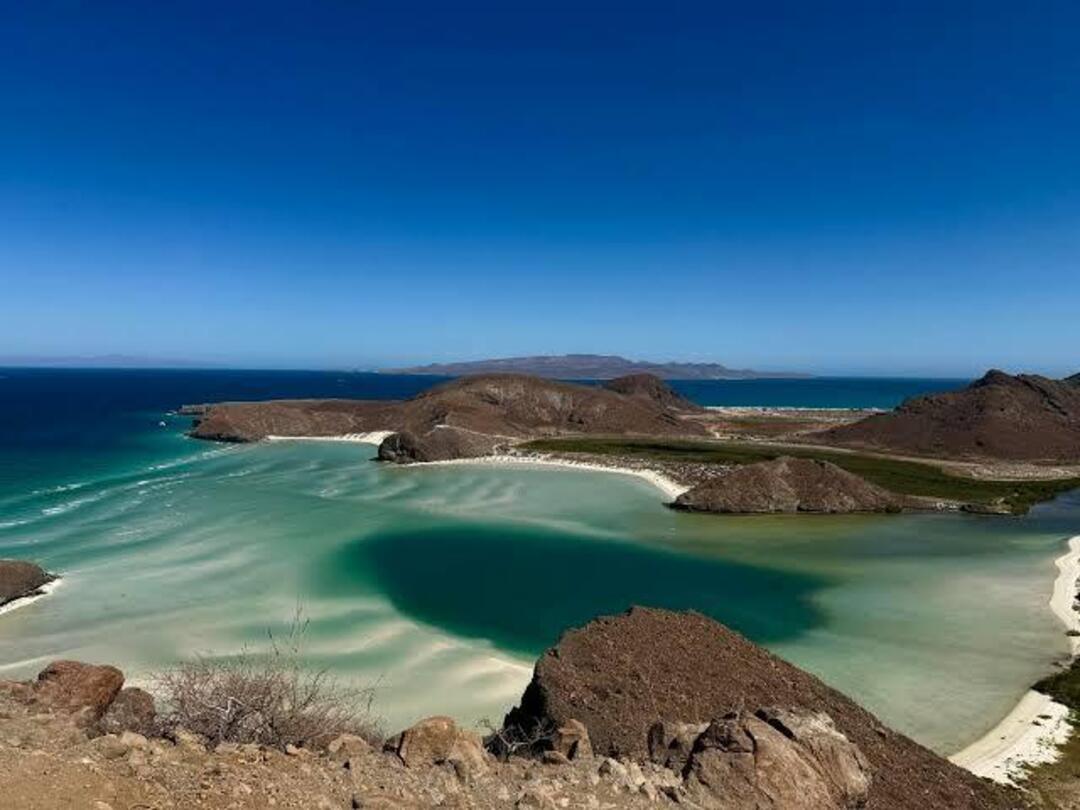
Along the scenic corridor connecting Playas de Rosarito to Ensenada, sweeping Pacific views meet a recurring infrastructure headache. From Primo Tapia and Cantamar down past the surf breaks of K-38 and the estuary at La Misión, residents enjoy an enviable coastal lifestyle, but they also share a common grievance: unpredictable grid instability. Power outages, flickering service, and extended blackouts have historically been accepted as routine costs of coastal living in Northern Baja. Yet over the past two seasons, the daily routine in these expat enclaves has quietly shifted. Rather than stocking candles or enduring the deafening roar of pull-start gasoline generators, homeowners and remote cross-border professionals are constructing bespoke domestic micro-grids powered by lithium iron phosphate (LiFePO4) storage, rooftop solar arrays, and low-earth orbit satellite broadband.
The Grid Reality: Isolated Distribution and Summer Peaks
To grasp why power fails regularly along the coast, one must examine the unique anatomy of Baja California’s power grid. Unlike mainland Mexico, the Baja California electric system operates as an isolated regional transmission network. Operating under the oversight of the Centro Nacional de Control de Energía, Baja California does not connect to the broader Mexican National Interconnected System (SIN); its sole external electrical ties connect across the border into Southern California. During sweltering summer heatwaves and dry autumn Santa Ana wind conditions, aggregate electricity demand in industrial Mexicali and densely populated Tijuana pushes transmission lines to capacity.
Coastal communities at the southern reaches of Playas de Rosarito and northern Ensenada sit at the physical margins of this regional distribution web. Marine humidity and relentless salt spray create corrosive deposits on roadside transformers, insulators, and coastal substations. When high-velocity Santa Ana winds sweep westward through the canyons, arcing faults and emergency line trippings follow promptly. For homeowners in bluff-side neighborhoods, these local infrastructure vulnerabilities translate into voltage dips, rolling brownouts, and multi-hour blackouts that stall home businesses and disrupt appliances.
Beyond distribution vulnerabilities, homeowners face a financial cliff within their utility bills from the Comisión Federal de Electricidad. In municipal zones classified under basic domestic tariffs (such as Tarifa 1), domestic power is heavily subsidized up to an established monthly consumption limit—typically 250 kilowatt-hours per month. Once a residence exceeds that threshold on a trailing 12-month average, CFE reclassifies the service into the Tarifa Doméstica de Alto Consumo (DAC). In DAC status, government subsidies disappear entirely, a fixed administrative surcharge applies, and every kilowatt-hour is billed at elevated marginal rates that can easily quadruple a bimonthly utility invoice. For households running mini-split climate control, pump systems, and modern smart amenities, avoiding DAC reclassification has become a primary economic priority.
| Grid Variable | Tarifa 1 (Subsidized Residential) | Tarifa DAC (High Consumption) | Physical Coastal Impact |
|---|---|---|---|
| Average Monthly Limit | Under 250 kWh/month | Exceeds 250 kWh/month average | Mini-splits and water pumps quickly breach thresholds |
| Cost per kWh | Tiered brackets ($1.14 – $4.05 MXN) | Full unsubsidized rate (often > $5.40 MXN) | Bills can surge four-fold without lifestyle changes |
| Grid Dependency Risk | Vulnerable to coastal line drops | Vulnerable to coastal line drops | Salt-air transformer arcing during high Santa Ana winds |
The Tech Shift: Replacing Gas Generators with LiFePO4 and Starlink
For decades, the standard expat defense against an outage was a portable, open-frame gasoline or diesel generator stored in the garage. While effective for keeping a refrigerator cold, internal combustion units carry steep drawbacks in coastal communities. Their continuous engine exhaust and loud running noise violate HOA noise covenants in tightly spaced subdivisions such as Las Gaviotas and Plaza del Mar. Furthermore, coastal humidity degrades engine carburetors, while volatile fuel must be procured, stored in jerrycans, and constantly refreshed.
Today’s response is silent and solid-state. Homeowners are building hybrid domestic micro-grids centered on lithium iron phosphate battery chemistry, paired with hybrid solar inverters and low-earth orbit satellite terminals from Starlink. Unlike older lead-acid or sealed AGM battery banks, LiFePO4 batteries offer deep discharge capabilities (often up to 90% usable capacity), complete thermal stability, and operational lifespans reaching 4,000 to 6,000 charge cycles. These battery systems integrate directly into home electrical panels through automatic transfer switches, restoring power to critical lighting, refrigeration, and pump circuits within milliseconds of a CFE failure.
For cross-border professionals who manage engineering teams, financial desks, or legal consultancies from Baja, power resilience is only half the battle; connectivity is equally non-negotiable. Coastal copper and fiber lines often follow the same roadside utility poles that drop during winter storms or brushfires. By mounting motorized Starlink dishes on coastal parapets and powering them through uninterrupted pure-sine inverters, remote workers maintain latency-sensitive cloud connectivity and high-definition video calls regardless of whether the municipal street grid is dark.
- Rapid Automatic Transfer: Modern hybrid inverters transition within 10 to 20 milliseconds, preventing desktop reboots, NAS crashes, or smart home security disconnects during brownouts.
- Marine-Grade Corrosion Resistance: Anodized aluminum racking, marine-rated electrical enclosures, and sealed battery units withstand aggressive oceanfront salt air without mechanical degradation.
- Zero Maintenance and Fuel Storage: Unlike combustion generators, LiFePO4 battery banks emit no fumes, require no oil changes, and deliver silent backup power compliant with community rules.
Permitting and Legalities: CFE Interconexión Versus Off-Grid Systems
Navigating solar deployment in Mexico requires an understanding of energy regulations overseen by the federal regulatory framework and local distribution offices. Property owners along the Rosarito-Ensenada corridor generally choose between two regulatory approaches: a grid-tied system with a formal CFE interconnection contract, or a physically isolated energy storage system operating behind an automatic transfer switch.
Homeowners who remain tied to the municipal grid can install distributed generation systems up to 500 kilowatts without a commercial generation permit. Under this framework, the owner applies for a formal Contrato de Interconexión. CFE replaces the traditional mechanical meter with a digital bidirectional meter that calculates net metering (neteo de energía). During sunny midday hours, excess solar energy is exported back to the grid, earning kilowatt-hour credits that offset evening power consumption. Crucially, a legal CFE interconnection requires that the system comply strictly with Mexican electrical installation standard NOM-001-SEDE-2012, requiring verified grounding arrays, disconnect switches accessible to utility personnel, and certified anti-islanding inverters that automatically disconnect solar production during grid blackouts to protect utility line workers.
Because anti-islanding shuts down standard grid-tied solar arrays when the grid drops, resilience-minded expats install modern hybrid systems with dedicated emergency backup sub-panels. During a blackout, the inverter physically severs its connection to the CFE line and establishes an intentional domestic micro-grid fueled by the local battery and rooftop modules. For properties situated on rural land parcels south of Cantamar where grid connections are unavailable or prohibitively costly to extend, owners opt for purely autonomous off-grid architectures. These isolated systems bypass CFE utility agreements entirely, though they must still observe sound electrical codes to protect household infrastructure from electrical fires and equipment stress.
Cost Versus Resilience: Valuation Across Northern Baja Gated Communities
While domestic micro-grids were once viewed as speculative luxuries, they have rapidly evolved into tangible capital assets that directly influence real estate transactions. In premier gated communities such as Las Gaviotas, Real del Mar, and Plaza del Mar, buyers are increasingly evaluating properties based on their independent infrastructure. In a coastal real estate market where a large share of buyers are North American retirees and dual-border professionals, turnkey backup power and independent internet are no longer optional novelty features.
| System Tier | Typical Hardware Configuration | Estimated Investment (USD) | Operational Resiliency Payback |
|---|---|---|---|
| Essential Continuity Micro-Grid | 5 kW Hybrid Inverter, 5 kWh LiFePO4, Starlink Mini/Standard, 6 Solar Modules | $6,500 – $8,500 | Immediate outage continuity for work; halts minor DAC escalation risk |
| Whole-Home Autonomy Micro-Grid | 10–12 kW Split-Phase Inverter, 15–20 kWh LiFePO4, 16–24 Modules, Starlink | $14,000 – $19,500 | Completely erases DAC billing charges; powers AC and water pumps off-grid indefinitely |
Beyond providing peace of mind during regional power fluctuations, investing in rooftop generation provides immediate financial protection against runaway DAC billing. A household paying $300 to $500 USD bimonthly under unmanaged DAC rates can recover the capital cost of a mid-tier solar and battery installation within four to six years through direct utility bill elimination alone. When factoring in the preservation of remote professional incomes and the prevention of food spoilage or appliance burnouts caused by voltage spikes, the return on investment accelerates.

The Road Forward for Coastal Energy Independence
As Northern Baja continues to attract sustained residential investment and cross-border remote work, regional utility infrastructure along the Pacific coast will face ongoing structural tests. The combination of coastal climatic stress, peak summer air conditioning loads, and the geographical isolation of Baja California’s transmission corridor means grid reliability cannot be taken for granted. By pairing LiFePO4 battery banks with rooftop solar generation and satellite communications, homeowners from Primo Tapia to La Misión are doing more than just waiting out the next blackout. They are demonstrating how domestic micro-grids provide practical autonomy, financial stability, and true peace of mind on the Baja coastline.