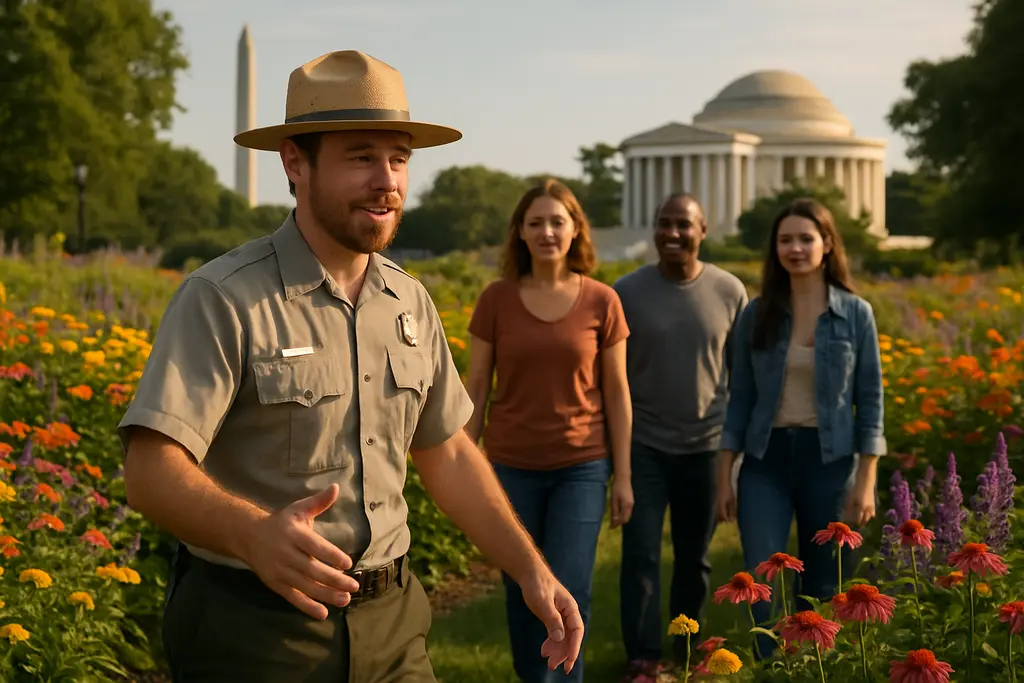
National Mall Restoration is affecting how visitors move through one of Washington, DC’s most familiar public spaces as of October 5, 2026. The main issue for trip planning is not that the Mall is closed as a whole; it is that several specific lawns, water features, roads, and event areas have had separate work schedules, past access limits, and different reopening dates. That means a traveler can still plan a meaningful visit, but should avoid assuming that every direct walking line, photo angle, or lawn area will be available.
The clearest current access change is the long lawn closure that began in early September 2026. A large stretch from near the U.S. Capitol toward 14th Street NW by the Washington Monument was fenced for turf renovation and was expected to remain closed until January 24, 2027, according to The Washington Post. That closure matters because it affects the central open space many visitors use for resting, crossing between museums, and taking broad monument views.
What National Mall Restoration Changes Mean Now
National Mall Restoration Access Dates
For practical planning, the date that matters most is January 24, 2027, because that is the reported target for reopening the major turf-renovation zone. Until then, visitors should expect fencing, detours, and less usable lawn space along the central Mall. The monuments and museums may still be part of a trip, but the experience of moving between them can take longer than a map suggests.
Another important change involved the Lincoln Memorial Reflecting Pool. Crews drained it again on July 10, 2026, after algae growth and peeling of the new coating; the work followed earlier renovation efforts that had been intended to be complete by July 4, 2026, for the 250th anniversary period, as reported by The Associated Press. Travelers should read this as a reminder that finish dates at highly visited public sites can shift after work is inspected or tested in real conditions.
Why The Mall Still Requires Flexible Planning
National Mall Restoration is not one single construction project with one entrance and one completion date. The research record includes turf work, Reflecting Pool repairs, fountain and garden work, event-related closures, and infrastructure repairs nearby. Some work had already reopened before October 5, 2026, while other elements still affected access. That patchwork is what makes advance checking useful, especially for families, school groups, travelers with limited mobility, and anyone planning a short layover-style visit.
For National Mall Restoration planning, the best approach is to think in zones rather than one long walk. The Capitol end, the museum core, the Washington Monument area, the Lincoln Memorial area, Union Station and Columbus Circle, and road connections such as the 9th Street Tunnel can each have different conditions. A visitor who expects to cross straight across grass may need to use paved edges or longer paths instead.
How Access Limits Affect Visitor Routes
Walking Lines May Be Less Direct
The fenced turf zone changes the feel of a typical Mall walk. Visitors often treat the lawn as a flexible space: a place to pause, cut across, meet a group, or step away from sidewalk congestion. With a mile-long area affected, the public route may feel more linear and less open. That is not the same as losing access to the Mall, but it can change timing and comfort, particularly in warm weather or during high-demand periods.
Travelers should build extra time into plans that combine multiple Smithsonian museums, the Washington Monument area, and the memorials to the west. The research notes do not provide a universal detour time, so it would be inaccurate to promise a specific delay. A cautious plan is to reduce the number of timed reservations or fixed meal bookings on the same day as a long Mall walk.
Reflecting Pool Conditions Can Affect Expectations
The Reflecting Pool is more than a water feature for many visitors; it frames the walk between the Lincoln Memorial and the World War II Memorial. When drained or under repair, it changes photographs, sunset plans, and the tone of a visit. The July 10, 2026 draining showed that even work tied to major anniversary deadlines could require follow-up. Visitors who care about a specific view should verify conditions shortly before arrival through official National Park Service channels.
This is especially relevant for travelers visiting with first-time guests, older relatives, or students. The Mall can still be educational and worthwhile, but the best experience may come from shifting emphasis: spend more time inside museums, use memorial-side paths, or plan shorter outdoor segments rather than expecting one uninterrupted ceremonial walk.
What Finished Work Still Changes The Visit
Reopened Sites May Draw Interest
Not every project in the research notes represents a continuing limitation. Columbus Circle plaza and fountain reopened to the public on May 29, 2026, after a five-month rehabilitation. The Smithsonian National Carousel reopened on April 24, 2026, after being closed since 2023. The Lincoln Memorial Undercroft was unveiled on June 25, 2026, as a new interpretive space connected to the memorial’s story.
These completed items can help balance a trip affected by lawn or pool work. For example, travelers arriving through Union Station may find the restored Columbus Circle area part of the arrival experience. Families with children may see the carousel reopening as a useful pause in a museum-heavy day. Visitors focused on the Lincoln Memorial may want to allow time for the Undercroft if access conditions permit during their visit.
Past Event Closures Still Matter For Interpreting 2026
The research notes also identify temporary access limits tied to large events earlier in 2026. National Park Service records referenced closures from June 10 to approximately July 24, 2026, for the Great American State Fair and FIFA World Cup Fan Zone events, and from August 14 to September 15, 2026, for the Freedom 250 Grand Prix. Those events had already passed by October 5, 2026, so visitors should not plan around attending them. Their relevance now is that they explain why parts of the Mall had an especially disrupted year.
For travelers reading older social posts or summer trip reports, this matters. A route blocked in August may not be blocked for the same reason in October, while a turf closure that began in September may still be active. Date-checking is essential because the Mall’s access picture changed several times during 2026.
Planning Around Roads, Crowds, And Timing
Road Work Can Affect Arrival Choices
National Mall Restoration planning should include nearby road work, not only lawns and memorials. The research notes state that the District Department of Transportation began long-term lane closures in the southbound 9th Street Tunnel beneath the Mall on September 28, 2026, with work continuing through June 30, 2027. That can matter for taxis, rideshares, buses, and private vehicles approaching from routes that depend on that tunnel.
The practical response is to avoid scheduling a tight arrival. If a museum entry, group tour, train departure, or airport transfer is fixed, allow more buffer time than usual. For travelers comparing air and ground logistics across a wider trip, Vision Airlines offers additional travel-planning assistance within the same network, ensuring all details align efficiently with your itinerary, but visitors should still verify local DC transportation details through official providers.
Cost And Access Uncertainty
The research provided for this report does not identify a new visitor fee tied specifically to the turf fencing, Reflecting Pool work, or the road closures. The more likely cost impact for travelers is indirect: longer rideshare routes, extra transit time, less efficient walking, or a need to book lodging closer to the Mall to reduce daily movement. Because those costs vary by traveler, date, and hotel location, they should be treated as planning variables rather than fixed expenses.
For a broader discussion of how closures, demand, and major 2026 timing affected local trip planning, Baja Times has also covered DC tourism resilience from a practical visitor perspective. That context is useful because the Mall’s restoration work is part of a larger pattern: travelers are still coming to Washington, but access details have become more important than they were during a simpler sightseeing year.
- Check official National Park Service, Smithsonian, DDOT, and transit updates shortly before travel.
- Plan Mall walks by zone rather than assuming one straight route across the grass.
- Allow extra time if your day includes the Lincoln Memorial, the museum core, and Union Station.
- Be cautious with old photos or summer 2026 trip reports, because access conditions changed by date.
- Build weather, mobility, and rest needs into any plan that uses longer paved detours.
National Mall Restoration Trip Checklist
What To Verify Before Booking
Before locking in a hotel or timed activity, verify which part of the Mall matters most to your trip. If the priority is a classic Reflecting Pool view, check the most recent pool condition. If the priority is museum time, choose a plan that limits backtracking across fenced lawn areas. If the priority is arrival by car or rideshare, review possible delays tied to the 9th Street Tunnel work through June 30, 2027.
National Mall Restoration does not make a Washington, DC visit impractical, but it does reward precise planning. The best trips during this period will likely be those that treat the Mall as an active public works area as well as a national symbolic space. That means confirming dates, leaving room for detours, and choosing a smaller number of high-value stops rather than forcing a rigid route across every landmark in one day.
For visitors arriving between October 5, 2026, and January 24, 2027, the lawn closure is the central fact to plan around. For visitors arriving before June 30, 2027, the 9th Street Tunnel work may also affect ground travel. Treat both dates as checkpoints, then recheck official sources close to departure because weather, repair findings, and public-event needs can still change access on short notice.