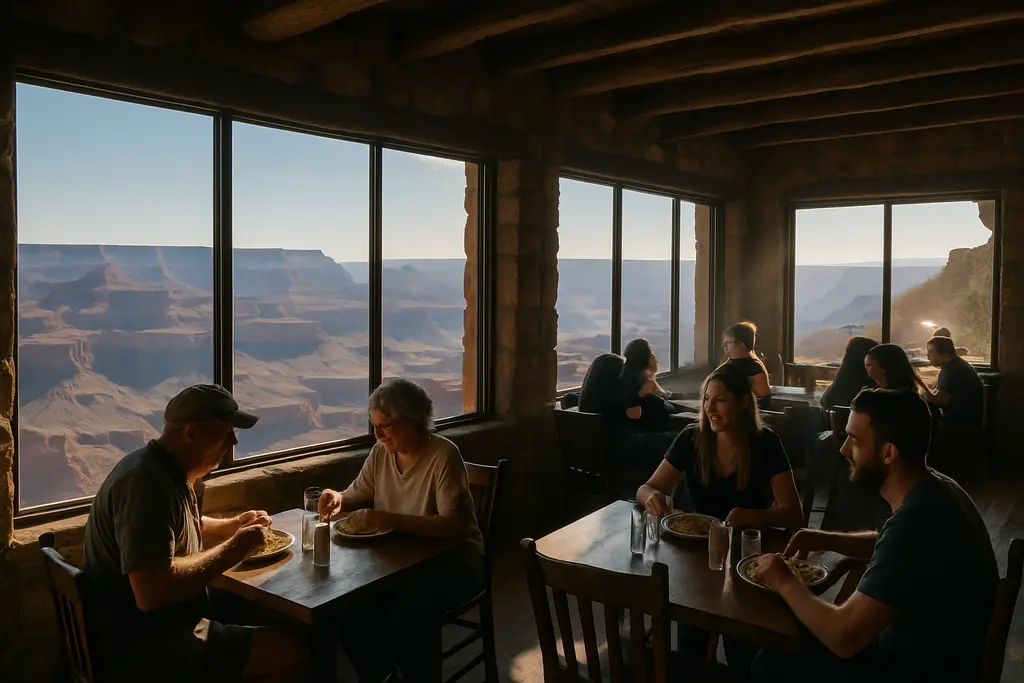
Grand Canyon Dining requires more advance checking than usual after the August 29, 2026 flash flood damaged Bright Angel Creek infrastructure and the Transcanyon Waterline. As of September 28, 2026, the practical dining question is not only where to eat, but which services are open, which require reservations, which have reduced hours, and whether a visitor should plan meals outside the park before committing to a South Rim day.
The National Park Service reported that all overnight lodging inside Grand Canyon National Park was closed indefinitely as of August 31, 2026, including El Tovar Hotel, Maswik Lodge, Yavapai Lodge, Bright Angel Lodge, Trailer Village, and Phantom Ranch, according to the park’s Eating and Sleeping update. That lodging closure matters for food planning because park dining has long been tied to hotel districts, lodge cafés, canteens, and concession areas.
For travelers, the cautious approach is simple: do not assume that a familiar restaurant from a prior Grand Canyon trip is operating in the same way. Build a meal plan with backup food, check the park’s same-day service information, and consider Tusayan for a wider set of restaurant, grocery, and lodging choices outside the entrance area. Travelers combining Arizona and California road plans may also find extensive regional travel insights at Californian Times.
Grand Canyon Dining After The August Flood
Grand Canyon Dining Starts With Verification
The August 29 flood shifted the park from ordinary seasonal variability into a service-disruption period. The flood damaged water-related infrastructure, and Stage 4 water restrictions followed shortly afterward. Because dining depends on water, staffing, deliveries, kitchens, lodging demand, and concession operations, a restaurant can be listed as open in one district while another nearby food outlet remains closed or limited.
Treat Grand Canyon Dining as a daily-confirmation task, not a fixed itinerary item. The National Park Service says dining and food services vary by location, and some rim restaurants remain open while many have reduced hours or are closed; visitors are advised to check daily for updated hours through the park’s operations update. That is the most useful planning point for anyone driving long distances, arriving late, or traveling with children.
Why Lodging Closures Affect Food Access
Restaurant access is harder to judge when lodging is closed. A traveler who once booked an in-park room and ate nearby may now be visiting only for the day, sleeping outside the park, or relying on a smaller number of active food outlets. That changes timing. Breakfast may need to happen before entering the park. Lunch may need to be packed. Dinner may be easier in Tusayan if park restaurants are booked, limited, or closed by the time a day visit ends.
The closure of Phantom Ranch cabins and the Phantom Ranch Canteen is especially significant for inner-canyon hikers. The research notes confirm those services were entirely closed after the August 29 flood. Visitors should not plan an inner-canyon meal around Phantom Ranch food service during this disruption period. Any hike plan should be built around what the park currently allows, water availability, and self-sufficient food planning within the rules in effect on the date of travel.
South Rim Food Options To Verify
Historic District Choices Are Not Uniform
In Grand Canyon Village’s Historic District on the South Rim, the reported options are mixed. El Tovar Dining Room is open by reservation only. Arizona Steakhouse is operating for dinner. Bright Angel Lodge offers The Harvey House Café for breakfast and lunch, while Fred Harvey Tavern is closed. For a visitor, that means the Historic District may still work for a meal, but not as an open-ended food court where every venue is available at all hours.
Reservations matter where they are required. If El Tovar Dining Room is part of the plan, confirm availability before entering the park, not after parking. If dinner is the goal, Arizona Steakhouse may be an option, but visitors should still check same-day hours and availability before relying on it. If breakfast or lunch is the immediate need, The Harvey House Café may be more relevant, but the closure of Fred Harvey Tavern reduces flexibility in that lodge area.
Maswik And Yavapai Need Extra Caution
Maswik is not a dependable fallback during this disruption period. Maswik Food Court and Maswik Pizza Pub are closed until further notice. That matters because food courts often serve travelers who want quick, informal meals without reservations. With those options unavailable, day visitors should avoid arriving hungry with the assumption that Maswik will cover the gap.
Yavapai also requires care. The research notes report that Yavapai Dining Hall, Yavapai Lodge Tavern, and Yavapai Café are either closed or limited. The Dining Hall is closed, while the Café offers limited coffee and snack service. Limited coffee and snacks may help with a short stop, but that is not the same as a full meal. Families, hikers, and travelers with dietary needs should plan accordingly.
For readers tracking how water repairs affect Village services, Baja Times has a related report on the Grand Canyon water timeline. Use that kind of context as background, but still check official park updates before paying for lodging or counting on a specific restaurant.
Tusayan And North Rim Backup Planning
Tusayan Is The Practical Meal Base
Tusayan is the most practical backup for travelers who need more food choices or overnight lodging near the South Rim. The research notes state that lodging there is open and that the community has multiple restaurants, grocery stores, and services. For a visitor coping with limited in-park dining, that can make Tusayan useful for breakfast before entry, groceries for a packed lunch, or dinner after sunset viewing.
This does not mean every Tusayan restaurant will have space at every hour. Demand can rise when in-park lodging and dining shrink. Travelers should still check hours, consider reservation policies where available, and carry enough food and water for delays. The key planning shift is that Tusayan may function less like a convenience stop and more like the primary food base for a South Rim visit.
North Rim Food Service Is Limited
The North Rim requires a different plan. The research notes state that seasonal food services remain limited, the North Rim General Store is open from 9 a.m. to 4 p.m. with grab-and-go food and bottled water, and no overnight lodging or full restaurant services are available as of the 2026 season. That makes the North Rim a poor fit for visitors who need flexible restaurant access or a late meal on site.
For North Rim visitors, food planning should happen before arrival. A 9 a.m. to 4 p.m. general-store window can support a simple daytime stop, but it cannot replace full restaurant service. Travelers should bring appropriate meals, account for driving distance, and avoid assuming that a scenic viewpoint day will include easy access to dinner inside the park.
What To Check Before Paying For Food Or Lodging
Questions To Answer Before Arrival
The main risk is not that food is impossible to find; it is that a visitor expects a normal park dining pattern during a disrupted period. Before leaving for the rim, answer the basic questions in writing, especially if traveling with children, older adults, hikers, or anyone who needs regular meals.
- Which rim are you visiting, and are you planning a day trip or an overnight stay outside the park?
- Which specific restaurant or café is open on your travel date, and does it require a reservation?
- What is your backup if Maswik, Yavapai, or another familiar area has limited service?
- Do you have breakfast, lunch, snacks, and drinking water covered if hours change?
- Are you relying on Tusayan for dinner, groceries, or lodging, and have you confirmed hours there?
Costs are harder to address because the research supplied here does not provide current menu prices or grocery prices. Treat any older budget estimate with caution. The more reliable planning method is to confirm the venue first, then check its current menu or reservation system directly before assuming a meal cost.
Timing Matters More Than Usual
During normal visits, many travelers can adjust meals after arrival. During this disruption, timing carries more weight. If a breakfast café has limited service, if dinner is available only in one area, or if a dining room requires reservations, the order of the day may need to change. A sunrise visit, midday hike, and sunset viewpoint plan can still work, but food should be built into that plan rather than left for the nearest lodge.
Visitors should also be careful with late arrivals. If the only confirmed food is outside the park, do not enter near evening assuming that a full dinner option will appear inside the Village. If the day includes hiking, pack enough food for the outing under current park rules and conditions, and avoid relying on closed inner-canyon services.
Grand Canyon Dining Choices Before You Go
Grand Canyon Dining remains possible in late September 2026, but it is more constrained and less predictable than many repeat visitors may remember. The most dependable plan is to verify South Rim restaurants by name, reserve where required, treat Tusayan as a serious backup, and carry enough food for a disrupted day. North Rim visitors should be even more self-contained because current food service is limited to grab-and-go items and bottled water at the general store during posted daytime hours.
The August 29 flood was a real operational break, not a minor inconvenience. Until water service, concession operations, lodging, and restaurant schedules are restored more fully, travelers should plan meals with the same care they give to trail conditions and driving distance. That approach will not remove uncertainty, but it will reduce the chance that a Grand Canyon visit becomes a search for a meal instead of a well-planned day at the rim.