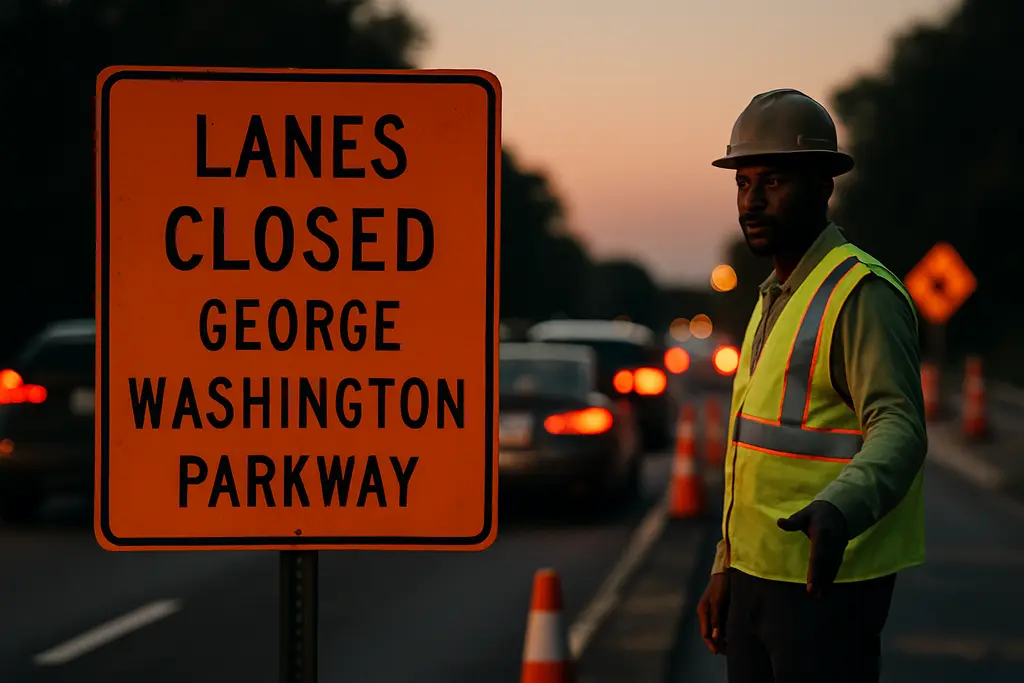
The George Washington Parkway lane closures that affected northbound travel between Spout Run Parkway and Route 123 from August 10, 2026, through September 1, 2026, have now passed. For travelers using the parkway as a scenic approach to Washington, D.C., Arlington, McLean, Alexandria, or Ronald Reagan Washington National Airport, the closure period still offers a useful planning lesson: this road is both a commuter artery and a visitor route, so even off-peak work can shape drive times, airport transfers, and sightseeing schedules.
According to the National Park Service, all northbound lanes between Spout Run Parkway and Route 123 were closed Mondays through Thursdays from 9:30 a.m. to 2:30 p.m. during that August 10 to September 1 work window for tree inspections, pruning, and removal; southbound lanes stayed open, and morning and evening rush hours were not affected by that specific work schedule NPS closure notice. Drivers who reached the closure had to exit at Spout Run Parkway and follow posted detour signs to Route 123 before re-entering the parkway.
That detail matters for travel planning because mid-day closures can be easy to underestimate. A visitor may avoid rush hour on purpose, only to encounter a scheduled maintenance window. The safer planning habit is to check the National Park Service project page before using the corridor for airport moves, monument visits, hotel check-ins, or a scenic drive along the Potomac.
How The George Washington Parkway Closure Window Worked
George Washington Parkway Timing And Direction
The August 2026 closure was narrow in one sense and highly consequential in another. It was limited to northbound lanes between Spout Run Parkway and Route 123, and it took place Monday through Thursday during late morning and early afternoon hours. It did not close the southbound side. It also avoided the heaviest morning and evening commuting periods.
For a traveler, however, a five-hour mid-day northbound closure can still disrupt plans. The George Washington Parkway connects visitor areas near Washington, D.C., Northern Virginia neighborhoods, the airport corridor, and several riverfront points of interest. A closure between Spout Run Parkway and Route 123 could affect a drive toward McLean, Great Falls-area approaches, or northern parkway connections, especially for people unfamiliar with local exits.
Why A Past Closure Still Helps Drivers Plan
Because the August 10 to September 1 closure has ended as of September 9, 2026, readers should not treat those dates as an active advisory. The value is practical rather than predictive. It shows how the parkway’s maintenance work may be scheduled outside peak commute hours while still affecting visitors who travel at mid-day.
The detour instruction was also simple but time-sensitive: affected northbound drivers exited at Spout Run Parkway and followed posted signage to Route 123. That means drivers relying only on habit, scenery, or a general map view could have missed the best available guidance on the road. Posted detours should be treated as the authority during active closures, since they reflect the agency’s intended traffic handling for the work zone.
Current Construction Context For Travelers
What The Rehabilitation Project Changed
The broader northern section rehabilitation project began in August 2022 and reached substantial completion on January 7, 2026, according to the National Park Service project page. The same NPS page says the northern section covers about 7.6 miles and that remaining work includes items such as curb, median, signage, and paint touch-ups, generally during off-peak hours; it also notes that the parkway carries about 70,000 vehicles per day between Northern Virginia and Washington, D.C. NPS construction updates.
This background helps explain why delays can appear even after a large project milestone. “Substantial completion” does not mean every cone, lane shift, or repair activity has disappeared. It means the main project has reached a major completion point while smaller finishing work and related repairs may still occur. Travelers should be especially careful about assuming that a familiar parkway drive will operate exactly as it did before the rehabilitation period.
Route 123 And Airport-Area Segments
The research notes also identify structural repairs at the Route 123 Interchange bridge, including lane adjustments outside peak commuting hours, and mill-and-overlay work in segments between Ronald Reagan Washington National Airport and First Street in Alexandria, Virginia, weather permitting. Those details matter for two very different kinds of travelers: visitors using the parkway for a scenic river drive and travelers trying to make a flight.
For airport-bound drivers, even a short work zone can create enough uncertainty to justify a time buffer. The George Washington Parkway is attractive because it can feel direct and scenic, but it is not a road where visitors should cut departure timing close during active roadwork. For leisure travelers, the smarter approach is to treat the drive as flexible: plan a backup route, avoid tight lunch or tour reservations immediately after the drive, and confirm conditions before leaving. For additional information related to air travel, travelers may consult Vision Airlines.
Practical Drive Planning After The August Closures
How To Build A Time Buffer
The most useful takeaway from the August closure period is not that every future drive will be delayed. It is that the parkway can shift quickly from scenic corridor to constrained work zone. A time buffer should match the purpose of the trip. A museum visit may tolerate a late arrival; a flight, train, timed entry, or restaurant booking may not.
For travelers staying in Northern Virginia and planning a day in Washington, D.C., the best practice is to check the NPS construction page before departure, review live traffic from a trusted map service, and keep a surface-street alternative in mind. Drivers coming from the airport area should also pay attention to work between Ronald Reagan Washington National Airport and Alexandria, since that section can matter for hotel transfers and Old Town visits.
- Check the official NPS project page before driving, especially on weekdays.
- Use posted detour signs during active closures rather than improvising near the work zone.
- Allow extra time for airport transfers, timed tickets, and dinner reservations.
- Expect off-peak work to affect visitor travel even when rush hours are protected.
- Watch the posted 40 mph limit between the I-495 interchange and Spout Run Parkway during the remaining project period.
Cost, Access, And Visitor Expectations
There is no supported information in the research notes indicating a toll, special permit, or visitor fee tied to these lane closures. The main cost for travelers is time: added minutes, possible fuel use, and the stress of adjusting plans while already on the road. That makes advance checking more useful than trying to solve the problem after reaching a closed segment.
Visitors planning a broader Mid-Atlantic trip should also separate parkway access from airport access. The road can be part of an efficient airport approach, but it should not be the only plan when construction advisories mention lane shifts, paving, or bridge repair. Travelers comparing flight options, regional drives, and airport timing may find related aviation planning context at Vision Airlines, though road conditions should still be confirmed through official transportation or park sources.
Scenic Driving On A Working Parkway

Why The Parkway Is Not Just A Shortcut
The George Washington Parkway is often used as a practical route, but it is also part of the visitor experience for people approaching Washington, D.C., from the Virginia side. River views, parkland edges, and connections to major visitor areas make it more appealing than many urban roadways. That appeal can create a planning trap: drivers may think of it as a pleasant scenic drive and forget that it also carries heavy daily traffic.
The reported figure of about 70,000 vehicles per day helps explain why even limited lane changes deserve attention. A road serving that many vehicles has less room for error when a lane closes, a detour begins, or speeds drop near construction. Travelers should expect local commuters to know the alternatives better than visitors do, which can leave out-of-town drivers at a disadvantage during sudden changes.
How To Keep The Drive Experience Realistic
A realistic plan treats the parkway as condition-dependent. If the day’s purpose is sightseeing, the drive can remain part of the experience as long as timing is flexible. If the day’s purpose is an airport departure or a timed entry in Washington, D.C., the scenic value should come second to reliability.
That does not mean avoiding the road. It means using it with the right expectations. Check official notices, respect posted speeds, avoid last-minute lane decisions, and leave room in the schedule for an alternate route. The safest planning language is not “the parkway will be clear,” but “the parkway is preferred if conditions support it.”
George Washington Parkway Travel Checks
As of September 9, 2026, the specific northbound weekday closure between Spout Run Parkway and Route 123 from August 10 through September 1 has already occurred. Travelers should not plan around that window as if it were still active. They should, however, use it as a reminder that parkway access can change by date, direction, and time of day.
Before driving the George Washington Parkway, confirm the current National Park Service construction notice, review live traffic, and give yourself a buffer if your trip depends on being on time. The most careful plan is also the simplest: know where the work is, know whether it affects your direction, and avoid treating a scenic road as a fixed travel-time promise.