Ensenada’s 29 July cruise arrivals could shape summer visitor flow downtown because cruise passengers do not enter the city the same way overnight hotel guests or road-trippers do. They arrive in concentrated waves, usually with limited hours ashore, a clear return deadline, and a strong pull toward the waterfront, Avenida López Mateos, seafood stops, souvenir shops, La Bufadora tours, and Valle de Guadalupe excursions. That makes July 2026 a practical test for how Ensenada moves people from the cruise terminal into the city without overwhelming its most visited corridors.
The local news hook is specific. Ensenada has 29 cruise ship arrivals scheduled for July 2026, with six vessels on the calendar. El Imparcial reported that Carnival Firenze leads the month with nine scheduled calls, making it the ship with the largest presence in the destination. For downtown businesses, tour operators, taxi services, restaurants, and independent travelers, that calendar matters because cruise traffic can change the feel of the city by hour, not only by day.
Why July’s 29 Cruise Arrivals Matter For Ensenada
El Imparcial reported on June 24, 2026, that Ensenada’s July calendar includes 29 cruise arrivals, with six ships scheduled during the month and Carnival Firenze expected to make nine calls. The report also framed the cruise activity against a local commercial sector looking for recovery after business closures, making the ship schedule more than a port statistic through this Ensenada cruise arrivals report.
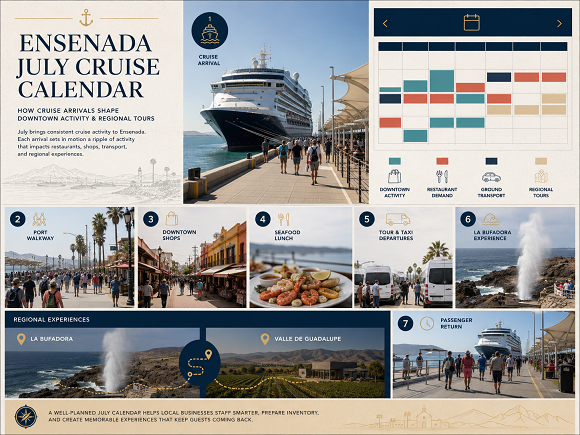
For Ensenada, cruise arrivals are different from ordinary tourism numbers because of their timing. A cruise ship can place thousands of passengers close to downtown in a short window. Many passengers walk directly toward the malecón, the giant Mexican flag area, Avenida López Mateos, taco stands, bars, pharmacies, craft shops, and tour pickup points. Others leave quickly for La Bufadora, wine-country tastings, horseback rides, city tours, or coastal excursions.
That means downtown visitor pressure is not evenly spread. A street can feel calm before disembarkation and busy shortly after. A restaurant may be quiet in the morning and full during the lunch rush. A tour vendor may depend on the first hour after passengers leave the ship. A taxi area may see its strongest demand when several tours and independent travelers depart at once.
The July count matters because it gives businesses, port-area services, and travelers a schedule-based way to think about the month. Ensenada is not only receiving visitors. It is receiving them in waves.
How The Cruise Terminal Connects Directly To Downtown
The cruise terminal’s location is one of Ensenada’s biggest advantages. ASIPONA Ensenada describes the facility as a specialized terminal for cruise ship docking and tourist marina use, with a projected capacity of 800,000 passengers per year and services including mooring, customs and migration modules, and two gangways through the official Ensenada cruise terminal.
That location makes downtown accessible, but it also concentrates movement. Cruise passengers can move quickly from the ship area toward the waterfront and commercial corridors. For the city, this proximity is valuable because passengers do not need a complicated transfer to spend money downtown. For crowd flow, it creates a familiar challenge: the easiest streets become the busiest streets.
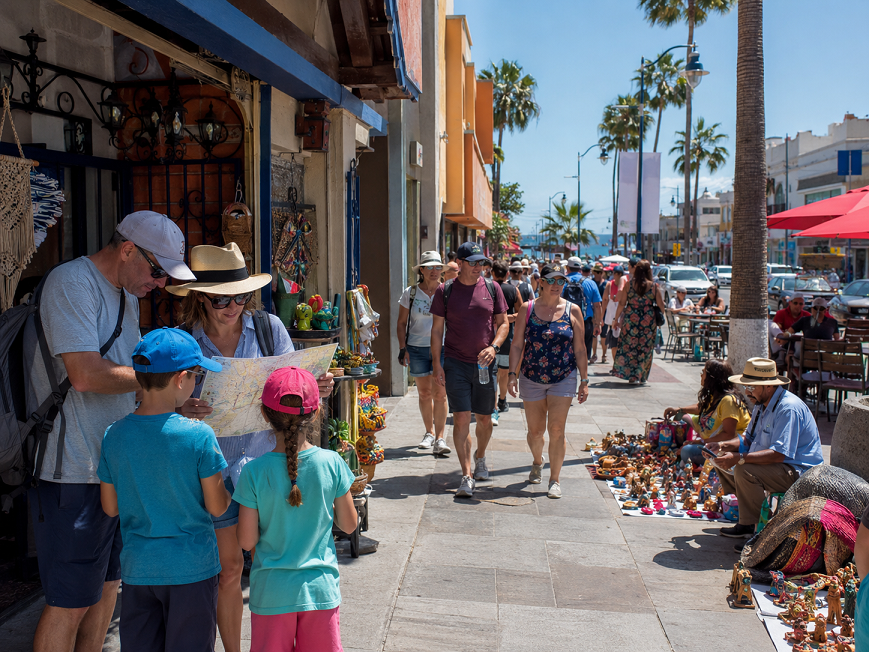
Avenida López Mateos, often known to visitors as First Street, is especially important. It functions as the basic downtown route for many cruise passengers because it offers shops, food, bars, cafés, pharmacies, and souvenir stops within a manageable walking area. That makes it a practical corridor, but also a pressure point.
The city’s advantage is walkability. The city’s challenge is pacing. If passengers cluster around the same blocks at the same times, the visitor experience can become rushed, and independent travelers may find the downtown core more crowded than expected.
Why Cruise Visitors Move Differently Than Road-Trippers
Road-trippers and hotel guests can adjust their day more easily. They can leave the hotel later, shift dinner time, drive to a quieter neighborhood, or extend a beach stop. Cruise visitors have a ship schedule. That changes every decision.
A cruise passenger has to think backward from the all-aboard time. A downtown lunch, a souvenir stop, a margarita, a pharmacy run, and a walk by the waterfront may fit easily. A La Bufadora excursion or Valle de Guadalupe tasting requires stronger timing because transportation, traffic, tour length, and return buffers matter.
This is why cruise visitor flow is more compressed. Passengers may be in Ensenada for only part of the day, so they spend quickly and move in predictable patterns. Businesses near the port and Avenida López Mateos can benefit from that concentration, while businesses farther away need a clear reason, easy transport, or tour partnerships to capture visitors.
For independent travelers already in Ensenada, the cruise calendar can affect planning. A downtown walk may feel more relaxed before ships disembark or after tour groups leave. A traveler who wants a quieter meal may choose a different hour or neighborhood. A visitor heading to La Bufadora may prefer to avoid the same departure window as large shore-excursion groups.
How Downtown Restaurants And Shops Could Benefit
Cruise traffic can be especially useful for downtown restaurants and shops because passengers often make short, impulse-driven purchases. They may want fish tacos, seafood, craft items, coffee, beer, candy, souvenirs, sunscreen, or a quick sit-down meal before returning to the ship. The businesses that benefit most are usually visible, easy to enter, clear about payment, and able to serve visitors within a limited time window.
Baja California’s official tourism guide calls Ensenada the most visited port in the Mexican Pacific and says it receives more than 300 cruise ships and more than 1 million cruise passengers a year. The same guide highlights the city’s wine valleys, seafood identity, surfing, off-road culture, and Pacific setting through the official Ensenada visitor guide.
That broader identity matters because cruise passengers may arrive with only a simple idea of Ensenada. Downtown businesses have a chance to turn a short stop into a stronger destination impression. A good seafood lunch, a helpful shop, a clean restroom, a clear menu, or a reliable tour can shape whether a passenger sees Ensenada as only a port stop or a place worth returning to by car or hotel stay.
The challenge is not just attracting visitors. It is handling them well when several thousand people may be working through the same streets at once.
Why La Bufadora Trips Need Time Discipline
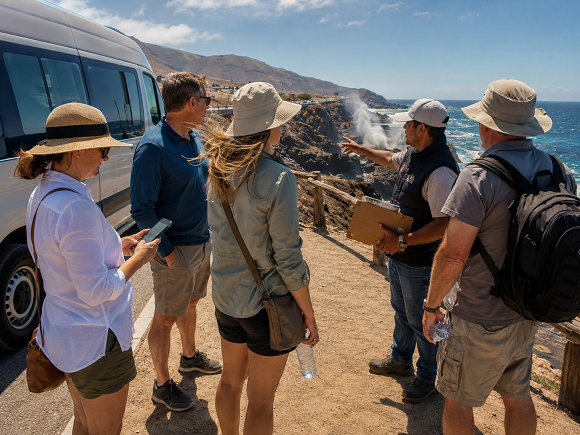
La Bufadora is one of Ensenada’s best-known shore-excursion draws, but it requires more time discipline than a downtown walk. Visitors have to account for transport to the Punta Banda area, time at the site, vendor corridors, photos, snacks, and the return to the port. That can be rewarding, but cruise passengers have less flexibility if traffic or delays appear.
The destination’s appeal is clear. Visit Mexico describes La Bufadora as a coastal phenomenon on the Punta Banda peninsula where Pacific Ocean swells push through a marine cave system, forcing sea spray upward through a blowhole. The official travel description presents it as one of Ensenada’s natural visitor attractions through this La Bufadora visitor guide.
For cruise passengers, the practical question is not whether La Bufadora is worth seeing. It is whether the timing works for the specific ship day. A long port call creates more room. A shorter call, late arrival, or heavy crowd day means passengers should be more careful.
Tour operators and transportation providers can help by communicating realistic return times. Passengers should avoid treating the excursion like an open-ended road trip. The ship schedule is the hard limit. Downtown visitors who are not on a cruise have more flexibility and may want to plan around cruise-heavy hours if they prefer fewer crowds.
How Wine Tours Compete With Downtown Spending
Valle de Guadalupe gives Ensenada a major advantage over many cruise stops because wine country sits within the broader visitor orbit. Some cruise passengers want a tasting experience rather than a downtown shopping route. That can move spending away from the port corridor and into wineries, restaurants, transportation services, and tour companies.
This is good for regional tourism, but it also changes downtown flow. Passengers who leave early for wine country may not spend much time on Avenida López Mateos. Passengers who return late may only have a short final window for souvenirs or food. Businesses near the terminal may see the strongest spending from passengers who remain in the city or return with enough time to spare.
For travelers, the choice should be realistic. A wine-country tour can be a better fit for passengers who have booked transportation, understand the schedule, and are not trying to add too many stops. A downtown day may be better for passengers who prefer a lower-risk experience close to the ship.
This is where Ensenada’s tourism offer becomes more complex. The city is not only a port stop; it is a gateway to wine, seafood, coastal scenery, and Baja culture. The more options visitors have, the more timing matters.
What Cruise Days Mean For Independent Travelers
Independent travelers who arrive by car or stay in hotels should not ignore the cruise calendar. A cruise-heavy day can change the experience downtown. It can make sidewalks busier, taxis more active, tour pickup areas more crowded, and restaurants more focused on quick-turn cruise traffic.
That does not mean independent travelers should avoid downtown. It means they should plan with the rhythm of ship days in mind. Morning coffee before disembarkation, lunch away from the busiest blocks, late afternoon waterfront walks, or dinner after cruise passengers return to the ship can all create a calmer experience.
BajaTimes has covered how Baja California mass tourism planning is becoming more important as cruise traffic, event travel, border movement, and visitor services overlap across the state. Ensenada’s July cruise schedule fits that larger pattern because it shows how visitor movement can concentrate around specific entry points and times.
The practical point is simple. Cruise passengers may be temporary, but their movement affects the whole downtown tourism environment for the day.
Where Visitor Flow Will Be Most Visible
| Visitor Zone | Why It Matters In July | Who Feels The Impact |
|---|---|---|
| Cruise Terminal And Marina | First point of movement after disembarkation | Passengers, taxis, tour operators, port staff |
| Malecón And Waterfront | Easy walking area near the ship | Families, photo stops, casual visitors |
| Avenida López Mateos | Main downtown shopping and dining corridor | Restaurants, bars, shops, pharmacies |
| La Bufadora Routes | Popular shore-excursion corridor | Tour operators, drivers, vendors |
| Valle de Guadalupe Tours | Higher-value regional add-on | Wineries, restaurants, transportation providers |
This flow pattern helps explain why 29 arrivals matter. Cruise visitors do not spread randomly. They move through corridors. The strongest tourism strategy is not only bringing ships to port. It is helping people move through those corridors without making the city feel harder to enjoy.
Why The Carnival Firenze Schedule Matters
Carnival Firenze matters because frequency can shape business expectations. One ship calling nine times in a month gives restaurants, vendors, taxis, and tour operators a repeating pattern. Businesses can anticipate certain passenger demographics, timing habits, group sizes, and shore-excursion behavior more easily when a ship appears several times.
Cruise schedule listings for July show Carnival Firenze among the ships serving Ensenada, with listed calls including July 29 from 8 a.m. to 5 p.m. and capacity estimates above 4,000 passengers on that schedule listing through this Ensenada cruise schedule. Cruise schedule sites are not official port authorities, so travelers should confirm directly with their cruise line before making plans. Still, they help show the scale of passenger movement that can reach downtown on a single ship day.
For Ensenada, repeated calls can support more predictable staffing. A restaurant might prepare extra lunch coverage. A tour operator may schedule additional vehicles. A shop may adjust inventory. A taxi zone may expect stronger morning demand.
For passengers, the message is different. A large ship with a short shore window means popular routes can fill quickly. Booking early and keeping the return deadline in view can make the day smoother.
How Ensenada Businesses Can Prepare For Cruise Waves
The most successful downtown businesses will likely be the ones that understand cruise pacing. Passengers want fast clarity. They need to know what is available, how long it will take, whether cards or dollars are accepted, how far they are from the ship, and whether the experience can fit before all-aboard time.
Restaurants can help by making menus easy to understand without inventing tourist-only gimmicks. Shops can benefit from clear pricing and easy browsing. Tour providers can build trust by stating return windows plainly. Cafés and bars can help by serving quickly while still giving visitors a sense of place.
Clean restrooms, shade, visible staff, and honest timing can matter more than aggressive sales tactics. Many cruise passengers are nervous about missing the ship, so businesses that reduce uncertainty may win more spending.
The goal should not be to turn downtown into a cruise-only zone. The stronger goal is to make cruise traffic work alongside local life, overnight visitors, and road-trippers.
What Cruise Passengers Should Check Before Walking Off The Ship
Cruise passengers should start with the ship’s all-aboard time, not the attraction list. From there, they can decide whether downtown, La Bufadora, a city tour, or wine country makes sense. Passengers should confirm tour pickup points, return times, mobility needs, payment options, and how much buffer they want before reboarding.
Passengers who stay downtown should still watch time. A relaxed lunch, shopping, a waterfront walk, and a photo stop can fill several hours quickly. Passengers going farther should book transportation they trust and avoid improvising a long excursion without a clear return plan.
Travelers with mobility concerns should ask about walking distance, curb conditions, vehicle access, and restroom availability. Families should keep water, sun protection, and a simple route. Visitors who do not speak Spanish should save key pickup information and ship details in a form they can show if needed.
A good Ensenada cruise day is not about seeing everything. It is about choosing the right version of the city for the time available.
Why July Could Be A Useful Test For Ensenada’s Visitor Economy
Ensenada’s 29 July cruise arrivals give the city a useful summer test. The month can show how well downtown absorbs cruise waves, how much spending reaches local businesses, how shore excursions distribute visitors beyond the port, and whether independent travelers still feel comfortable in the same areas.
For the commercial sector, the opportunity is clear. Cruise passengers can bring steady foot traffic during a month when businesses want recovery and stability. For city planners and tourism operators, the challenge is equally clear. Visitor flow has to be managed in ways that support downtown without making it feel congested, rushed, or overly dependent on one kind of tourist.
Ensenada’s strength is that it has more than a pier. It has a walkable waterfront, a dining corridor, La Bufadora, wine-country access, seafood culture, off-road identity, and a Pacific port setting. July’s cruise calendar can help those assets work together if timing, transportation, and visitor expectations are handled well.
That is why the 29 arrivals matter. They are not only ship calls. They are repeated chances to turn a short stop into a stronger Baja travel impression.