

Rosarito’s 97% July Fourth hotel occupancy shows that Southern California still drives Baja beach travel because the city remains one of the easiest coastal escapes for U.S. visitors who want a short, beach-focused trip without turning the holiday weekend into a long-haul vacation. The July 2026 numbers point to a familiar but important pattern: when a U.S. holiday creates a long weekend, Rosarito’s hotels, restaurants, beach vendors, seafood corridors, and coastal attractions feel the pressure quickly.
The story is not only that Rosarito had a strong weekend. It is that the demand came mainly from Southern California visitors, according to César Rivera González, president of the Asociación Mexicana de Hoteles y Moteles in Playas de Rosarito. That detail matters because it confirms Rosarito’s role as a drive-to destination tied closely to San Diego, Orange County, Los Angeles, and other nearby U.S. markets.
Why The 97% Occupancy Number Matters
Playas de Rosarito reached 92% hotel occupancy on Friday, July 3, 2026, before climbing to 97% on Saturday, July 4, during the U.S. Independence Day holiday weekend. Regional reporting also said average room rates increased from $129 in 2025 to $156 in 2026, a 21% increase tied to stronger hotel revenue during the same period through this Rosarito hotel occupancy report.
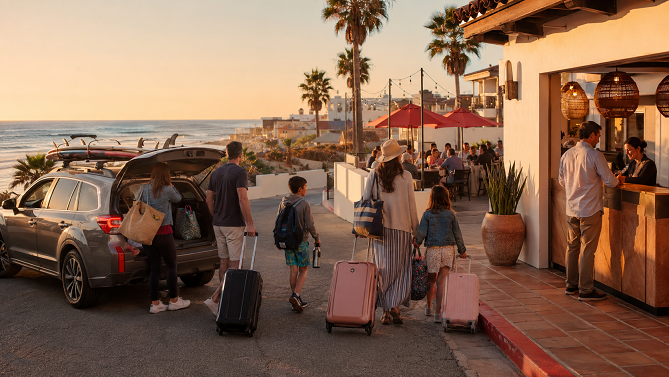
Those figures are meaningful because Rosarito is not a fly-in resort destination for most holiday travelers. It works as a border-adjacent beach city. Visitors can leave Southern California by car, cross through Tijuana, reach Rosarito, spend one or two nights near the water, eat in Puerto Nuevo, and return home without booking a full vacation week.
That is the exact kind of travel that has become more valuable in 2026. People still want the feeling of a summer trip, but many prefer shorter, more controllable getaways. Rosarito benefits from that mindset because the destination is close enough for a quick decision yet different enough to feel like a real break.
For hotels and restaurants, the occupancy number also signals pricing power. A nearly full Saturday gives businesses room to earn more from a short holiday window. For travelers, it signals the opposite: waiting too long can mean fewer rooms, higher rates, tougher restaurant timing, and heavier return traffic.
Why Southern California Still Shapes Rosarito’s Beach Economy
Rosarito’s tourism economy has long depended on cross-border visitors, but the July Fourth weekend shows how strong that connection remains. Southern California travelers can treat Rosarito as a beach weekend, food trip, surf stop, family escape, or nightlife stay without needing a flight. That proximity is the city’s biggest travel advantage.
Official tourism materials describe Playas de Rosarito as a traditional sun-and-beach destination with water activities, surf, diving, Baja Studios, the Baja California Center, and Puerto Nuevo-style lobster as key visitor draws through the official Rosarito tourism guide. Baja California’s official tourism site also calls Rosarito the “Cradle of Surfing in Baja California,” noting waves available year-round and surf areas for different skill levels through the Baja California Rosarito visitor guide.
That mix matters because Southern California visitors are not all looking for the same trip. Some want a family beach weekend. Others want a surf break, seafood lunch, spa stay, wedding weekend, wine-country add-on, or quick coastal reset. Rosarito can serve those different trip styles because it sits between Tijuana’s border access, Puerto Nuevo’s dining identity, and the coastal route toward Ensenada.
This is why the July Fourth number is more than a hotel statistic. It shows how a U.S. holiday can activate a whole cross-border travel corridor.
How July Fourth Turns Rosarito Into A High-Pressure Weekend
Holiday weekends are different from ordinary summer weekends because travelers arrive in tighter waves. Many people leave after work, cross during similar windows, dine at similar times, and return north around the same day or evening. A destination can feel manageable on a regular weekend and strained during a U.S. holiday.
Rosarito’s 97% Saturday occupancy suggests that travelers should treat July Fourth weekend like a peak event period. Hotel choice, parking, beach access, restaurant timing, and border return plans all need more attention. A traveler who books late may still find a room, but not necessarily in the location, price range, or property style they wanted.
Restaurants can feel the same pressure. Puerto Nuevo lobster houses, beachfront seafood spots, coffee shops, taco stops, and hotel restaurants all see concentrated demand when hotels are nearly full. Travelers who assume they can arrive at peak dinner hour with a large group may face waits, limited tables, or a rushed experience.
The smarter approach is to plan around time blocks. Beach time, dinner time, and return-crossing time should not all be improvised. A relaxed Rosarito weekend usually works best when the traveler leaves space between activities instead of trying to fit beach, Puerto Nuevo, nightlife, and a northbound border crossing into one tight stretch.
Why Hotel Occupancy Also Affects Restaurants And Local Businesses
A full hotel weekend does not only benefit hotels. Visitors who stay overnight spend across the local economy. They buy coffee, seafood, beach snacks, gas, souvenirs, parking, spa services, convenience items, ride-share trips, tours, and casual meals. That is why Rosarito’s hotel occupancy is a useful signal for the broader visitor economy.
The reported 21% increase in average room rate revenue also suggests that holiday demand is translating into stronger hotel-side economics. For local businesses, that can create a short but valuable revenue window. A restaurant that prepares for larger groups, a beach vendor that stocks appropriately, or a tour operator that communicates clearly can capture more value from the same weekend.
The challenge is consistency. A high-demand weekend can bring more customers than staff, parking, kitchens, or roads can comfortably handle. Businesses that communicate current hours, reservation rules, payment options, parking limits, and realistic wait times can turn heavy traffic into better guest experiences.
Travelers benefit from that same clarity. Before driving south, they should check hotel policies, restaurant hours, cancellation rules, and whether a business takes reservations. This is especially useful for families, large groups, and visitors with limited Spanish who may need a smoother plan.
What Travelers Should Plan Before A Holiday Weekend
| Planning Factor | Why It Matters In Rosarito | What To Check Before Leaving |
|---|---|---|
| Hotel Location | Near-full occupancy limits choices | Distance to beach, parking, check-in time, cancellation rules |
| Restaurant Timing | Dinner demand can spike when hotels fill | Reservations, current hours, group-size limits |
| Border Return | Northbound waits can shape the whole trip | San Ysidro and Otay Mesa wait times |
| Beach Access | Parking and crowds change by hour | Arrival time, paid parking, family needs |
| Add-On Trips | Puerto Nuevo or Ensenada can extend the day | Drive time, daylight, dining windows |
This kind of planning does not make the trip less spontaneous. It protects the parts of the trip that matter most. A traveler can still decide where to stop for tacos or when to walk the beach, but the hotel, return crossing, and dinner plan should not be left entirely to chance during a weekend that nearly fills the city’s hotel base.
Why Border Timing Is Part Of The Rosarito Experience
Rosarito beach travel is inseparable from border planning for Southern California visitors. The trip is not finished when travelers leave the hotel. It is finished when they return through San Ysidro, Otay Mesa, or another port of entry. During holiday weekends, that final step can shape whether the trip feels easy or exhausting.
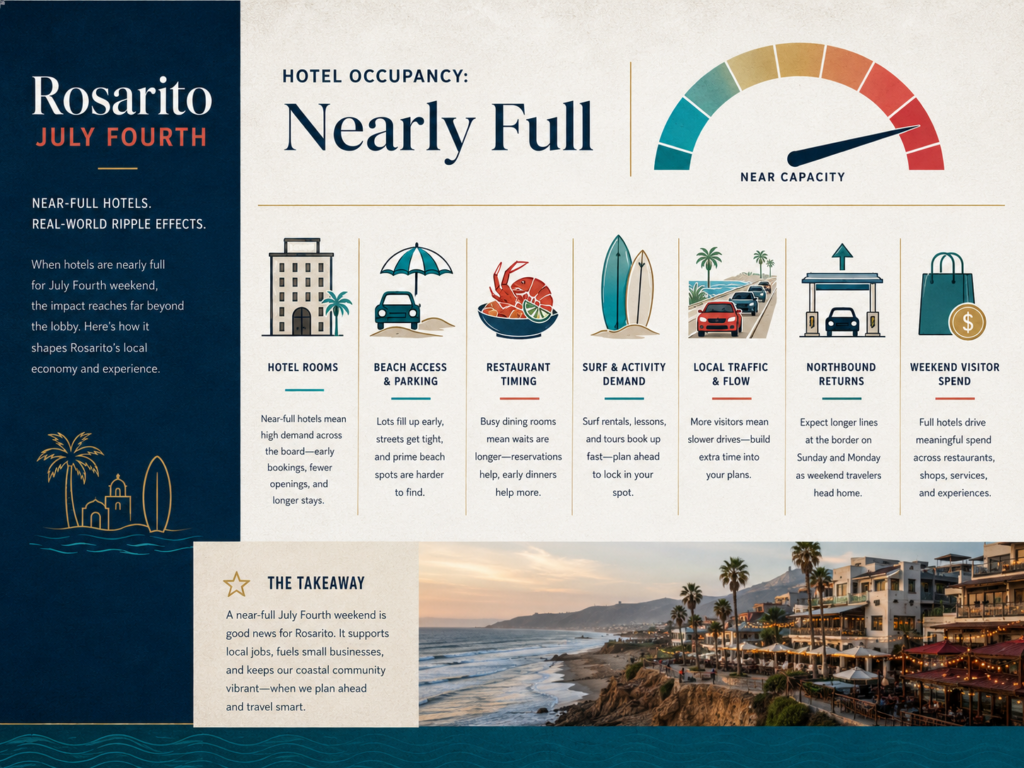
U.S. Customs and Border Protection provides official border wait-time information for ports of entry including San Ysidro and Otay Mesa through the CBP border wait-time tool. Travelers should check that source before choosing a return hour, especially on Sunday evenings, holiday Mondays, and peak summer weekends.
The practical issue is that Rosarito can feel close on the map but longer in real time. A 30-minute coastal drive to the border area can turn into a longer return if many U.S.-bound visitors leave at once. SENTRI, Ready Lane, and general lanes can also differ sharply, so travelers should check the lane that actually applies to them.
Families should be especially careful. A late checkout, long lunch, beach stop, gas stop, and border line can stack into a tiring return day. For many visitors, the best Rosarito plan is to decide the return window before the trip begins, then adjust only after checking current conditions.
How Rosarito Fits The Bigger Baja Travel Pattern
Rosarito’s July Fourth hotel demand fits a wider Baja travel pattern. Northern Baja is increasingly shaped by short-stay visitors who want food, coast, wine, events, and border access in the same trip. Rosarito can serve as the beach base, Puerto Nuevo as the seafood stop, Valle de Guadalupe as a wine-country extension, and Ensenada as a longer coastal add-on.
That makes Rosarito valuable as both a destination and a gateway. A visitor may stay in Rosarito for the beach but build a second day around lobster, surf, wine, or a coastal drive. This is similar to other Baja travel patterns where timing, food, and access define the trip more than distance alone. BajaTimes has covered how Baja California mass tourism planning is becoming more important as major events, border movement, and visitor services overlap across the region.
The lesson for travelers is that Baja trips work best when they are built around corridors, not isolated stops. Rosarito is close to Tijuana, but it is also connected to a coastal tourism chain. A visitor who understands that can avoid overloading one day and create a better weekend.
Why Higher Room Rates May Not Slow Demand Immediately
The reported increase from $129 to $156 in average room rate does not appear to have stopped the July Fourth rush. That makes sense for a holiday weekend. When travelers have a fixed date, limited time, and a destination close to home, they may accept higher room rates if the trip still feels cheaper or easier than flying elsewhere.
Rosarito’s value proposition is not only the hotel price. It is the total trip cost. A Southern California family may compare Rosarito with San Diego beach hotels, Orange County coastal rooms, Palm Springs resorts, or a flight-based trip. Even with a higher room rate, Rosarito can still look competitive if the group drives, shares a room, eats casually, and keeps the trip short.
That does not mean travelers are indifferent to price. It means the price is being judged against convenience and experience. A beachfront room, a seafood dinner, a short drive, and a different cultural setting can feel worth the premium during a holiday window.
Hotels should be careful with that demand. If rates rise, visitors expect cleaner communication, reliable check-in, safe parking guidance, and a smoother stay. Strong demand creates opportunity, but it also raises expectations.
What Rosarito Businesses Can Learn From The July Fourth Weekend
The July Fourth numbers should encourage Rosarito businesses to think like regional travel planners. Southern California visitors often make decisions quickly, but they still search for current information. They want to know where to stay, where to eat, how long the crossing might take, what is family-friendly, whether parking is simple, and whether a place is prepared for holiday crowds.
Businesses that keep online hours current, explain reservation rules, answer messages, and show real location details are more likely to capture this traveler. The same applies to hotels. Clear check-in instructions, parking information, pet policies, cancellation terms, and proximity to the beach can matter as much as photos.
The destination also benefits when businesses work together. Hotels can suggest nearby restaurants with realistic timing. Restaurants can tell guests when large groups should call ahead. Tour and activity operators can make pickup points clear. That coordination helps Rosarito feel easier for visitors who may not know the city well.
Holiday weekends are won before the traveler arrives. The businesses that prepare for the visitor’s questions usually win more of the trip budget.
What Travelers Should Check Before Booking Rosarito
Travelers planning a future July Fourth, Labor Day, summer, or long-weekend Rosarito trip should start with three questions: where will we sleep, when will we cross back, and what experience matters most? A beach weekend, Puerto Nuevo seafood trip, surf stay, nightlife trip, or family hotel weekend will each require a different plan.
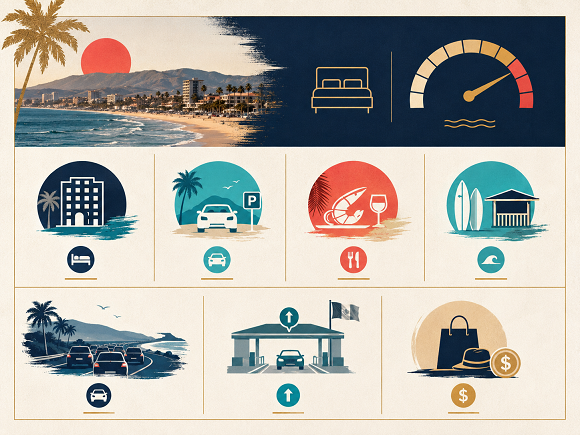
Travelers should book lodging earlier for U.S. holiday weekends, especially if they want beach proximity or secure parking. They should confirm restaurant hours directly before relying on old travel content. They should check CBP wait times before returning north. They should build extra time for large groups, children, older relatives, and anyone unfamiliar with cross-border travel.
The destination remains close, but close does not mean effortless. Rosarito’s 97% July Fourth hotel occupancy proves that Southern California demand is strong enough to fill rooms quickly, raise rates, and put pressure on the visitor experience. For travelers, that is a reason to plan better. For Rosarito, it is proof that Baja beach travel still runs on the rhythm of Southern California weekends.


