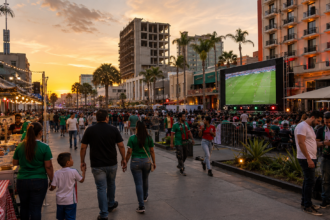
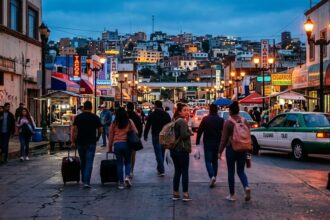
Close-to-home summer travel is giving U.S. small businesses a lift because many Americans are still traveling, but they are changing the shape of the trip. Instead of committing to longer, more expensive vacations, families are choosing regional road trips, day trips, weekend stays, and drive-to destinations where they can control costs more easily. That shift is helping businesses in places such as Lake Tahoe, Asheville, Kansas City, and other domestic tourism corridors where restaurants, outfitters, food makers, local shops, and short-stay attractions depend on seasonal visitors.
The pattern matters for BajaTimes readers because the same travel logic shapes Southern California and Baja trips. When travelers decide that closer, more flexible, and more experience-rich trips make more sense than expensive long-haul vacations, nearby destinations can win. That includes U.S. mountain towns, East Coast food cities, Midwest host cities, and cross-border escapes where planning, value, and local business support become part of the travel decision.
Why Travelers Are Staying Closer To Home
AP reported on July 3, 2026, that small business owners in U.S. tourist destinations are seeing Americans stick closer to home this summer, trading overseas travel for road trips, day trips, and shorter getaways. The report tied the pattern to higher airfares, gasoline prices, inflation pressure, the FIFA World Cup, and the country’s 250th birthday, all of which are giving people reasons to make memories without going far through this close-to-home travel report.
AAA’s Independence Day forecast reinforces the scale of the market. The organization projected 72.2 million Americans would travel at least 50 miles from home between June 27 and July 5, 2026, slightly above last year’s record of 71.8 million. That does not mean every traveler is spending freely. It means people are still prioritizing summer movement, even when they are making more cautious choices about distance, lodging, meals, and transportation through the AAA July Fourth travel forecast.
That is the central tension of summer 2026 travel. Demand is still strong, but the traveler is more selective. A family may skip an overseas trip but still drive to a lake. A couple may avoid a weeklong beach rental but book a two-night food weekend. A parent may choose a road trip because packing groceries, sharing lodging, and controlling the schedule feel more manageable.
Small businesses benefit when travelers do not cancel travel altogether. The spending shifts from airfare-heavy itineraries to more local purchases: rentals, coffee, chocolate, sandwiches, outdoor gear, souvenirs, local tours, family attractions, and casual restaurants.
Lake Tahoe Shows How Outdoor Businesses Benefit
Lake Tahoe is one example of how close-to-home travel can help seasonal businesses. AP cited Ron Williams of Tahoe Sports, who said his company was seeing strong demand from drive-in visitors renting bikes, kayaks, and paddleboards. That matters because outdoor rental businesses depend on people who may not own gear but still want a complete summer experience.
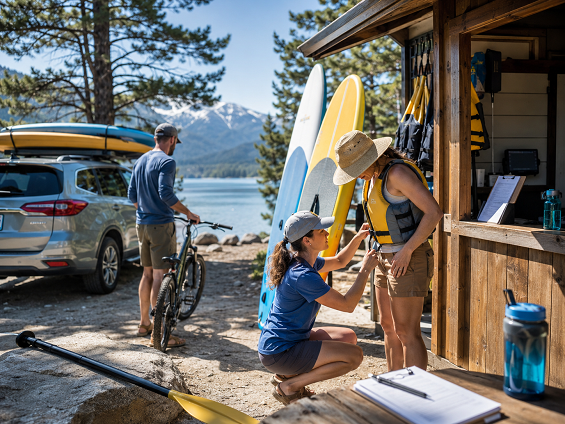
For a destination like Lake Tahoe, proximity is part of the product. Visitors from California and Nevada can reach the lake by car, stay for a shorter period, and still feel they have taken a real summer trip. The destination does not need every traveler to book a long luxury vacation. It needs enough families, couples, and friend groups to keep rental counters, restaurants, trails, marina services, and local shops active.
That pattern is especially valuable when travelers are watching costs. A paddleboard rental, a picnic, a scenic drive, and a two-night stay can feel more achievable than a flight-based vacation. The money may be spent more carefully, but it still circulates through local businesses.
For business owners, this kind of demand can be more reliable than one-time destination splurges. A nearby traveler may return later in the season, recommend the trip to friends, or visit again when fall colors, skiing, or another event changes the destination’s appeal.
Asheville Shows The Power Of Food-Based Recovery
Asheville, North Carolina, offers a different version of the same trend. AP cited Jael Skeffington of French Broad Chocolate, a local business that has become part of the city’s food identity. Asheville is still recovering from the effects of Hurricane Helene in 2024, but food, river activities, downtown walking, chocolate tours, breweries, and mountain access are helping bring visitors back.
Food businesses are especially well positioned for close-to-home travel. A traveler may reduce hotel nights or skip a flight, but still want one memorable meal, dessert stop, coffee shop, or local specialty. That makes restaurants, bakeries, chocolate makers, breweries, and farmers-market vendors central to the shorter-trip economy.
Asheville’s lesson is that recovery tourism does not have to be built only around major attractions. It can be built around a cluster of smaller experiences. A visitor may come for the Blue Ridge Mountains, but spend money on chocolate, lunch, local art, parking, river tubing, and a small shop downtown.
That kind of spending matters because it is distributed. Instead of one large transaction with a resort or airline, the trip supports many smaller businesses. For local economies, that distribution can be one of the biggest advantages of regional travel.
Kansas City Shows How Events Extend Local Spending
Kansas City is another strong example because event-driven travel can pull people from nearby regions. AP cited Keith Bradley of Made in KC, a local retail brand, as one of the small business operators seeing benefits from Americans traveling closer to home. Kansas City is also part of the broader World Cup tourism map, which gives the city a reason to attract visitors beyond its usual weekend market.
Events change the short-trip calculation. A traveler who might not otherwise visit a city may drive in for a match, watch party, festival, anniversary event, concert, or food weekend. Once there, the traveler spends on parking, food, local merchandise, hotels, ride-shares, and attractions.
This is why small businesses should pay attention to calendars, not only seasons. Summer travel demand may rise around holiday weekends, but it can also spike around sports schedules, city celebrations, local festivals, and national milestones. A business that knows when visitors are likely to arrive can adjust staffing, inventory, hours, reservations, and marketing.
Kansas City’s lesson is useful for any travel corridor. A destination does not need to be the most famous city in the country to benefit. It needs a clear reason for regional visitors to show up and enough local businesses ready to capture that attention.
Why Budget-Conscious Travelers Still Spend Locally
A cautious traveler is not the same as a non-spender. Many Americans are reducing costs in one part of the trip so they can still spend in another. They may drive instead of fly, cook breakfast at a rental, stay with relatives, shorten the trip, travel midweek, or choose a destination within a few hours. Those savings can leave room for selective spending.
That spending often goes to local experiences. People still want a memorable lunch, a scenic rental, a specialty dessert, a guided tour, a local market, or a shop that sells something tied to the place. A shorter trip can even make those purchases feel more worthwhile because the traveler has fewer days to create a sense of escape.
For small businesses, the opportunity is to meet travelers where they are. Value does not always mean cheap. It means clear, practical, and worth the stop. A family will pay for a kayak rental if the process is easy. A couple will buy local chocolate if the experience feels tied to the destination. A road-tripper will choose a local shop if it feels more memorable than a chain store.
That is why close-to-home travel can be powerful. It turns ordinary regional spending into vacation spending.
What This Means For Baja And Southern California Travel
The close-to-home pattern is also relevant for Baja and Southern California. Many travelers in San Diego, Orange County, Los Angeles, Phoenix, and the broader Southwest are weighing the same tradeoffs: airfare versus driving, long vacations versus quick escapes, big resorts versus local food and scenery.
Baja is well positioned in that environment because it offers nearby experiences that still feel distinct. Valle de Guadalupe, Ensenada, Tijuana, Rosarito, Tecate, and Baja California Sur road trips can all appeal to travelers looking for a trip that feels different without requiring a long-haul itinerary. BajaTimes recently covered how Valle de Guadalupe summer wine travel is becoming a Southern California story because food, wine, Michelin-recognized dining, and long-weekend planning are drawing more regional visitors.
The Baja connection is not that every U.S. traveler is suddenly crossing the border. It is that the same traveler mindset applies. People want reachable, practical, experience-rich trips. They want food, scenery, culture, and value. They want enough planning certainty to feel comfortable but enough difference to feel like they went somewhere.
That gives Baja businesses the same opportunity U.S. small businesses are seeing: serve the traveler who is still spending, but spending with more intention.
How Small Businesses Can Capture The Close-To-Home Traveler
Small businesses in tourist destinations should not assume this traveler behaves like a pre-2020 vacationer or a luxury traveler. The close-to-home traveler may be more flexible, more price-aware, more likely to compare options, and more likely to build a trip from several smaller purchases.
| Business Type | What Travelers Need | Practical Opportunity |
|---|---|---|
| Outdoor Outfitters | Easy rentals and clear safety basics | Offer simple half-day options and reservation clarity |
| Restaurants And Cafes | Memorable local meals without long uncertainty | Publish current hours, wait expectations, and signature items |
| Hotels And Inns | Short-stay comfort and local guidance | Provide two-night itineraries and nearby business recommendations |
| Local Shops | Place-specific products | Highlight regional makers, gifts, and travel-friendly items |
| Tour Operators | Flexible, time-conscious experiences | Build shorter tours for weekend and day-trip travelers |
The common thread is clarity. When people travel closer to home, they may decide faster and compare more options. A business with current hours, easy booking, visible pricing, accurate location details, and a strong local identity has an advantage.
That applies in Lake Tahoe, Asheville, Kansas City, Baja wine country, and almost any destination trying to attract regional travelers.
Why Day Trips And Short Stays Can Be Economically Useful
Tourism economies often focus on overnight stays because hotels, lodging taxes, and multi-day spending are easy to measure. But day trips and short stays still matter. A day visitor can buy lunch, pay for parking, rent gear, visit a museum, buy souvenirs, and return later for a longer trip.

Short visits are also lower-risk for travelers. A family uncertain about costs may test a destination with a day trip before committing to a weekend. A couple may visit a restaurant town for one night before booking a later food-and-wine itinerary. A regional traveler may explore a place during a festival and return in a quieter season.
For small businesses, that means the first interaction matters. The visitor who walks into a shop, rents a bike, buys chocolate, or eats at a local restaurant may be forming an opinion about the entire destination. A good experience can turn a close-to-home compromise into a repeat travel habit.
Destinations should treat day-trippers as future overnight guests, not second-tier visitors.
Why Local Authenticity Matters More This Summer
Close-to-home travel puts pressure on destinations to feel worth the trip. If a visitor is only driving two or three hours, the place has to offer something different from home. That does not require expensive attractions. It requires local identity.
Lake Tahoe has water, mountains, and outdoor rentals. Asheville has food, art, chocolate, breweries, and mountain access. Kansas City has local retail, barbecue culture, sports energy, and event-driven downtown activity. Baja has wine valleys, seafood, border culture, coastal drives, craft food, and desert-meets-ocean scenery.
Small businesses are often the clearest expression of that identity. They are the places travelers remember because they feel rooted in the destination. A chain store can fill a need, but a local shop gives the trip a story.
That is why this travel trend can be good news for independent businesses. Travelers trying to make a shorter trip feel meaningful often seek the very places that make a destination distinct.
What Travelers Should Check Before A Close-To-Home Trip
Close-to-home does not mean no planning. Regional trips can still be affected by traffic, weather, parking, lodging availability, wildfire smoke, heat, road work, sold-out rentals, restaurant closures, and holiday crowds. The smartest traveler treats a nearby trip with the same respect as a bigger vacation.
Check current hours directly from businesses, not only old travel blogs. Book outdoor rentals in advance during peak weekends. Review road conditions before leaving. Make restaurant reservations where possible. Carry water, sun protection, and a backup plan. For cross-border or international-adjacent trips, verify documentation, insurance, phone coverage, and return timing.
The point is not to make the trip complicated. It is to protect the experience. A short trip has less room for mistakes because there are fewer days to recover from a bad plan.
That is especially true for families. A two-hour wait, a closed attraction, or a sold-out rental can change the day quickly. Good planning keeps the trip relaxed enough to feel like a vacation.
Why This Trend Could Last Beyond One Summer
Close-to-home travel may be strongest during expensive travel cycles, but the habit can last. Once travelers discover that a nearby destination offers enough food, scenery, activity, and local character, they may keep returning even when budgets improve.
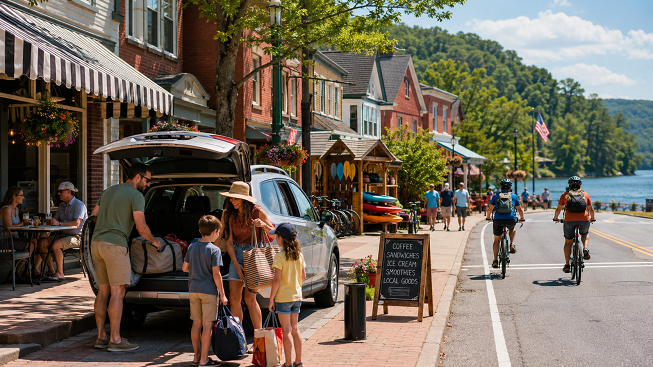
That is the best long-term outcome for small businesses. A summer of cautious travel can introduce new customers to regional destinations. A visitor who originally chose a road trip to save money may later return for a birthday, anniversary, family weekend, holiday market, ski trip, food festival, or wine harvest.
For destinations, the goal should be loyalty, not only traffic. Businesses that offer clear information, good service, local character, and practical value can turn a budget-driven visitor into a repeat guest.
The close-to-home travel lift is not just about Americans staying within driving distance. It is about a renewed appreciation for reachable places that still feel special. That is why U.S. small businesses are seeing an opening this summer—and why destinations from Lake Tahoe to Asheville, Kansas City, and Baja’s regional travel corridors should pay attention.