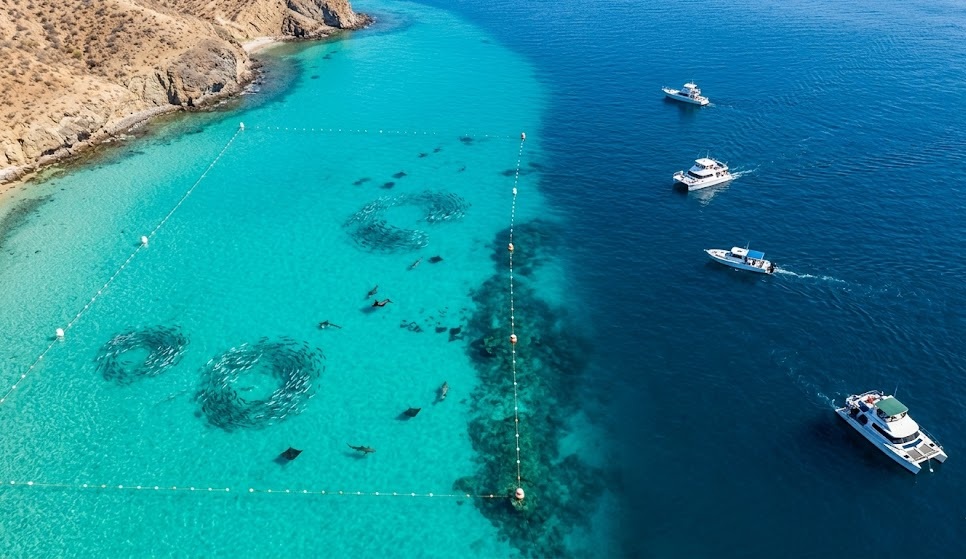
In 2026, Mexico is taking significant steps to expand marine protected areas (MPAs) across the Sea of Cortez, reinforcing its commitment to preserving one of the most biologically rich marine ecosystems in the world.
Often referred to as “the aquarium of the world”—a term popularized by Jacques Cousteau—the Sea of Cortez is home to hundreds of fish species, migratory whales, sea lions, and endangered marine life. As tourism continues to grow in Baja California Sur, authorities are moving to ensure that this growth does not come at the expense of long-term ecological stability.
The expansion of protected zones signals a shift toward managed, sustainability-driven tourism, where conservation is not just a policy—but a central part of the visitor experience.
What Marine Protected Area Expansion Actually Means
Marine protected areas are designated zones where human activity is regulated to protect ecosystems. In the Sea of Cortez, this includes restrictions on fishing, boating, anchoring, and wildlife interaction depending on the level of protection.
The 2026 expansion builds on existing frameworks such as:
- Cabo Pulmo National Marine Park
- Espíritu Santo Island National Park
- Loreto Bay National Park
The goal is to increase the total protected surface area and improve enforcement in high-traffic zones, particularly around La Paz and Los Cabos.
Rather than banning tourism, these measures aim to guide how tourism happens, ensuring that activities like snorkeling, diving, and wildlife encounters remain viable for future generations.
Why The Expansion Is Happening Now
The timing of this expansion is directly tied to the rapid growth of tourism in Baja California Sur.
Over the past decade, the region has experienced a surge in visitors drawn by its marine life and outdoor experiences. While this has boosted the local economy, it has also increased pressure on fragile ecosystems.
Key concerns include:
- Overcrowding in popular snorkeling areas
- Disruption of wildlife behavior from unregulated tours
- Damage to coral reefs and marine habitats
By expanding protected areas now, authorities are attempting to stay ahead of these risks, implementing safeguards before environmental degradation becomes irreversible.
How Protected Areas Are Changing Tourism Activities
For travelers, the expansion of MPAs does not mean fewer experiences—it means more structured and responsible ones.
Tour operators are increasingly required to follow guidelines that may include:
- Maintaining safe distances from wildlife
- Limiting group sizes
- Operating within designated zones
This shift is already visible in activities like whale shark tours in La Paz, where access is controlled to prevent overcrowding.
Here’s how the experience is evolving:
| Activity | Before Expansion | After Expansion |
|---|---|---|
| Snorkeling | Open access | Designated zones and limits |
| Wildlife Tours | Variable regulation | Standardized guidelines |
| Boating | Flexible routes | Restricted areas in MPAs |
| Fishing | Broad access | Controlled or restricted zones |
The result is a more predictable and sustainable tourism model, where quality of experience is prioritized over volume.
The Economic Impact On Baja’s Tourism Industry
At first glance, stricter regulations might seem like a limitation for tourism. In reality, they often have the opposite effect.
Well-managed ecosystems tend to attract higher-value travelers—those willing to pay for guided, ethical, and exclusive experiences. This aligns with Baja California Sur’s broader strategy of shifting toward premium, low-impact tourism.
Protected areas also help preserve the natural assets that drive tourism in the first place. Without healthy marine ecosystems, the region would lose much of its appeal.
This balance between conservation and economic growth is becoming a defining feature of Baja’s tourism model.
Cabo Pulmo: A Proven Example Of Conservation Success
One of the strongest arguments for expanding marine protected areas comes from Cabo Pulmo.
Since its designation as a protected marine park in 1995, Cabo Pulmo has experienced a dramatic ecological recovery. Scientific studies have shown that fish biomass in the area increased by more than 400% within a decade, making it one of the most successful marine conservation stories in the world.
Today, Cabo Pulmo attracts divers and eco-tourists from around the globe, demonstrating that conservation can enhance—not limit—tourism potential.
What This Means For Travelers Visiting Baja In 2026
For travelers, the expansion of MPAs introduces a new dynamic: planning and awareness become essential parts of the experience.
Visitors may encounter:
- Permit requirements for certain activities
- Limited daily access to high-demand locations
- Greater reliance on certified tour operators
While this may require more preparation, it also ensures a more meaningful and less crowded experience.
For those looking to explore responsibly, this guide to Sea of Cortez wildlife experiences provides insight into how to navigate eco-tourism opportunities within protected areas.
How Baja Fits Into Global Conservation Trends
Baja California Sur is not acting in isolation. Around the world, destinations are expanding protected areas to address the environmental impact of tourism.
From the Great Barrier Reef in Australia to marine reserves in the Mediterranean, governments are recognizing that long-term tourism success depends on preserving natural resources.
Mexico’s efforts in the Sea of Cortez place it among leading nations adopting proactive conservation strategies.
According to the International Union for Conservation of Nature (IUCN), marine protected areas are one of the most effective tools for safeguarding biodiversity while supporting sustainable tourism.
A More Controlled, More Sustainable Future
The expansion of marine protected areas marks a turning point for Baja California Sur.
Tourism is no longer being allowed to grow unchecked. Instead, it is being shaped by policies that prioritize sustainability, resilience, and long-term value.
For travelers, this means experiencing a destination that is not only beautiful, but also actively protected and thoughtfully managed.
In 2026, visiting the Sea of Cortez is about more than seeing marine life—it’s about understanding the systems in place to preserve it.