Grand Canyon disruptions after the August 29, 2026, flash flood have shifted the South Rim travel equation from a normal park visit to a water, lodging, trail-access, and local-business problem. The immediate damage was physical: floodwater in Bright Angel Canyon severely damaged the Transcanyon Waterline, the system supplying water to the South Rim, including the intake, leaving many areas without potable water, according to AP reporting. The wider effect is economic because Grand Canyon trips are not isolated purchases. A room night, a guided hike, a shuttle ride, a meal, a gas stop, and a gear purchase all depend on park access functioning in predictable ways.
As of September 25, 2026, the practical message for travelers is not that the Grand Canyon stopped mattering. It is that planning has become more conditional. Visitors who once treated South Rim lodging, inner-canyon trail access, and village services as standard parts of the experience now need to confirm water status, closures, cancellation rules, and nearby alternatives before booking.
Why Grand Canyon Disruptions Matter To Travelers
What Grand Canyon Disruptions Changed First
The waterline damage hit the core of the visitor experience because water is not a secondary amenity at the South Rim. It supports lodging, food service, bathrooms, employee housing, trail operations, emergency readiness, and basic resident life in Grand Canyon Village. Research notes from late September described Grand Canyon Village as a year-round community of about 1,600 residents, meaning the shortage affected workers and families as well as visitors.
Park officials estimated that about 40% of the 12.5-mile Transcanyon Waterline was destroyed by the flood, according to The Washington Post. That figure helps explain why the economic impact has extended beyond a brief closure notice. A damaged pipeline can restrict hotel operations, food service, employee housing, and backcountry logistics at the same time.
Why A Waterline Becomes An Economic Issue
For travelers, infrastructure usually becomes visible only when it fails. At a place like Grand Canyon National Park, the supply chain for a single visit is especially dependent on water and access. A family staying at a South Rim lodge may also eat inside the park, take shuttle routes, book a mule or hiking-related experience, visit shops, and stop in Tusayan or Flagstaff. If lodging closes, that spending does not simply move within the park. Some of it is delayed, redirected outside the area, or canceled.
This is where sports culture and outdoor travel overlap with local economics. Inner-canyon hikers, endurance-minded visitors, backpackers, and rim-to-rim planners tend to spend on lodging, food, gear, transport, and permits or reservations. When water availability and trail access change, those travelers cannot always substitute a casual viewpoint stop for the trip they planned.
Economic Pressure Around The South Rim
Lodging Closures Reduce More Than Room Revenue
The research notes identify several lodging facilities affected by the lack of water, including El Tovar Hotel, Bright Angel Lodge, Maswik Lodge, Yavapai Lodge and Trailer Village, Phantom Ranch, and related campgrounds. Those closures matter because in-park lodging is not just a place to sleep. It anchors dining demand, early trail starts, visitor-center traffic, shuttle use, gift-shop spending, and staffing patterns.
In 2024, the region drew nearly 5 million visitors and generated close to $1 billion in annual visitor spending, supporting almost 9,000 jobs, about $400 million in labor income, and $1.1 billion in total economic output in nearby communities, according to the research notes. Those numbers should be read as scale, not as a precise loss estimate for the August 2026 flood. Still, they show why even a partial disruption can matter. A shortfall in lodging capacity during a key travel period can affect hotel workers, restaurant servers, guides, maintenance crews, shuttle-related services, and businesses outside the park boundary.
Visitor Declines Add Pressure
The research notes also show a softer visitation base before the flood. Grand Canyon visits were about 4.9 million in 2024, then fell to about 4.4 million in 2025, with further declines into 2026 linked in part to wildfire and flood disruptions. For local businesses, that sequence matters. A single bad month is hard; repeated disruptions make it harder to retain staff, carry debt, maintain inventory, and keep seasonal operations viable.
Travelers may experience that pressure as fewer available rooms, altered restaurant hours, reduced services, or more uncertainty around bookings. Businesses may experience it as a cash-flow problem at the exact moment when they need to pay employees, repair property, or prepare for the next travel wave. For broader regional travel context in the same network, Californian Times provides insights into visitor-economy stories across the West.
Access, Closures, And Outdoor Recreation
Trail Limits Affect High-Value Trip Planning
Trail closures are central to the economic story because the Grand Canyon is not only a scenic stop. It is a hiking, backpacking, photography, trail-running, and outdoor-training destination. Research notes list closures including South Kaibab Trail below the Tip-Off and Bright Angel Trail below its intersection with the Tonto Trail, along with damaged bridges, utilities, and other infrastructure, with no estimated reopening date. Travelers building active trips should read closure details before committing money; a related planning note on inner canyon trails explains why water, heat, lodging, and reroutes now need closer attention.
Outdoor travelers often book earlier and spend more specifically than casual viewpoint visitors. A backpacking trip may require lodging before and after the hike, transport timing, meals, specialty gear, and training time. If a trail segment closes, the replacement is not always simple. A rim walk may still be worthwhile, but it is not the same product for someone who planned an inner-canyon route.
Access Uncertainty Changes Booking Behavior
The safest business assumption is that uncertainty reduces early commitment. Travelers facing unclear water service, lodging closures, and trail restrictions may delay booking, choose refundable rates, shorten stays, or shift to other Arizona and Utah destinations. That behavior is rational, but it can deepen stress for businesses that rely on advance reservations to schedule staff and purchase supplies.
For sports and outdoor visitors, the key is to separate scenery access from trip purpose. If the purpose is a rim viewpoint visit, options may be different than if the purpose is a backcountry route, a Phantom Ranch stay, or a long-distance hike. The disruption does not erase the destination, but it narrows which experiences can be planned with confidence.
Planning Around Water And Lodging Limits
What Travelers Should Confirm Before Booking
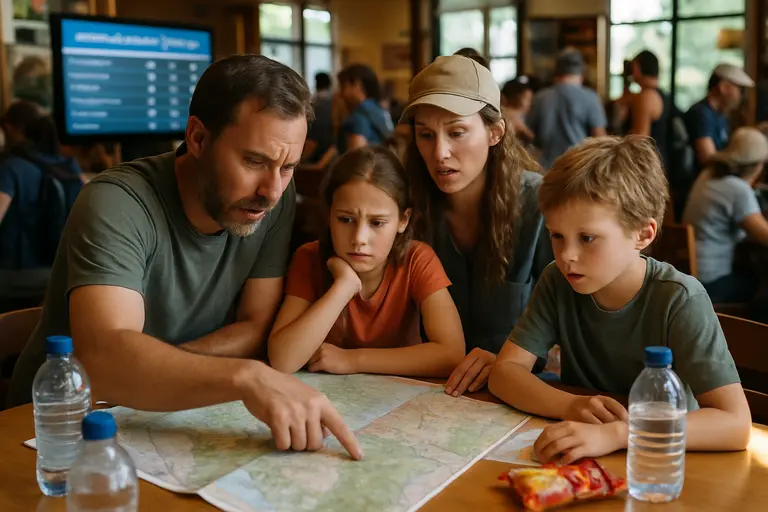
As of early September 2026, water officials expected restoration of a reliable supply in “weeks, not months,” with work underway on a temporary intake at Bright Angel Creek, according to the research notes. That estimate was useful, but it should not be treated as a personal booking guarantee on September 25, 2026. Travelers should confirm the latest status directly with the park and lodging operators before paying for nonrefundable rooms or arranging backcountry-dependent trips.
- Confirm whether the specific lodge, campground, or dining facility is operating on the exact travel dates.
- Check whether potable water is available where the trip depends on it, especially for trail plans.
- Ask about cancellation terms before booking rooms, tours, shuttles, or guide services.
- Review trail closures against the intended route, not just the general park status.
- Build extra flexibility into road-trip plans involving Tusayan, Flagstaff, Williams, or other nearby bases.
Research notes indicated that hotels inside the park were expected to remain closed until around Thanksgiving 2026, with water service restoration tied to pumping from a new treatment facility by November 16, 2026. Because those dates were projections, travelers should treat them as planning signals rather than fixed promises.
Cost And Timing Caution
Cost impacts for visitors may appear in indirect ways. A closed in-park lodge can push demand to rooms outside the park. A canceled inner-canyon plan can add change fees, longer drives, or extra nights elsewhere. A shorter park stay can reduce the value of flights or road-trip time already committed. None of those outcomes should be assumed for every traveler, but they are realistic risks during an infrastructure disruption.
Travelers who still want a Grand Canyon experience should match the plan to confirmed access. A scenic-drive and rim-viewpoint trip has different needs than a backcountry hiking trip. A family road trip has different flexibility than a group that trained for a specific corridor route. The more specialized the trip, the more conservative the booking strategy should be.
Grand Canyon Disruptions And The Travel Economy
Grand Canyon disruptions show how a single infrastructure failure can ripple through a destination economy built on outdoor access. The damaged Transcanyon Waterline affected water supply first, but the secondary effects reached lodging, trails, resident life, employee stability, visitor confidence, and nearby businesses. That is why the August 29, 2026, flood should be understood as more than a weather event. It became a travel-economy shock.
The cautious reading is also the most useful one. The Grand Canyon remains a major public-land destination, but late-2026 trips require verification rather than assumptions. Travelers should confirm water, lodging, trail, and cancellation details close to departure. Businesses need clear communication because uncertainty can be as damaging as a closure notice. For the South Rim economy, recovery depends not only on repairing pipe and trail infrastructure, but also on restoring traveler confidence in what can be booked, reached, and experienced on specific dates.