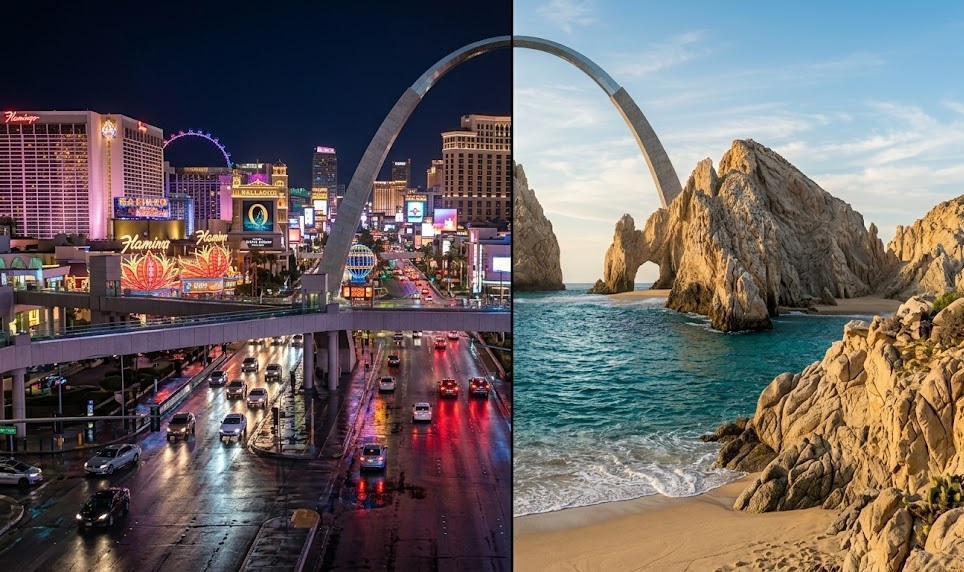
The connectivity between the world’s most iconic desert entertainment hub and Mexico’s premier luxury destination has reached a significant milestone. In May 2026, Southwest Airlines officially inaugurated its highly anticipated nonstop service between Harry Reid International Airport (LAS) in Las Vegas and Los Cabos International Airport (SJD). This move marks a strategic pivot for the Dallas-based carrier, as it solidifies Las Vegas not just as a domestic powerhouse, but as a primary international gateway for travelers heading to the Baja Peninsula.
For years, the journey from “Sin City” to the “Land’s End” required a connection through hubs like Phoenix (PHX), San Diego (SAN), or Los Angeles (LAX). The introduction of this direct link fundamentally alters the travel dynamics for residents of Southern Nevada and the millions of international visitors who use Las Vegas as a multi-destination base. By removing the friction of layovers, Southwest is tapping into a growing “dual-destination” trend where travelers pair a high-energy Vegas excursion with a tranquil Cabo retreat.
Bridging Two Global Entertainment Powerhouses
The synergy between Las Vegas and Los Cabos is undeniable. Both destinations cater to a high-volume, experience-driven demographic that prioritizes accessibility and premium hospitality. However, the lack of a direct flight has historically acted as a bottleneck for spontaneous travel between the two regions. According to the Los Cabos Tourism Board (FITURCA), international arrivals have seen a steady 2.6% year-over-year increase in early 2026, driven largely by the diversification of flight origin points.
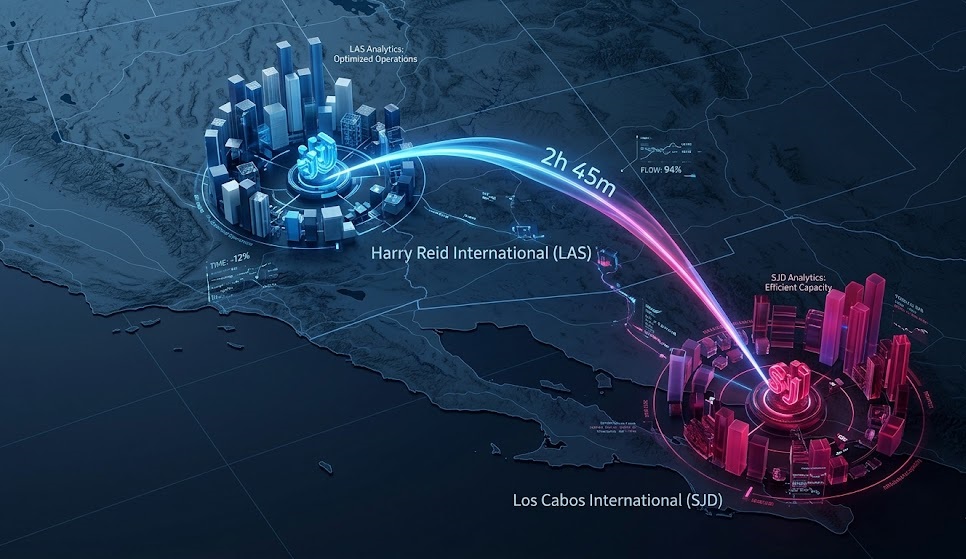
This new route is not an isolated development but rather the centerpiece of Southwest’s broader 2026 expansion strategy. The airline has identified Las Vegas as a “foundational community,” positioning it alongside Orlando as a primary hub for leisure growth. By launching this direct link, Southwest is effectively bridging the gap between the sports and convention capital of the world and the culinary and golf capital of Mexico.
Flight Logistics and Operational Capacity
Operational efficiency is at the heart of this new route. Southwest is utilizing its fleet of Boeing 737-800 and 737 MAX aircraft to service the corridor, offering a balance of fuel efficiency and passenger comfort. The flight duration is remarkably short, typically clocking in between 2 hours and 35 minutes and 2 hours and 50 minutes, depending on wind patterns. This makes the trip shorter than many domestic cross-country flights within the United States.
| Flight Feature | Detail / Specification |
| Origin Airport | Harry Reid International (LAS) – Terminal 1 |
| Destination Airport | Los Cabos International (SJD) – Terminal 2 |
| Average Flight Time | 2 Hours 45 Minutes |
| Aircraft Type | Boeing 737-800 / 737 MAX 8 |
| Frequency | Daily Round-Trip Service |
The daily schedule has been optimized to capture both the traditional week-long vacationer and the emerging “weekend warrior” market. Morning departures from Las Vegas allow travelers to be poolside in Cabo San Lucas by early afternoon, while late-afternoon return flights maximize the final day of a vacation. This cadence is essential for a market that increasingly values time as much as cost.
The Strategic Shift for “Weekend Warrior” Tourism
One of the most compelling aspects of the LAS-SJD route is its appeal to the short-term traveler. Historically, the three-to-four-day getaway was difficult to justify when four to six hours of that time were spent in airport terminals during connections. With the new nonstop access, Los Cabos becomes as accessible to Las Vegas residents as a drive to Southern California, but with the added allure of an international cultural experience.
This shift is particularly relevant as airlines are adding more direct flights to Los Cabos from non-traditional hubs across the U.S. and Canada. The Las Vegas route specifically benefits from a unique “reverse-feeder” effect. International tourists from Europe or Asia who fly into Las Vegas for conventions or residency shows now have a frictionless path to extend their journey into Mexico. This creates a powerful tourism “circuit” that strengthens the economic ties between the two regions.
Competitive Landscape: How Southwest Disrupts the Cabo Market
Southwest’s entry into the nonstop Las Vegas-Cabo market introduces a layer of price competition that has been absent for several years. While other carriers have operated seasonal charters or one-stop services, Southwest’s brand of “no-fee” baggage and flexible cancellation policies creates a high bar for competitors.

Analytically, this disruption is likely to result in a “Southwest Effect” on the route, where the increased capacity and competitive pricing force other carriers to re-evaluate their regional strategies. For the consumer, this translates to lower average fares and more frequent promotions. In a landscape where travel costs have faced upward pressure, this new competition is a welcome reprieve for budget-conscious luxury seekers.
Furthermore, Southwest’s expansion coincides with the Southwest Airlines official 2026 route announcement, which highlights a significant ramp-up in international departures from Nevada. The carrier is not just competing on price; it is competing on the “convenience factor,” which is often the deciding variable for high-net-worth individuals and corporate retreat planners who frequent the Los Cabos corridor.
A Turning Point for Cross-Border Regional Connectivity
The launch of the Las Vegas to Los Cabos nonstop service is more than just a new line on a flight map; it is a testament to the maturing relationship between the Southwestern United States and the Baja Peninsula. As infrastructure at both Harry Reid International and Los Cabos International continues to expand to meet record-breaking demand, the barriers between these two distinct yet complementary cultures are dissolving.
For travelers, the message is clear: the journey to the tip of the Baja Peninsula is now faster, cheaper, and more convenient than ever before. Whether it is a quick escape from the neon lights of the Strip or a calculated extension of a business trip, the new Southwest route ensures that the sun, sand, and serenity of Los Cabos are only a short, direct flight away. As we look toward the remainder of 2026, this route is expected to maintain high load factors, further cementing the status of Los Cabos as a global leader in accessible luxury tourism.