The 2026 change to national park fees is not a small paperwork update for foreign travelers. It changes the cost math for international visitors who plan to enter some of the most visited U.S. parks, especially families, guided groups, and road-trippers building trips around multiple park gates. For U.S. residents, the familiar $80 America the Beautiful annual pass remains in place. For non-U.S. residents, the annual pass price increased to $250, and a separate $100 per-person surcharge now applies at 11 major parks for non-U.S. residents aged 16 and over.
The practical effect depends on trip style. A couple visiting one park for a short stop may face a different decision than a family trying to connect Yellowstone, Grand Teton, and Rocky Mountain on a longer outdoor route. The new structure also puts more pressure on travelers to confirm costs before reserving lodging, booking flights, or planning a scenic drive at a park entrance station.
Why National Park Fees Changed In 2026
National Park Fees For Pass Buyers
The largest visible change is the annual pass price for non-U.S. residents. The America the Beautiful annual pass for non-U.S. residents rose from $80 to $250, while U.S. residents continue to pay $80. That is a direct price difference for travelers who previously used the pass as a cost-control tool across several parks.
For international visitors, the pass is no longer an automatic savings choice. The decision now depends on how many fee sites are included, which parks are on the route, how many travelers are age 16 or older, and whether the itinerary includes one of the 11 parks with the added surcharge. The pass may still have value on some multi-park trips, but travelers should calculate the full expected cost rather than relying on the old $80 benchmark.
Where The Surcharge Applies
The National Park Service lists an added $100 per-person charge for non-U.S. residents aged 16 and over at 11 parks, and says standard entrance fees are separate from that charge. Standard entrance fees generally range from $20 to $35 per vehicle for a seven-day pass, according to the official NPS entrance fee page.
- Acadia
- Bryce Canyon
- Everglades
- Glacier
- Grand Canyon
- Grand Teton
- Rocky Mountain
- Sequoia & Kings Canyon
- Yellowstone
- Yosemite
- Zion
That list matters because it covers parks that often anchor international road trips. A traveler who visits only one of them faces a different expense than someone planning a circuit through several western parks. The key point is that the surcharge is per eligible person, not just per vehicle.
How Costs Change For Foreign Travelers
Trip Budget Effects
The clearest budget shift is for parties with more than one adult or older teenager. A vehicle entrance fee may still look modest on paper, but the added international visitor charge can raise the total quickly. For example, the research supports that a standard seven-day vehicle fee commonly falls between $20 and $35, while the added charge at the listed parks is $100 for each non-U.S. resident age 16 or older. That means the largest cost increase comes from group size, not from the vehicle fee itself.
Travelers comparing national park fees should separate three items: the ordinary entrance charge, the $100 surcharge where it applies, and the $250 non-resident annual pass price. Mixing those together can lead to poor estimates. A trip that looked affordable under the old pass price may still be worthwhile, but the price difference should be built into the planning stage before lodging cancellation deadlines pass.
Fee-Free Days And Access Timing
The change also affects fee-free planning. Research from the Associated Press reports that resident-only patriotic fee-free days, including Veterans Day, are now exclusive to U.S. residents, and that Interior Secretary Doug Burgum framed the policy as a way for U.S. taxpayers to retain affordable access while international visitors contribute more toward park maintenance and services through the AP report on park fee changes.
For foreign visitors, this means a trip should not assume that a fee-free date will reduce costs. If a park visit is being timed around a holiday, travelers should verify whether the fee break applies to them. This is especially relevant for international visitors who are flying into the United States and cannot easily shift dates once hotels and car rentals are booked.
Road Trips And Gateway Town Planning
The Parks Most Likely To Shape A Route
The surcharge list includes parks that often define outdoor road trips: Grand Canyon, Zion, Bryce Canyon, Yellowstone, Grand Teton, Glacier, Yosemite, Rocky Mountain, Sequoia & Kings Canyon, Acadia, and Everglades. The research does not give a single itinerary, and travelers should avoid treating the list as a ready-made route. Distances, weather, lodging supply, seasonal access, and timed-entry rules can vary by park and year.
For travelers combining park visits with mountain drives, it’s essential to ensure route timing fits with entrance costs. Colorado enthusiasts can explore scenic routes and planning resources at Drive Sat Mile High, which is part of the same travel network.
What To Check Before Booking
Before paying for flights or hotels, foreign visitors should check the current fee page for each park on the route, confirm whether the $100 charge applies, and count every traveler age 16 or older. That last step is easy to miss. A family of four with two older teenagers may face a very different bill than two adults traveling with younger children.
Access also involves more than price. Some parks manage heavy demand through separate systems, seasonal road openings, shuttle rules, or entrance procedures. The research supplied here does not verify those park-specific access rules, so travelers should check each park’s official page close to the booking date and again shortly before arrival.
Economic Signals And On-Site Friction
International Demand Is Already Uneven
The visitor data in the research shows why the change is being watched closely by gateway communities. National parks welcomed more than 14 million international guests in 2018. By 2024, the international share had declined in at least some locations; Yellowstone reported that nearly 15% of its visitors were from outside the country in 2024, down from 30% in 2018.
Those figures do not prove that the 2026 fee change will reduce travel by a specific amount. They do show that international visitation is already uneven, and that a higher entrance cost lands in a market that has not simply returned to its earlier international mix. Tourism-dependent businesses near parks, including areas around Glacier National Park, have expressed concern that higher costs may discourage foreign visitors.
Entry Lines And Local Business Risk
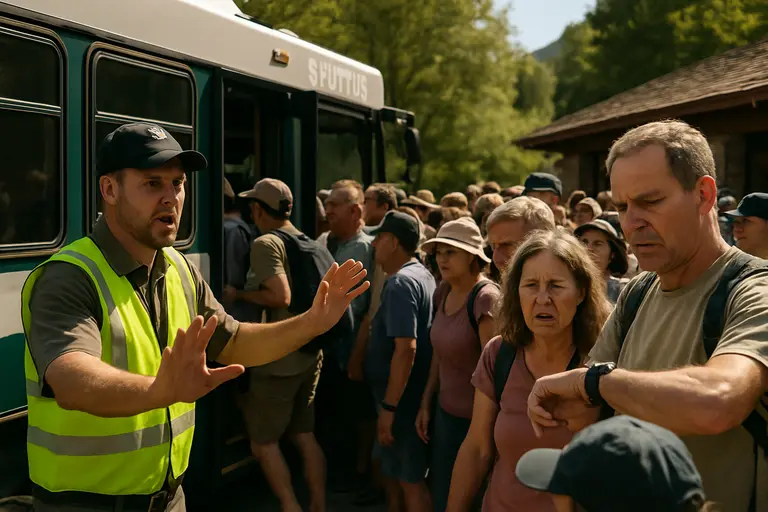
The research also notes early implementation concerns, including reports of longer entry lines tied to residency checks and instances of visitors abandoning park plans because of the new costs. Travelers should treat those reports as a reason to build extra time into arrival days rather than as a promise that every entrance station will have delays.
For gateway towns, the risk is more practical than theoretical. International travelers often book lodging, meals, fuel, guides, rental cars, and supplies near park entrances. If some visitors shorten a route, skip a park, or redirect to non-fee outdoor areas, spending can shift away from those communities. At the same time, the stated policy goal is to generate more money for visitor facilities, essential maintenance, and improved services nationwide. Both outcomes can exist at once: parks may receive added revenue while some local businesses face reduced international demand.
How To Plan Around National Park Fees
Questions To Answer Before You Pay
The safest planning approach is a simple cost worksheet built before reservations become hard to change. Travelers should identify every park on the route, mark whether it is one of the 11 surcharge parks, count non-U.S. residents age 16 and older, then compare per-visit costs against the $250 non-resident pass. They should also check whether any fee-free day applies to them, rather than assuming it does.
A cautious checklist should include the standard vehicle fee, the per-person surcharge, pass eligibility, timed-entry or reservation rules where relevant, seasonal road access, lodging cancellation dates, and arrival time at the entrance station. This keeps national park fees connected to the full travel plan instead of treating them as a gatehouse surprise.
Access Trade-Offs For Outdoor Trips
The new structure does not mean foreign visitors should avoid U.S. parks. It does mean they should be more selective and price-aware. A higher-cost park day may still justify itself for travelers who have long planned Yosemite, Yellowstone, Grand Canyon, or Zion. Other travelers may choose fewer park entries, longer stays in one area, or a route that balances national parks with state parks, scenic roads, beaches, forests, or public lands not covered by the listed surcharge.
For international travelers, the decision is no longer just whether a park is worth visiting. It is whether the park fits the budget, timing, access rules, and route design of the whole trip. Clear planning will matter more in 2026 than it did under the old pass price, especially for families and multi-park road trips.