The summer travel season of 2026 is shaping up to be one of the most logistically challenging periods for Southern California flyers in recent history. At the center of this friction is San Diego International Airport (SAN), where the final, high-intensity push to complete Phase 1 of the massive $3.8 billion New Terminal 1 project has triggered unprecedented operational bottlenecks. With the official opening of the new facility not scheduled until mid-September 2026, peak summer travelers between June and August are bearing the full brunt of construction-related disruptions.
From permanently closed parking lots to terminal transit loops stretched beyond capacity, navigating SAN this summer requires extreme patience. Travelers frequently report TSA security wait times exceeding 1.5 hours during early morning flight banks, compounded by gridlock on the immediate airport approach roads. For those planning vacations to the Baja Peninsula or broader Mexican destinations, these domestic delays are prompting a massive strategic pivot toward the Cross Border Xpress (CBX) terminal in Santa Teresa as the preferred international gateway.
The Summer 2026 Infrastructure Bottleneck at SAN
The long-term vision for SAN’s New Terminal 1 promises a world-class, 2.6 million-square-foot facility featuring expanded dining, natural light, and improved gate capacity. However, the current reality on the ground is defined by intense construction infrastructure. The permanent closure of the old Terminal 1 parking lot has concentrated nearly all on-site parking into the Terminal 2 Parking Plaza, forcing Terminal 1 passengers to rely heavily on the overburdened Terminal Loop Shuttle to transit between facilities.
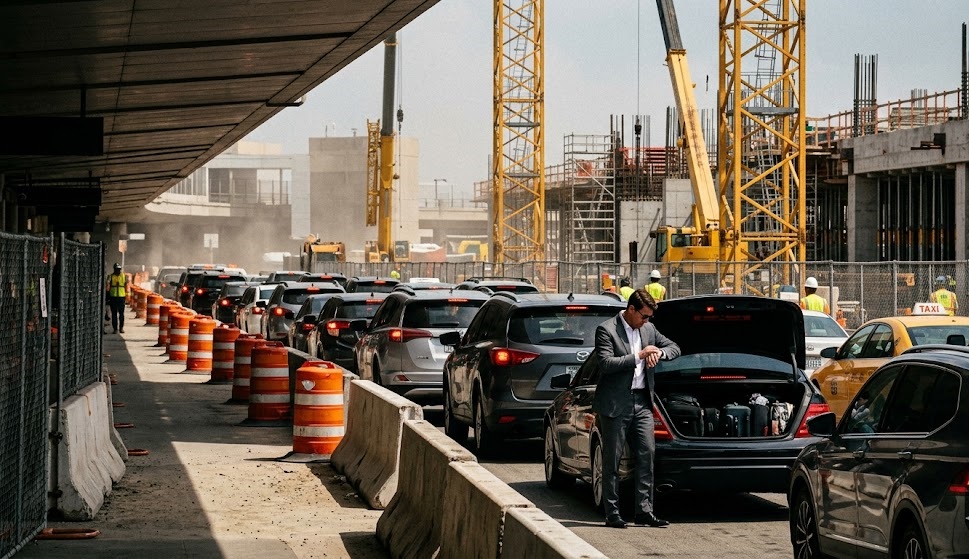
This vehicle congestion spreads rapidly to rideshare drop-off zones and municipal access roads, creating unpredictable delays before a passenger even enters the building. When combined with seasonal passenger volumes and unexpected regional FAA ground stops, SAN has become a high-risk starting point for time-sensitive vacationers. For travelers whose ultimate destinations are Cabo San Lucas, Loreto, or the capital city of La Paz, enduring this multi-layered domestic chaos is becoming increasingly unnecessary.
Understanding the CBX Alternative for Baja Travelers
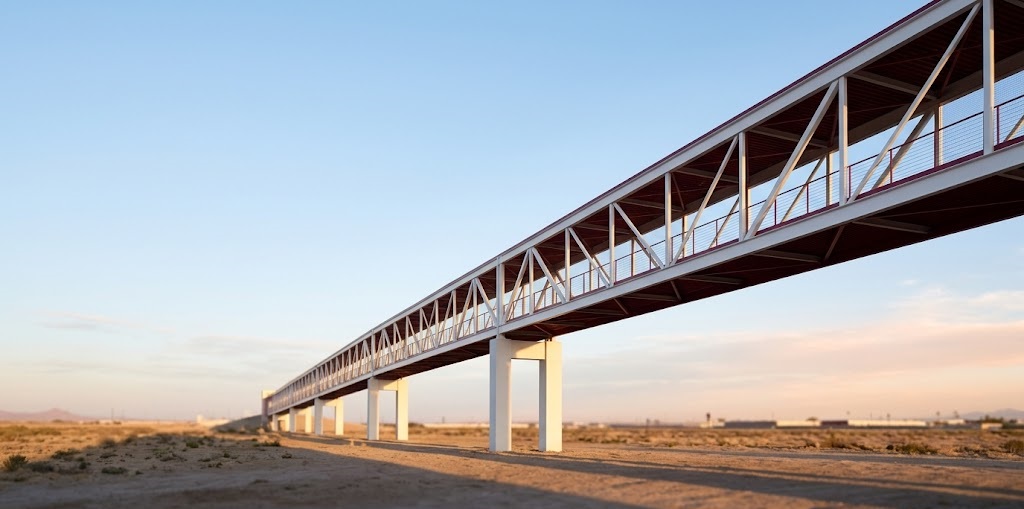
As the domestic infrastructure crunch intensifies north of the border, the Cross Border Xpress has firmly established itself as a model of cross-border transit efficiency. Having recently surpassed its 10-year anniversary under the continuous leadership of CEO Jorge Goytortúa, the privately operated terminal has processed more than 25 million ticketed passengers since its inception. CBX functions as a enclosed, secure 390-foot pedestrian skybridge that connects a specialized terminal in San Diego directly to the departure gates of Tijuana International Airport (TIJ).
The primary operational benefit of CBX is that it eliminates the traditional friction points of international travel. Passengers check in for their flights on the U.S. side of the border, walk across the architectural skybridge, clear Mexican customs (SAT) within a dedicated, streamlined corridor, and emerge directly inside the secure concourse of TIJ. This workflow effectively bypasses both the clogged highway lanes of the traditional San Ysidro land border and the severe TSA checkpoint backlogs currently plaguing San Diego International.
Data Comparison: SAN vs. CBX Transit Efficiency
When analyzing travel options for the peak summer rush, comparing the raw data highlights why seasoned travelers are altering their booking habits. The operational profiles of both hubs reveal distinct differences in capacity, accessibility, and processing speed:
| Operational Metric | San Diego International Airport (SAN) | Cross Border Xpress / Tijuana Airport (TIJ) |
| Peak TSA/Security Wait Times | 60 to 90+ minutes during morning surges | 15 to 30 minutes via automated E-gates |
| On-Site Parking Status | Terminal 1 lot permanently closed; T2 restricted | 8,500 short- and long-term secure spaces |
| Direct Destinations in Mexico | Limited to major hubs (Los Cabos, Puerto Vallarta) | 40+ direct domestic Mexican destinations |
| Average Departure Buffer | 3 hours recommended for international flights | 2 hours recommended on the U.S. side |
This division illustrates why TIJ has experienced a steady annual growth rate, fueled almost entirely by Southern California residents utilizing the CBX gateway. By redistributing the logistical weight away from urban airport terminals to a purpose-built border crossing, travelers can predictably manage their schedules.
Financial and Operational Advantages of Flying via TIJ
Beyond the clear time-saving benefits, the economic logic of routing a summer vacation through CBX and Tijuana International Airport is compelling. Flights departing from TIJ to destinations within Baja California Sur or mainland Mexico are classified as domestic operations. This classification exempts travelers from the heavy international taxes and federal segment fees automatically appended to flights departing from U.S. soil like SAN or LAX.

High carrier competition at TIJ—driven by Mexican airlines such as Volaris and VivaAerobus—maintains downward pressure on base airfares, even during peak summer weeks. This pricing structure often allows a family of four to save hundreds of dollars on airfare alone, easily offsetting the nominal cost of the bridge ticket. These savings are increasingly vital as rising regional hospitality costs force consumers to find efficiency in their transit budgets.
Beyond logistics, safety and security protocols at CBX remain a benchmark for cross-border travel. The controlled terminal environment on the U.S. side and the direct access to secure federal areas in Mexico align closely with broader updates on Mexico travel safety, offering peace of mind to international vacationers who wish to bypass unpredictable municipal transit systems.
Streamlining Your Cross-Border Journey
To maximize the efficiency of the CBX terminal during the summer surge, travelers must adhere to specific operational guidelines set by border authorities. The bridge is not a public walkway; it is legally restricted to ticketed air passengers holding a valid boarding pass for a flight departing from or arriving at TIJ within a strict time window.
Key requirements for a seamless crossing include:
- The 24-Hour Rule: Departing passengers are only permitted to access the bridge within 24 hours of their scheduled flight time.
- Documentation Readiness: Travelers must possess a valid passport, a completed FMM (Multiple Migratory Form), and proof of paid Mexican immigration fees if staying longer than seven days.
- Ticket Integration: To utilize the bridge, travelers must purchase a ticket via the official Cross Border Xpress platform, which handles seasonal rates ranging from $20 to $30 one-way.
The facility features designated pickup and drop-off zones optimized for rideshare services like Uber and Lyft, as well as major car rental onsite desks. By arranging transportation directly to the Santa Teresa terminal, travelers eliminate the uncertainty of airport parking entirely.
Navigating the 2026 Summer Travel Surge
The operational realities of Summer 2026 require a shift in how travelers approach the logistics of regional transit. While San Diego International Airport works through the final, challenging phases of its historical transformation, travelers are not forced to participate in the resulting delays. Utilizing CBX represents a sophisticated approach to destination travel—one that prioritizes predictability, financial efficiency, and peace of mind.
By substituting terminal gridlock with a managed, modern skybridge, the vacation begins the moment you step into the Santa Teresa facility, rather than hours after struggling through a TSA line. As Baja California continues its rapid evolution into a premier global travel market, assets like CBX ensure that the region remains highly accessible, letting visitors focus on the culture, cuisine, and landscapes that make the peninsula unique.