

Baja California’s waters are among the most biologically rich marine environments on the planet. From whale shark migration routes near La Paz to coral reefs around Cabo Pulmo, the region’s ecosystems support thousands of marine species and attract travelers from around the world.
Now a new conservation goal is shaping the future of the region: protecting 30% of ocean territory by 2030. The initiative aligns with international biodiversity commitments that aim to safeguard marine ecosystems while balancing economic activities such as fishing and tourism.
For Baja — a destination increasingly dependent on eco-tourism — the question is not only whether protection is possible, but how it can be implemented without disrupting local communities and the tourism economy.
The Global Goal Behind The 30×30 Ocean Initiative
The push to protect 30% of global oceans by 2030 is part of a broader international conservation framework adopted during recent global biodiversity agreements.
The idea is simple: healthy marine ecosystems are essential for climate stability, fisheries, and biodiversity. Yet many coastal regions around the world have seen declining fish populations and coral degradation due to overfishing, pollution, and warming oceans.
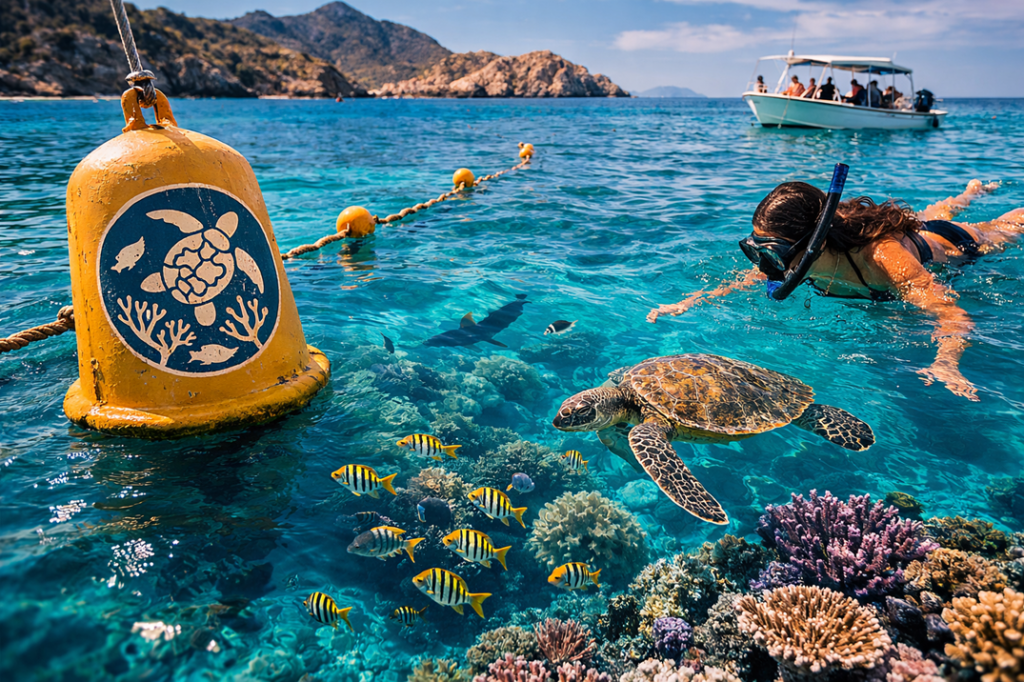
Protecting strategic ocean areas allows marine habitats to recover and ensures long-term sustainability.
Organizations such as the United Nations Environment Programme emphasize that marine protection zones can significantly increase biodiversity and help restore depleted fisheries when properly managed.
For Baja California, this global initiative aligns naturally with a region already recognized for its extraordinary marine diversity.
Why Baja’s Waters Are Central To Mexico’s Conservation Strategy
Baja’s coastline stretches for more than 3,000 kilometers, covering both the Pacific Ocean and the Sea of Cortez. These waters support:
- Migrating whale populations
- Large whale shark feeding areas
- Important coral reef systems
- Commercial fishing habitats
Because of this biodiversity, many existing marine reserves are already located in the region.
| Marine Protected Area | Key Ecosystem | Main Attraction |
|---|---|---|
| Cabo Pulmo National Park | Coral reef ecosystem | World-class scuba diving |
| Espíritu Santo Island | Marine wildlife habitat | Sea lion snorkeling |
| Loreto Bay National Park | Island biodiversity | Whale watching and kayaking |
These reserves have shown how marine protection can coexist with tourism when regulations are properly enforced.
Travelers exploring experiences like snorkeling in the Sea of Cortez often visit these protected areas, where clear water, thriving reefs, and abundant marine life create some of Baja’s most memorable travel experiences.
The Role Of Marine Protected Areas
Marine Protected Areas (MPAs) are the primary tool used to achieve conservation goals.
Rather than banning all activity, MPAs typically regulate how the ocean can be used. Depending on the zone, rules may include:
- Limits on fishing methods
- Restrictions on anchoring near reefs
- Caps on tour boat traffic
- Designated wildlife observation distances
These policies are designed to allow ecosystems to regenerate while still supporting tourism and sustainable fishing.
The success of Cabo Pulmo National Park illustrates how effective these protections can be. After strict fishing limits were introduced, marine biomass in the area increased dramatically over the following years, turning the reef into one of the most celebrated conservation success stories in North America.
As more areas are considered for protection, policymakers hope similar results can be replicated across Baja’s coastline.
Tourism’s Role In Funding Conservation
Tourism is becoming an increasingly important component of conservation funding.

Eco-tourism activities such as diving, whale watching, and wildlife tours generate revenue that helps support conservation programs, park infrastructure, and scientific research.
Visitors traveling to Baja often participate in marine experiences that depend directly on healthy ecosystems, including:
- snorkeling with tropical fish
- whale watching tours
- sea lion encounters
- kayaking around protected islands
This connection between tourism and conservation creates a powerful incentive: protecting marine ecosystems can also strengthen the long-term tourism economy.
International organizations such as the World Wildlife Fund’s marine conservation program highlight how well-managed marine tourism can support conservation while providing economic opportunities for coastal communities.
Challenges Facing The 30% Protection Goal
Despite growing support, expanding marine protection is not without challenges.
Some fishing communities worry that additional restrictions could limit traditional livelihoods. Enforcement also presents logistical challenges in remote coastal areas where monitoring activities across vast ocean territories can be difficult.
At the same time, rapid tourism growth creates new environmental pressures that conservation efforts must address.
Key concerns include:
- increased boat traffic near wildlife
- coral damage from inexperienced divers
- coastal development impacting marine habitats
Balancing economic growth with ecological protection will require careful planning and collaboration between government agencies, local communities, scientists, and tourism operators.
A Future Where Tourism And Conservation Work Together
The idea of protecting 30% of Baja’s ocean territory may seem ambitious, but it reflects a broader shift in how coastal destinations approach sustainability.
Rather than treating conservation as a barrier to tourism, many policymakers now view healthy ecosystems as the foundation of the travel economy itself.
Visitors come to Baja for clear water, thriving marine life, and dramatic coastal landscapes. Protecting these resources ensures that future generations can experience the same natural beauty that defines the region today.
If the 30×30 ocean protection initiative succeeds, Baja California could become a global model for how tourism and conservation can evolve together.


