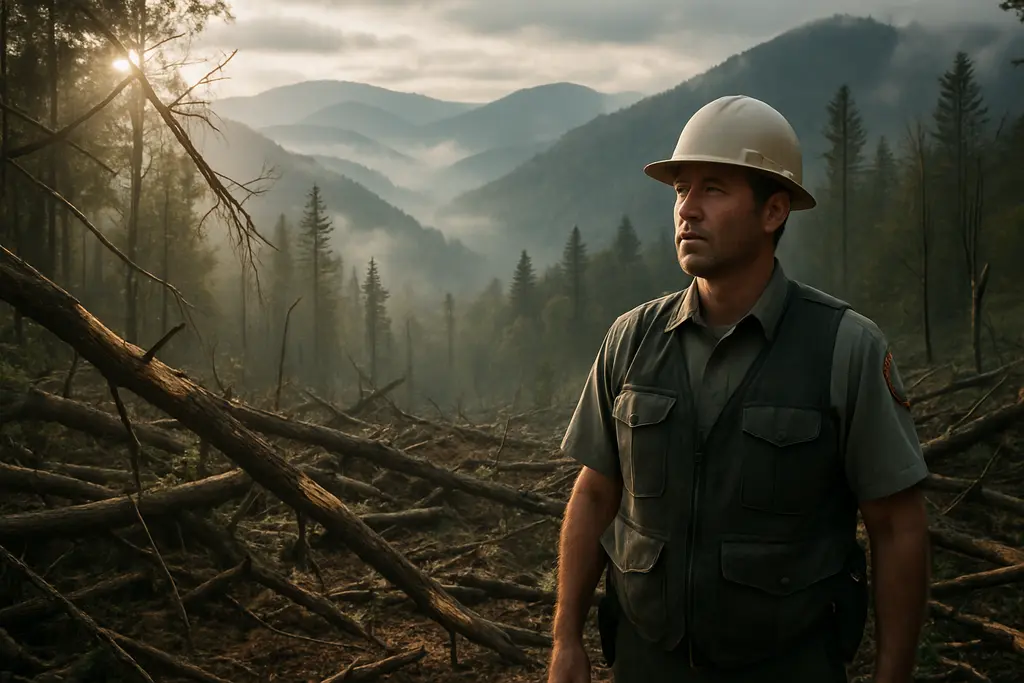
Smoky Mountains Closures changed quickly after Hurricane Isaias moved through the travel picture in early October 2026, and the practical lesson for visitors is clear: access in Great Smoky Mountains National Park can shift by elevation, wind exposure, road damage, and campground conditions. As of October 21, 2026, the strongest verified updates from the provided advisories show that U.S. 441/Newfound Gap Road closed on October 9, reopened on October 11, and that some visitor facilities and stops still required extra attention before trip planning.
For beach-and-outdoor travelers used to coastal storm planning, the Smokies are a reminder that inland mountain parks can face hurricane-related impacts too. The concern was not surf or storm surge. It was high wind, falling trees, debris, pavement damage, and the challenge of keeping a steep cross-park road usable. That matters for fall drives, hiking access, campground nights, and anyone using U.S. 441 as a scenic connector between Tennessee and North Carolina.
What Smoky Mountains Closures Changed
Smoky Mountains Closures Timeline
On October 9, 2026, the National Park Service closed U.S. 441/Newfound Gap Road beginning at 8 p.m. EDT because strong winds associated with Hurricane Isaias were expected to reach the park. The same notice said Balsam Mountain Campground on the North Carolina side closed at 5 p.m. EDT, and it cited a National Weather Service high wind warning with gusts up to 70 mph, especially on the Tennessee side, along with moderate rainfall across the park, according to the National Park Service notice.
Those details explain why the closure was not simply a traffic-control decision. U.S. 441/Newfound Gap Road climbs through high-elevation forest, and wind risk can translate into downed limbs, full tree falls, blocked lanes, or damage that cannot be assessed until conditions ease. In that setting, reopening depends on inspection and clearing, not just the end of rainfall.
For road-trippers, Smoky Mountains Closures around Newfound Gap Road affected more than one scenic pullout. U.S. 441 is one of the main cross-park routes, so a closure can change lodging choices, drive times, trailhead access, and whether a Tennessee-based day plan still works for North Carolina stops. Travelers planning a broader fall drive may want to compare timing and route decisions with this related Smoky Mountains road trip planning resource before setting a route.
Why Wind Drove The Access Decision
The October 9 closure was tied to the expected arrival of strong winds and possible tree debris. That is a different planning problem than a short construction delay. High wind can make conditions uncertain across a road corridor, especially where trees line a mountain roadway and visibility changes with rain and elevation. Even after a storm passes, crews may need daylight and field checks before reopening lanes.
The National Park Service also urged visitors to monitor weather alerts, adjust travel plans, and avoid closed or potentially hazardous roads. That advice remains relevant after a reopening because one road returning to service does not mean every campground, overlook, or side road has the same status. Travelers should treat each access point as its own check, especially after a named storm.
What Reopened And What Stayed Closed
Newfound Gap Road Reopened On October 11
Great Smoky Mountains National Park confirmed that U.S. 441/Newfound Gap Road reopened on Saturday, October 11, 2026, after the storm closure. A tourism update also reported that Balsam Mountain Campground remained closed, with alternate camping offered at Smokemont and Deep Creek, and that Carlos Campbell Overlook along Newfound Gap Road near Sugarlands Visitor Center was temporarily closed because cracks in pavement and sidewalk needed inspection and repairs, according to Visit Gatlinburg & Pigeon Forge.
That split status is the key planning point. The main road reopening helped fall drivers regain a major route through the park, but it did not erase every closure tied to the same weather period or related infrastructure concerns. A campground, a scenic overlook, and a through-road all serve different visitor needs. A family with a campsite reservation faces a different problem than a photographer looking for an overlook or a hiker trying to reach a trailhead.
Smoky Mountains Closures should therefore be read as a set of site-specific decisions, not a single open-or-shut condition for the whole park. If your plan depends on an overnight stay at Balsam Mountain, the relevant fact is the campground status. If your plan depends on a cross-park drive, the key fact is U.S. 441. If your plan depends on a scenic stop near Sugarlands, Carlos Campbell Overlook deserves its own check.
Campground And Overlook Impacts
Balsam Mountain Campground’s closure is especially relevant for travelers who build trips around quiet nights on the North Carolina side of the park. The provided reopening update named Smokemont and Deep Creek as alternatives, but travelers should still verify availability and reservation rules before changing plans. The research supplied for this story does not include cost changes, fee waivers, or guaranteed campsite availability, so it would be risky to assume any of those details.
Carlos Campbell Overlook presents a different type of travel disruption. It is not a campground or a through-route; it is a stop along Newfound Gap Road near Sugarlands Visitor Center. The reported issue was cracking in pavement and sidewalk needing inspection and repairs. For visitors, that means the road may be open while a specific viewpoint remains unavailable. It is a small detail, but it can affect photography plans, mobility planning, and timing for people who prefer frequent roadside breaks.
How To Plan A Smokies Trip After Isaias

Build Flexibility Into Driving Days
The most practical response is to make the first and last day of a Smokies trip less dependent on one road segment. If U.S. 441 is central to your plan, keep a backup route in mind and avoid stacking too many fixed activities on the same day. Mountain drives are rewarding, but they are less forgiving when wind, debris, or inspections change access.
For outdoor travelers, this is similar to planning around tides, swell, or launch conditions on the coast. You can still build a strong trip, but you need margin. After Hurricane Isaias, the key margin was time: time for road checks, time to change campground plans, and time to skip a closed overlook without losing the rest of the day.
- Confirm road status before leaving lodging, not only before leaving home.
- Check campground status separately from road status.
- Do not assume a reopened through-road means all overlooks or facilities are open.
- Keep food, fuel, layers, and daylight in mind if a detour changes the drive.
- Use official park updates and weather alerts before committing to high-elevation plans.
Match Your Plan To The Specific Closure
Smoky Mountains Closures affect travelers differently depending on the activity. A scenic driver may need a detour. A camper may need a new reservation. A hiker may need to shift trailheads. A family with limited mobility may need to know whether a specific overlook or restroom stop is available. The same closure map can create four very different trip changes.
There is also a timing issue. On October 9, the park was preparing for wind. On October 11, the main road had reopened. By October 21, travelers were no longer deciding whether to drive into an active closure on U.S. 441 from that storm event, but they still needed to verify any facility or overlook closure that could affect a specific plan. That distinction keeps the advice current without overstating risk.
Readers who track outdoor travel across beaches, mountains, and road-trip corridors may also find invaluable travel tips and experience-aware insights through The Silver Liners, a site in the same network.
What Smoky Mountains Closures Mean For Your Trip
For anyone planning around the Smokies after Hurricane Isaias, the practical takeaway is not that the park was off-limits. It is that access changed in layers. U.S. 441/Newfound Gap Road closed on October 9 at 8 p.m. EDT and reopened on October 11. Balsam Mountain Campground remained a separate issue in the reopening update, with Smokemont and Deep Creek named as alternatives. Carlos Campbell Overlook also required attention because pavement and sidewalk cracks prompted a temporary closure for inspection and repairs.
Smoky Mountains Closures are best handled with a route-first mindset. Decide which road, campground, overlook, or trailhead matters most to your trip, then verify that specific item before booking or driving. This is not about avoiding the Smokies; it is about respecting how mountain access works after wind and rain. A reopened main road can still coexist with a closed campground or overlook, and a good plan allows for that.
For travelers, that means using explicit dates, checking access close to departure, and avoiding assumptions based on a single reopening headline. The Smokies remain one of the country’s defining outdoor road-trip settings, but storms can change the details fast. Careful planning keeps the trip focused on the mountains rather than on last-minute reroutes.