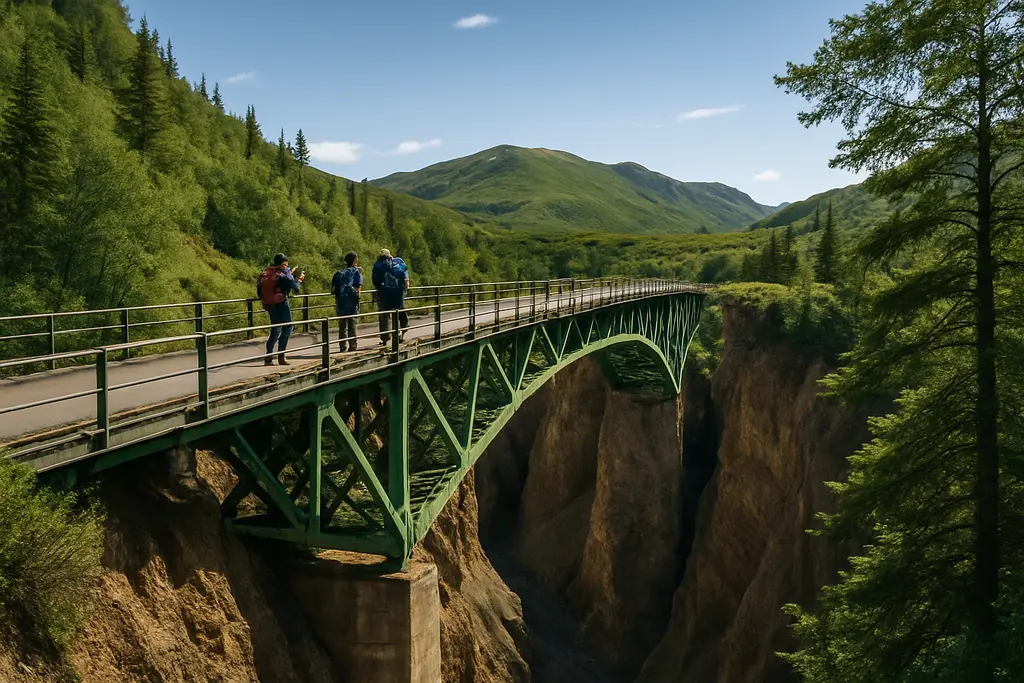
The Pretty Rocks Bridge is now complete, but Denali travel has not returned to its pre-2021 pattern. As of September 28, 2026, the key planning distinction is simple: non-motorized access west of East Fork has reopened, while public bus and tour access to the western Denali Park Road remains limited until the 2027 visitor season.
That difference matters for travelers booking Denali with specific goals in mind. A visitor hoping for a bus ride to Eielson Visitor Center, Wonder Lake, or Kantishna still needs to treat those western destinations as 2027 prospects, not late-2026 options. A cyclist or hiker, by contrast, has a new opening beyond East Fork, with the bridge crossing available for non-motorized travel under current park access rules described in the research notes.
The bridge’s completion is a major infrastructure milestone, but it should be read carefully. It restores a physical crossing over the active landslide area at mile 45.4, yet full visitor circulation depends on remaining road work, seasonal operations, and park decisions. Travelers should build plans around explicit dates and access categories, not assumptions based on the ribbon-cutting alone.
What The Pretty Rocks Bridge Changed
Pretty Rocks Bridge Status In 2026
The National Park Service said the bridge was completed with a ribbon-cutting ceremony on September 2, 2026, ending construction on Phase I of the Polychrome Area Plan. The same announcement describes a steel truss bridge about 475 feet long, 50 feet tall, and 24 feet wide, built to span the landslide while maintaining the historic road alignment near mile 45.4 of Denali Park Road NPS bridge announcement.
For travelers, the practical effect is not simply that a new structure exists. The change reopens a section of the park road corridor to hikers and cyclists beyond East Fork, which sits at mile 43. That is a meaningful shift after years of interruption, particularly for people comfortable with self-powered travel in a remote park-road setting. It does not mean private motorists, buses, or tour vehicles have resumed full west-end service.
What The Bridge Does Not Yet Restore
The Pretty Rocks Bridge does not, by itself, reopen the western road experience to the full range of Denali visitors. Research notes for September 28, 2026, state that buses and tour or transit vehicles remain restricted from traveling past East Fork until 2027. Eielson Visitor Center and Wonder Lake Campground remain closed in this access period, and regular seasonal road operations ended on September 17, 2026.
This distinction is especially important for travelers who plan Denali around the classic westbound park-road trip. If the purpose of a visit is to reach Eielson, Wonder Lake, or Kantishna by park bus, the supported planning window is the 2027 visitor season, when full bus service is expected to resume. That expectation should still be checked against park notices before booking lodging, flights, or a longer Alaska route.
What Travelers Can Access After East Fork
Non-Motorized Travel West Of Mile 43
As of August 27, 2026, hikers and cyclists were allowed to cross the bridge and continue west of East Fork. That creates a very different kind of Denali experience than a bus trip. Distances, weather exposure, wildlife awareness, daylight, and personal fitness carry more weight when the travel mode is walking or cycling rather than riding transit.
Visitors should avoid treating this reopening as a casual add-on. The road beyond East Fork passes through remote terrain, and support services are not the same as they are near the park entrance. A non-motorized trip may appeal to experienced cyclists or backcountry-minded hikers, but it requires conservative planning, realistic turnaround points, and current confirmation from Denali National Park before departure.
Motorized Access Still Stops Short
For most travelers, the most consequential fact is that motorized public access still stops at East Fork for the remaining 2026 access period described in the research. Private visitors should not plan a drive past that point, and bus-based itineraries should not be written as though west-end service has already resumed.
Those comparing road access to other scenic drives might explore Drives at Mile High for inspiration, but decisions on Denali should be informed strictly by park notices. This ensures decisions respect Denali’s unique rules and environmental conditions, reflecting current restrictions and opportunities.
Why The Landslide Still Matters
A Long-Running Geologic Problem
The Pretty Rocks landslide is not a new roadside inconvenience. The National Park Service describes the area as an active landslide that has displaced about 100 yards, or 90 meters, of the full road width at mile 45.4. The agency also notes that the area has been active for decades, with movement rates accelerating rapidly beginning in 2014 and intensifying into 2021 NPS landslide background.
That context helps explain why the 2026 opening is being staged. The landslide accelerated in late summer 2021, with research notes citing movement up to 0.65 inches per hour. Motorized travel beyond East Fork has been closed since August 2021 because the road could not be maintained through that moving section in a reliable way.
Engineering Work Beyond The Span
The bridge is the visible piece of the access change, but the surrounding engineering work matters. Research notes state that 23 thermosyphons were installed around the eastern abutment to help keep ground frozen in response to permafrost thaw. Phase II of the Polychrome Area Plan also involved realignment, rock scaling, and mitigation of other geologic hazards, including the Bear Cave Landslide at mile 44.8.
For travelers, this means 2027 access is expected rather than automatic. The completion of Phase I removed the central barrier at Pretty Rocks, but full vehicular restoration depends on related tasks being finished and accepted for visitor operations. That is why trip plans should keep a flexible margin, especially for early-season travel or expensive multi-stop Alaska itineraries.
How To Plan Denali Trips Around 2027 Access

If You Are Visiting After September 17, 2026
Because seasonal operations ended on September 17, 2026, late-2026 planning should be framed around limited access and end-of-season conditions. Travelers should not expect the normal summer bus network, and they should not assume that a completed bridge means visitor services have restarted across the west end of the road.
For people still assessing fall access details, BajaTimes has a related update on Denali Park Road fall access that fits the same planning question: what changed after the bridge completion, and what remains limited. Readers should pair any article with the latest park notice before making final plans.
If You Are Targeting The 2027 Visitor Season
For 2027, the major planning opportunity is the expected return of full bus service along Denali Park Road, including western destinations such as Eielson Visitor Center, Wonder Lake, and Kantishna. That would restore a travel pattern many visitors associate with Denali: a long park-road transit day focused on scenery, wildlife viewing opportunities, and access to deeper sections of the park.
Still, the cautious approach is to wait for confirmed 2027 schedules, operating dates, reservation rules, and any reopened facility details before committing to nonrefundable plans. The research supports an expected reopening, not a traveler guarantee. In Denali, road access can also be affected by weather, maintenance, and seasonal staffing decisions.
- For 2026 planning, treat East Fork at mile 43 as the motorized access limit described in the research notes.
- For hikers and cyclists, confirm current non-motorized access before crossing west of East Fork.
- For Eielson, Wonder Lake, or Kantishna, plan around the expected 2027 bus-service return and verify dates before booking.
- For late-season trips, account for the September 17, 2026 end of regular seasonal operations.
Pretty Rocks Bridge Planning Notes For Denali
Cost, Timing, And Access Clarity
The project cost is approximately $230 million, with funding described in the research notes as coming from federal transportation money, disaster relief supplements, and infrastructure funds. That scale helps explain why the bridge received broad attention: it was not a small repair, but a major effort to restore a critical section of Denali Park Road after years of landslide-related closure.
For travelers, the useful takeaway is narrower and more immediate. The Pretty Rocks Bridge has changed Denali access, but the change is staged. In 2026, it opened a path for hikers and cyclists beyond East Fork. In 2027, full bus service is expected to bring back broader public access to the west end. Until operating schedules are posted and confirmed, the best planning choice is to separate what is physically complete from what is available to the average visitor.
That separation can prevent costly mistakes. A traveler who wants a short entrance-area visit can still plan differently from someone targeting Wonder Lake. A cyclist studying the road west of East Fork needs a different risk assessment than a family expecting a transit bus. The bridge is an important milestone, but Denali trip planning still depends on access type, season, distance, and official park updates.