

Colorado Leaf Peeping in 2026 needs earlier planning than many fall travelers may expect. The key change is timing: Colorado transportation officials said on September 8, 2026, that drought and moisture stress were pushing peak foliage ahead of schedule, with northern high passes above 9,500 feet already showing color in early to mid-September and the central mountains expected to peak from late September into early October, according to the Colorado Department of Transportation.
For budget travelers, an early season can raise costs if plans are made too late. Lodging in popular mountain towns may become harder to price well near peak color weekends, and road delays can turn a low-cost day trip into a longer, more expensive outing. The practical response is not to rush blindly into the mountains. It is to match elevation, date, traffic risk, and backup routes before booking rooms or committing to long drives.
Colorado Leaf Peeping Timing In 2026
Colorado Leaf Peeping Windows By Region
The most useful planning detail is that the 2026 viewing windows were running about a week earlier than usual. CBS Colorado, updated on September 17, 2026, reported example windows of September 10–22 for Steamboat Springs and Cameron Pass, September 16–28 for Aspen, Vail, and Summit County, and September 18–29 for Gunnison and Crested Butte through its Colorado fall color timing report. As of September 21, 2026, that means some northern windows were close to ending, while several central and southern mountain areas still had practical viewing time.
This timing matters for anyone trying to keep costs down. A traveler who waits for the usual late-September or early-October instinct may still find color in some valleys and foothills, but the higher-elevation show may already be fading. That can lead to last-minute route changes, extra fuel, or a second trip. A better budget move is to choose a target area by elevation first, then compare lodging and transportation after the color window looks realistic.
Elevation Still Sets The Pace
Elevation remains the main planning tool. The research notes for fall 2026 point to high elevations around or above 10,000 feet peaking earlier, mid-elevations leaning toward late September, and lower elevations or Front Range foothills stretching into early to mid-October. That does not mean every hillside will look the same on the same date. Drought stress, aspect, wind, recent weather, and local tree health can all change the experience from one drainage to the next.
For Colorado Leaf Peeping, a downhill route can protect a trip from poor timing. If a high pass is past peak, lower roads and foothill corridors may still hold color later. This approach is useful for travelers who have already booked lodging and cannot easily shift dates. It also helps day-trippers avoid spending the whole day chasing one overlook that has already turned.
How To Cut Costs Without Missing The Color
Use Weekdays Before Paying More For Lodging
CDOT encouraged midweek travel from Tuesday through Thursday rather than weekends beginning in mid-September. That advice is especially relevant for budget travelers because traffic has a cost even when there is no toll. Delays can mean more fuel use, late meals, missed check-in windows, and less daylight for the actual foliage stop. A cheaper room far from the color can also lose value if traffic turns the drive into the main event.
Accommodation pricing is not included in the official foliage advisories, so travelers should avoid assuming any fixed savings. Still, the pattern is simple: popular mountain towns around Aspen, Vail, Summit County, Crested Butte, and Steamboat Springs draw heavy weekend interest when colors peak. If your schedule is flexible, compare Tuesday-to-Thursday stays against Friday-to-Sunday stays before booking. If you are planning with older relatives or a mixed-age group, travel advice from The Silver Liners can offer insights to keep drive times and rest stops more comfortable for everyone.
Transit Can Beat Parking Stress
Transit is not always the right fit for photography stops or family gear, but it deserves a cost comparison in 2026. CDOT promoted Bustang options, including a 25% discount for the Estes route on September 19–20 and September 26–27 with promo code ESTES25. As of September 21, 2026, the September 19–20 dates had passed, while the September 26–27 dates were still ahead. Travelers should verify availability, schedule details, and any discount conditions directly before relying on that fare.
Transit can be most useful when the goal is to avoid parking limits, traffic fatigue, or the cost of taking more than one vehicle. It may be less useful for travelers trying to stop frequently along a pass or reach trailheads outside the route. For Colorado Leaf Peeping on a strict budget, compare the full cost: fare, parking at the departure point, food, timing, and whether the route actually gets you near the color you want to see.
Road Access, Parking, And Route Choice
Guanella Pass And High-Demand Roads
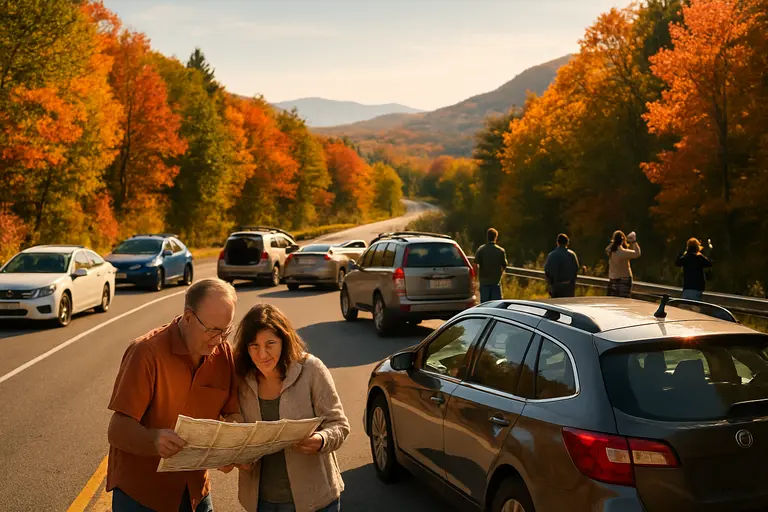
Some well-known fall routes need more caution than a normal scenic drive. CDOT specifically warned travelers about road closures and parking restrictions, including strict restrictions on Guanella Pass during peak leaf season to maintain emergency access. This is not just a convenience issue. Parking in restricted areas can block emergency vehicles, create hazards for pedestrians, and slow traffic for everyone using the corridor.
Budget travelers sometimes try to avoid paid lots or shuttle systems by improvising. That can backfire if the result is a citation, towing risk, or a long walk along a narrow road. Before leaving, check the road agency or local authority responsible for the route, then decide where you will turn around if lots are full. If you are building a broader autumn road trip, Baja Times has related route-planning context in its piece on fall scenic drives, including why road timing and access rules can matter as much as scenery.
Build A Downhill Backup Plan
A practical route plan should include at least one lower-elevation alternative. If Steamboat Springs or Cameron Pass is fading after its September 10–22 window, a traveler might shift attention toward mid-elevation areas that were still in their reported windows. If Aspen, Vail, Summit County, Gunnison, or Crested Butte is crowded, a nearby valley or less concentrated road segment may offer a calmer experience, though conditions can vary sharply.
Do not treat any single date as a promise. The 2026 season was influenced by drought and moisture stress, and the reported windows are estimates, not reservations. Call lodging properties before nonrefundable bookings, check road reports before departure, and keep daylight in mind. A fall drive that looks short on a map can take longer when traffic, photo stops, and parking restrictions are included.
Colorado Leaf Peeping Budget Takeaways
The strongest budget strategy for Colorado Leaf Peeping in 2026 is to act on timing rather than hype. Higher passes changed early, central mountain areas were expected to peak from late September into early October, and several named destinations had viewing windows that were already active by September 21, 2026. That makes waiting for a traditional late-season trip riskier than usual in the high country.
- Choose the elevation band first, then book lodging or transit around the most realistic color window.
- Favor Tuesday-through-Thursday travel when possible to reduce traffic exposure on mountain corridors.
- Check parking restrictions before driving to popular passes, especially Guanella Pass.
- Compare Bustang and other transit options against fuel, parking, and the cost of taking multiple vehicles.
- Keep a lower-elevation backup route in case high passes have already moved past peak color.
Travelers who plan this way are less likely to pay for avoidable mistakes. The early 2026 season rewards flexibility: start high if the timing is still right, move lower as the color shifts, and avoid building a trip around one crowded overlook. That approach protects both the budget and the experience.


