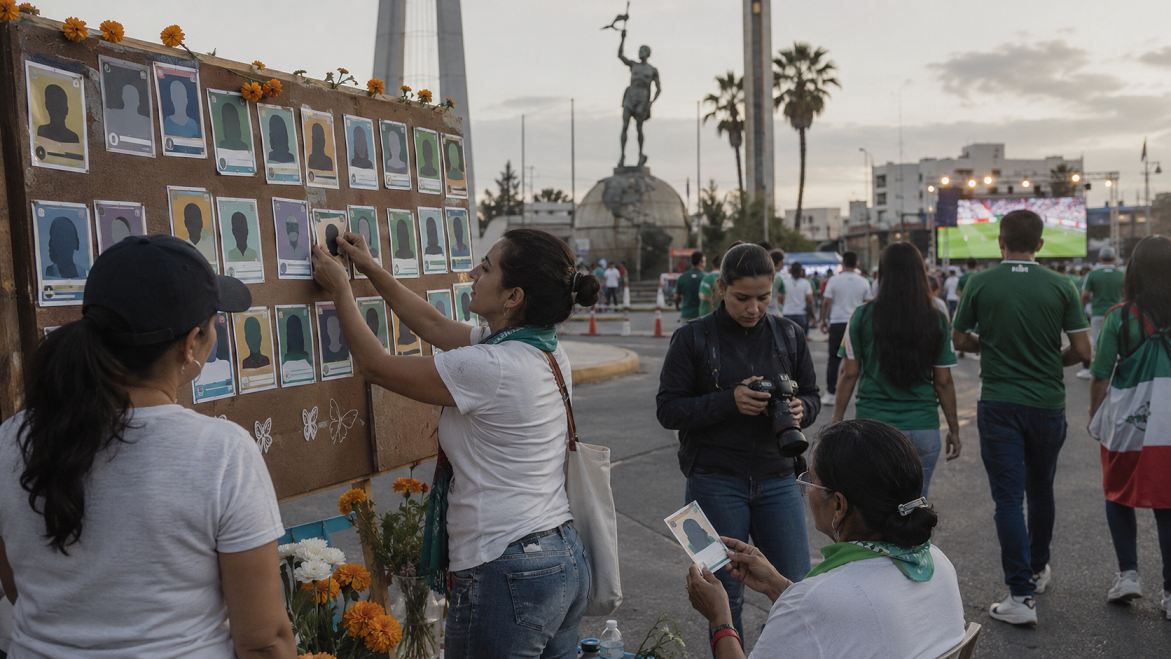
Tijuana search collectives using World Cup-style cards could turn soccer attention into a community awareness story because they are redirecting tournament visibility toward families still looking for missing loved ones. During a World Cup month filled with public screens, fan zones, team colors, and tourist movement, Colectivo Cimarrones Tijuana adapted the familiar language of soccer player cards to display missing-person information. The campaign is not a sports promotion. It is a reminder that public celebration and civic memory can occupy the same city.
Why The World Cup Card Campaign Matters In Tijuana
Punto Norte reported on June 10, 2026, that Colectivo Cimarrones Tijuana adapted World Cup player-card imagery to promote the search for missing people, placing faces and information of missing persons into a format inspired by soccer cards. The collective invited people to place search flyers on June 13 at Glorieta Cuauhtémoc on Paseo de los Héroes and at the Fiscalía General del Estado through the World Cup missing-person cards campaign.
That timing matters. The campaign appeared as the World Cup was opening in Mexico, when public attention was already moving toward matches, watch parties, and national-team symbols. In that environment, a soccer-card format becomes immediately legible. People understand the visual language of collectible players, team identity, and tournament excitement. The collective used that familiarity to ask a harder question: who remains unseen while the country celebrates?
For BajaTimes readers, the story fits Tijuana because it connects public space, World Cup attention, community organizing, and the city’s broader social reality. It is not a conventional travel story, but it is part of how visitors and locals experience public life during a global event.
The key is respect. These cards should not be treated as novelty objects. They are search tools, memorial signals, and calls for information.
How Glorieta Cuauhtémoc Became Part Of The Message
Glorieta Cuauhtémoc is not just a traffic circle. It is a recognizable Tijuana public space on Paseo de los Héroes, surrounded by movement, commuters, businesses, and civic visibility. By placing missing-person flyers there, search collectives used a visible urban node rather than a private or hidden location.
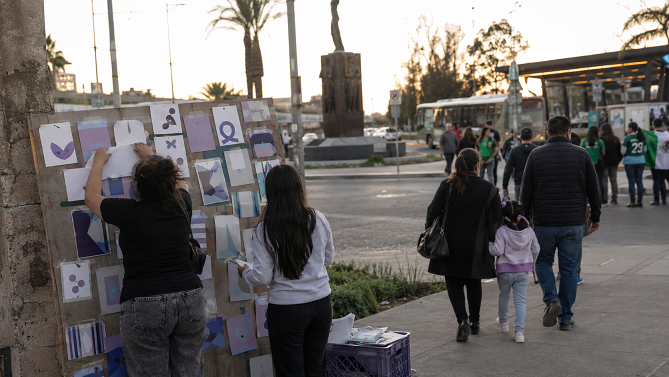
ZETA reported that collectives gathered at Glorieta Cuauhtémoc on June 13, 2026, placing search cards and connecting the action to the national context of more than 133,000 missing people. The report quoted the sentiment that it is painful to celebrate a World Cup while families continue searching for loved ones through this Glorieta Cuauhtémoc search action.
That public-space choice matters for Tijuana’s World Cup month. While Avenida Revolución hosted screens and fan gatherings, Glorieta Cuauhtémoc became a different kind of public message. One site drew attention through soccer celebration. Another used soccer imagery to ask people not to look away from disappearance.
The contrast is uncomfortable, but it is not accidental. Community awareness often depends on placing difficult realities where everyday life cannot avoid them.
Why Soccer Imagery Can Carry A Civic Message
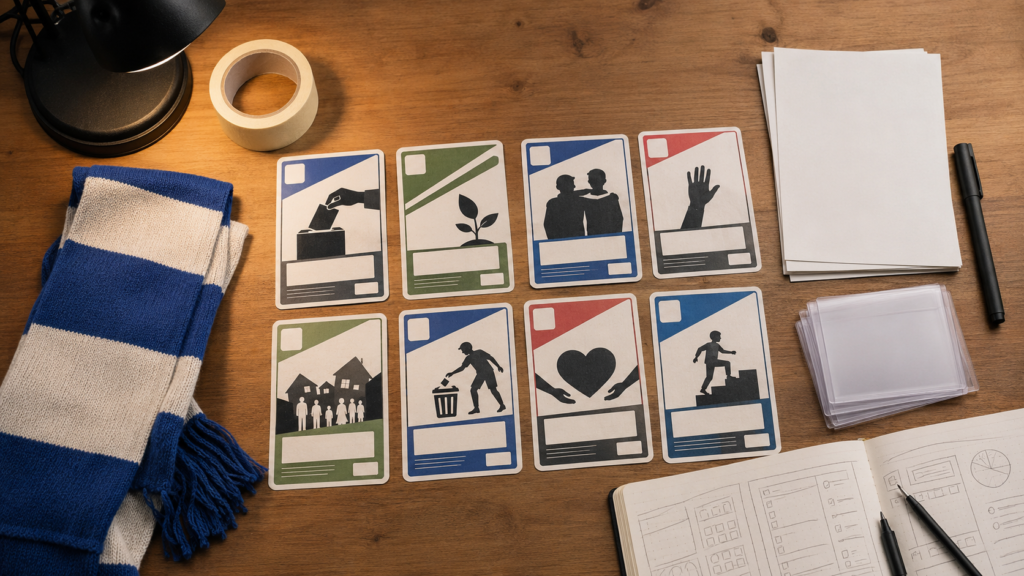
The World Cup produces symbols people recognize instantly: cards, stickers, jerseys, flags, fixtures, group tables, and player portraits. Colectivo Cimarrones Tijuana’s campaign uses that symbolic system in a different way. Instead of celebrating athletes, the card format asks people to remember names, faces, dates, and last-known information.
This strategy works because sports imagery is portable and shareable. A card can move across social networks, sidewalks, community boards, and public plazas. It can catch the eye of someone who might ignore a standard document. It can also connect with younger audiences who understand the album or trading-card format.
But the format also demands caution. The people shown are not characters in a campaign. They are missing people with families. Their images should not be copied casually, turned into memes, or removed from the search context. The purpose is visibility, not entertainment.
That boundary is central to ethical coverage. The creative format may be inspired by soccer, but the story belongs to the families.
How This Connects To Baja Fut Fest And Public Viewing
Tijuana’s World Cup month has been shaped by Baja Fut Fest, public viewing, and the transformation of Avenida Revolución into a fan corridor. BajaTimes has already covered how Tijuana Baja Fut Fest connects public screens, restaurants, hotels, families, and cross-border visitors during the tournament.
The search-card campaign adds a second layer to that public World Cup geography. It shows that tournament attention does not belong only to official events or fan zones. Community groups can also use the World Cup moment to reach people who might otherwise be focused only on the match.
That does not mean Baja Fut Fest and the collectives’ campaign are the same kind of event. They are not. One is a public viewing and tourism corridor. The other is a search and awareness action. But they share the same broader environment: Tijuana streets during a tournament that has pulled more eyes toward soccer, flags, and public gatherings.
That shared attention is the point. The World Cup creates a rare concentration of public focus. Search collectives are asking that some of that focus be used for people who are missing.
Why The Missing-Person Crisis Cannot Be Treated As Background
The Registro Nacional de Personas Desaparecidas y No Localizadas is the official tool coordinated by Mexico’s Comisión Nacional de Búsqueda to organize information on missing and not-located people through the RNPDNO public registry. The existence of that registry shows that disappearance is not an isolated issue handled only by individual families. It is a national crisis with public institutions, reporting systems, and community search networks.
Recent reporting has also emphasized Baja California’s role in the crisis. La Jornada reported in July 2026 that Baja California ranked fifth nationally for people reported disappeared and not located during 2026, according to RNPDNO data through this Baja California missing-person report. Red Lupa’s 2026 Baja California analysis also reported that Tijuana had the highest number of missing-person cases in the state as of May 2026, rising from 2,500 to 3,245 cases in one year through its Baja California disappearance data.
Those numbers should be handled carefully. They do not belong in an article as shock decoration. They explain why families and collectives look for public attention wherever they can find it.
That is what makes the World Cup-card campaign significant. It is a local tactic inside a much larger crisis.
What Colectivo Cimarrones Tijuana Is Asking People To See
El Sol de Tijuana reported that Colectivo Cimarrones Tijuana protested the lack of resources for searches during the World Cup context, with president and founder Valeria Gordian saying the group wanted Glorieta Cuauhtémoc to be recognized as a monument to missing people through this Cimarrones Tijuana search protest.
That request changes how the city reads public space. A traffic circle becomes a memory site. A card becomes a search notice. A World Cup month becomes an opportunity to ask why missing people remain invisible.
For Tijuana, that is powerful because the city is often described through mobility: border crossings, tourist corridors, shopping trips, restaurants, hotels, medical visits, and nightlife. Search collectives introduce another kind of movement: the movement of families through institutions, streets, search fields, offices, social media, and public plazas in search of answers.
Visitors should not treat that as unrelated to the city. It is part of Tijuana’s civic landscape.
How Travel Coverage Should Handle This Story
A travel and lifestyle site can cover this story, but it has to do so differently from a standard event article. The tone should not be promotional. It should not use families’ pain as a dramatic backdrop for World Cup tourism. It should not tell visitors to “tour” search sites. It should not turn missing people into visual content.
The right frame is public awareness. Travelers who encounter the cards or flyers should understand that they are seeing a community search action, not decoration. They should leave flyers in place, avoid taking intrusive close-up photos, and never share identifiable search material outside its context unless the family or collective has clearly made it public for that purpose.
For journalists and content creators, the same rule applies. Cover the collective, the public action, the location, and the civic purpose. Do not exploit faces, personal details, or grief. Link to official or reputable sources when discussing the broader crisis. Avoid unverified case details.
This is how Baja travel coverage can remain useful without becoming insensitive.
What Visitors Might Notice During World Cup Month
Visitors in Tijuana during the World Cup may encounter two very different kinds of soccer imagery. One will be celebratory: screens, jerseys, flags, food, chants, and fan corridors. The other may be civic: search cards, flyers, murals, vigils, or public actions tied to missing people.
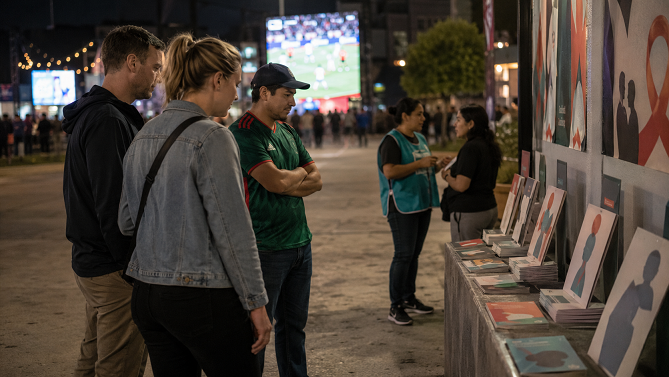
Those two realities can coexist in the same city. A visitor might watch a match on Avenida Revolución, then pass a public plaza where families have placed search information. That contrast can feel jarring. It should. The point of the campaign is to interrupt indifference.
For cross-border visitors from Southern California, this is part of understanding Tijuana beyond quick-trip stereotypes. The city is a tourism destination, a border economy, a food corridor, a World Cup gathering point, and a place where families are asking for answers.
Responsible visitors do not have to solve that crisis. But they can respond with respect.
What Readers Should Do If They See Search Cards Or Flyers
| Situation | Why It Matters | Respectful Response |
|---|---|---|
| A Search Flyer Is Posted In Public | It may contain information a family wants seen | Read respectfully and leave it in place |
| A Card Includes A Face Or Name | The person is missing, not a symbol | Do not use the image as casual social content |
| A Collective Is Holding An Action | Families may be grieving or seeking help | Keep distance unless invited to participate |
| A Visitor Wants To Share Information | Context protects families from misuse | Share only official or collective-posted materials |
| Someone Has Relevant Information | Search campaigns depend on credible leads | Contact the listed authority or collective channel |
This is not complicated etiquette. It is basic respect. The campaign’s purpose is visibility, but visibility should not become spectacle.
Why The Campaign Could Reach People Soccer Alone Cannot
The World Cup is one of the few events that can cut across age, class, language, and neighborhood. People who might not follow local politics may follow national-team matches. People who ignore official notices may stop for a soccer-style card. People who pass through Tijuana as tourists may notice a campaign because it uses imagery tied to the tournament they came to experience.
That reach is why the campaign has power. It borrows attention from soccer and redirects it toward families. It does not compete with the World Cup; it complicates the way the World Cup is seen.
For Tijuana, that may be the most important lesson. Public attention is a resource. During a global tournament, attention becomes concentrated, mobile, and emotional. Search collectives are using that moment to ask for recognition.
That is a community awareness story, not only an activist story.
How Tijuana Can Hold Celebration And Memory Together
Tijuana does not have to choose between hosting World Cup energy and acknowledging missing people. A mature public culture can hold both. Avenida Revolución can host Baja Fut Fest while Glorieta Cuauhtémoc carries search flyers. Restaurants can serve fans while residents remain aware of the families gathering in public spaces. Visitors can enjoy the tournament while respecting the civic messages they encounter.
The challenge is tone. City leaders, businesses, event organizers, and content publishers should avoid treating the World Cup as if it erases local realities. It does not. The tournament puts a spotlight on the city. What people see under that light depends on what communities choose to show.
Colectivo Cimarrones Tijuana chose to show the missing.
That choice should be treated with seriousness. It reminds readers that a World Cup city is not only a stage for celebration. It is also a place where families live with unanswered questions.
Why This Belongs In BajaTimes Coverage
This story belongs in BajaTimes coverage because it explains how World Cup attention moves through Tijuana beyond tourism corridors and matchday crowds. The search-card campaign is rooted in real public spaces, real local organizing, and real civic stakes. It uses soccer imagery, but it is about memory, visibility, and the right of families to be seen.
For readers planning to visit Tijuana during the tournament, the article adds context. If they see search cards or flyers, they will understand what those materials are asking of the public. If they attend Baja Fut Fest, they will better understand that World Cup public space is not only festive. It is also a platform.
Tijuana’s World Cup month is not one story. It is many stories happening at once: Mexico matches, immigrant communities, cross-border visitors, fan zones, restaurant traffic, hotel demand, public safety, and families searching for missing people.
The World Cup-card campaign makes that complexity visible. It turns soccer attention into a community awareness story because it asks the city and its visitors to remember that every face on a card represents someone loved, missed, and still being searched for.