Travelers heading to Baja California Sur in 2026 are encountering something new: active enforcement of the tourist tax beyond airports, including roadside checkpoints and verification stops.
What began as a digital system tied to the “Embrace It” initiative has now evolved into a more structured compliance model. Authorities are no longer relying solely on voluntary payment or airport reminders—instead, they are introducing on-the-ground verification measures designed to ensure that all international visitors contribute.
This shift marks a turning point in how Baja manages tourism: moving from passive collection to active enforcement backed by digital tracking.
Why Roadside Checks Are Being Introduced
The expansion of enforcement reflects a simple reality—compliance has not been universal. While many travelers complete the process online, a significant number still arrive without paying or registering.
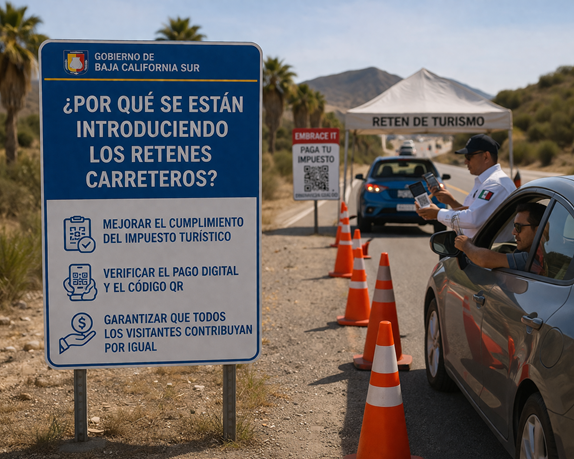
To address this, authorities have introduced roadside checks in key travel corridors, particularly between:
- Los Cabos and San José del Cabo
- The Tourist Corridor
- Routes leading into La Paz
These checkpoints allow officials to verify whether visitors have completed their registration and paid the required fee.
The goal is not just revenue collection. It is about creating a consistent, fair system where all visitors contribute equally to the region’s infrastructure and conservation efforts.
How The Verification Process Works In Practice
The process itself is relatively straightforward, but it depends heavily on digital readiness.
Travelers may be asked to present:
- A QR code confirming payment
- Digital proof stored on a smartphone
- Occasionally, identification matching the registration
Here’s how the system functions during a roadside check:
| Step | What Happens | What Travelers Need |
|---|---|---|
| Stop | Vehicle is briefly halted at checkpoint | Remain ready with documents |
| Verification | Officials request QR code | Smartphone or printed copy |
| Confirmation | Code is scanned or visually checked | Valid payment confirmation |
| Resolution | Travelers proceed or are directed to comply | Payment if missing |
For those who have completed the process, the experience is typically quick. For those who have not, delays can occur while payment is completed on-site or instructions are provided.
What Happens If You Haven’t Paid The Tourist Tax
One of the most important changes in 2026 is that the system now has real consequences for non-compliance.
Travelers who have not paid the tax may be:
- Asked to complete payment immediately
- Directed to official payment platforms
- Delayed until compliance is verified
While enforcement is generally handled professionally, it introduces an element of unpredictability for unprepared travelers. What might have once been overlooked is now part of a formalized process tied to digital tracking systems.
This is why preparation before arrival has become essential rather than optional.
How This Impacts Road Trips And Independent Travelers
The introduction of roadside checks is particularly relevant for travelers exploring Baja by car—a popular option for those seeking flexibility and access to remote destinations.
Unlike airport arrivals, road travelers may assume fewer formalities. However, the new system ensures that all entry methods are subject to the same requirements.
This means that whether you arrive by plane, rental car, or cross-border drive, you are expected to have completed the same digital process.
For those planning extended travel across the peninsula, understanding these requirements is just as important as mapping routes or booking accommodations.
The Bigger Picture: Funding Tourism And Conservation
The enforcement measures are tied directly to how Baja California Sur is managing rapid tourism growth.

Revenue from the tourist tax is allocated toward:
- Environmental protection, particularly marine ecosystems
- Infrastructure improvements in high-traffic areas
- Public services supporting tourism
By strengthening enforcement, authorities aim to ensure that these initiatives are properly funded as visitor numbers continue to rise.
This aligns with a broader global trend where destinations are implementing “pay-to-protect” models, requiring visitors to contribute directly to preservation efforts.
For travelers interested in understanding how these costs fit into overall trip planning, this breakdown of Baja travel costs in 2026 provides useful context on budgeting for the region.
How Baja Compares To Other Destinations Using Similar Systems
Baja California Sur is not alone in adopting stricter enforcement of tourism fees.
Destinations such as Bali, Venice, and parts of Europe have implemented similar systems, often combining digital registration with on-site verification.
What makes Baja’s approach unique is the integration of:
- Digital QR-based tracking
- Multi-point verification (airports, hotels, roadside checks)
- A clear connection between fees and environmental initiatives
According to the official Embrace It tourism program, the system is designed to improve compliance while supporting long-term sustainability goals.
This places Baja among a growing group of destinations that are using technology to balance tourism growth with environmental responsibility.
What Travelers Should Do Before Entering Baja
The most effective way to avoid delays or complications is simple: complete the process before arrival.
Travelers should ensure they have:
- Registered through the official platform
- Paid the tourist tax in advance
- Saved their QR code digitally and as a backup
Preparation transforms what could be a disruptive experience into a seamless one.
In 2026, the expectation is clear—digital compliance is part of the travel process, not an optional step.
A More Structured Travel Experience In Baja
The introduction of roadside checks signals a broader evolution in Baja California Sur’s tourism strategy.
The region is moving toward a model that is:
- More organized
- More accountable
- More aligned with sustainable growth
For travelers, this means a slightly more structured experience—but also a more reliable and professionally managed destination.
Baja is no longer just adapting to tourism growth—it is actively shaping how that growth is handled.
And in 2026, that includes ensuring that every visitor contributes to preserving what makes the region worth visiting in the first place.